





The second edition of the conference organized by Zintek brought together sheet metal workers, associations, and training, standardization, and certification bodies. In the spotlight: skills, generational turnover, and the value of a professional community
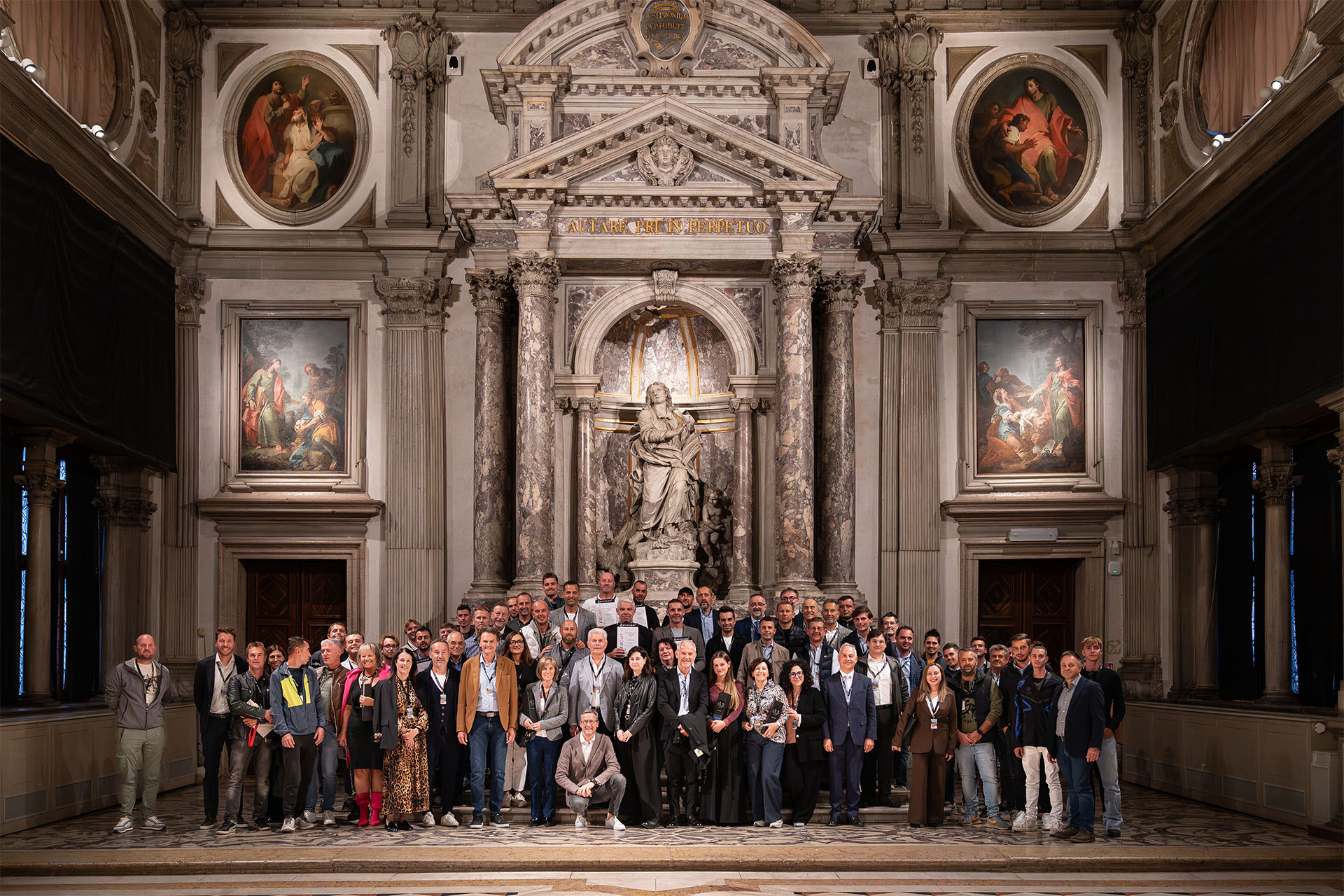
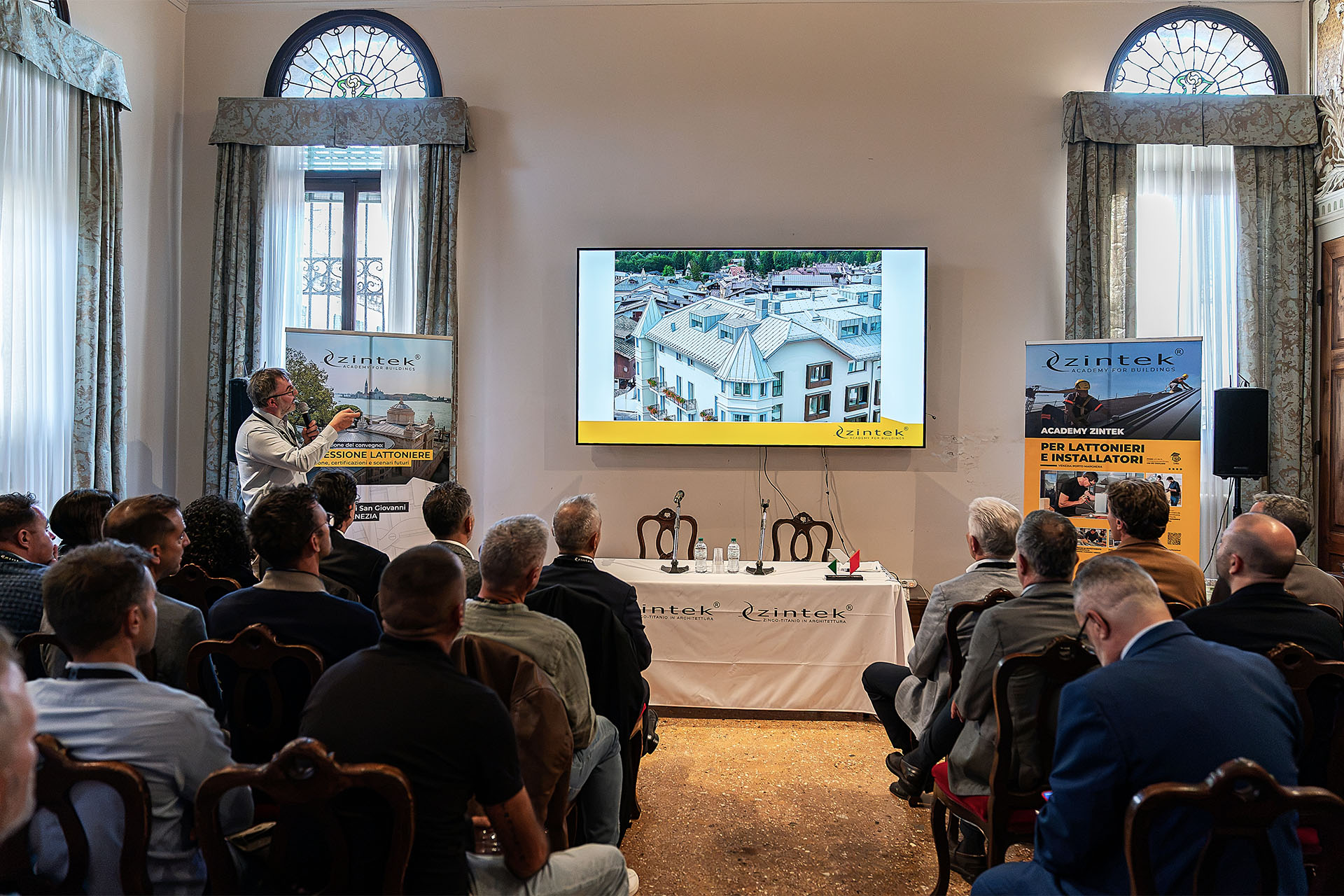
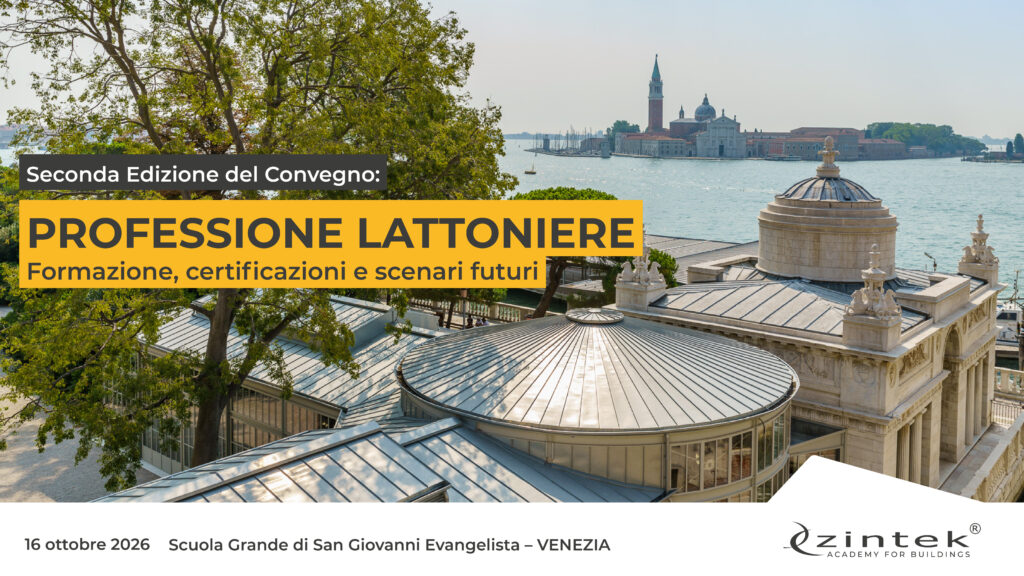
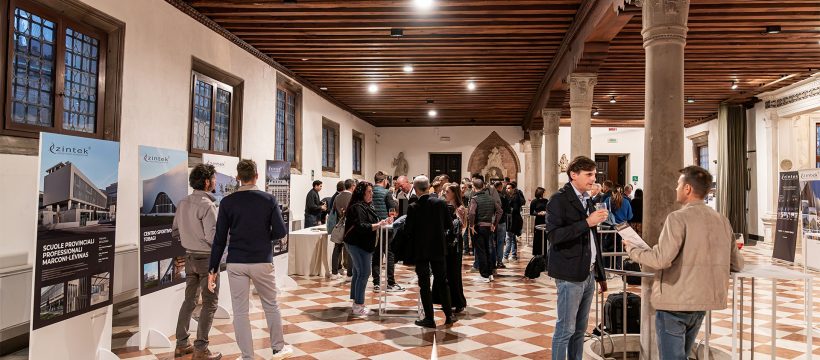
Venice, 16 October 2026 — The future of building sheet metal work is shaped through training and the recognition of skills, but also by giving space to the people who practise and pass on this craft every day. This was the message that emerged from the second edition of “Professione lattoniere. Formazione, certificazioni e scenari futuri” (“The Sheet Metal Worker Profession: Training, Certifications, and Future Scenarios”), organized by Zintek at the Scuola Grande di San Giovanni Evangelista in Venice.
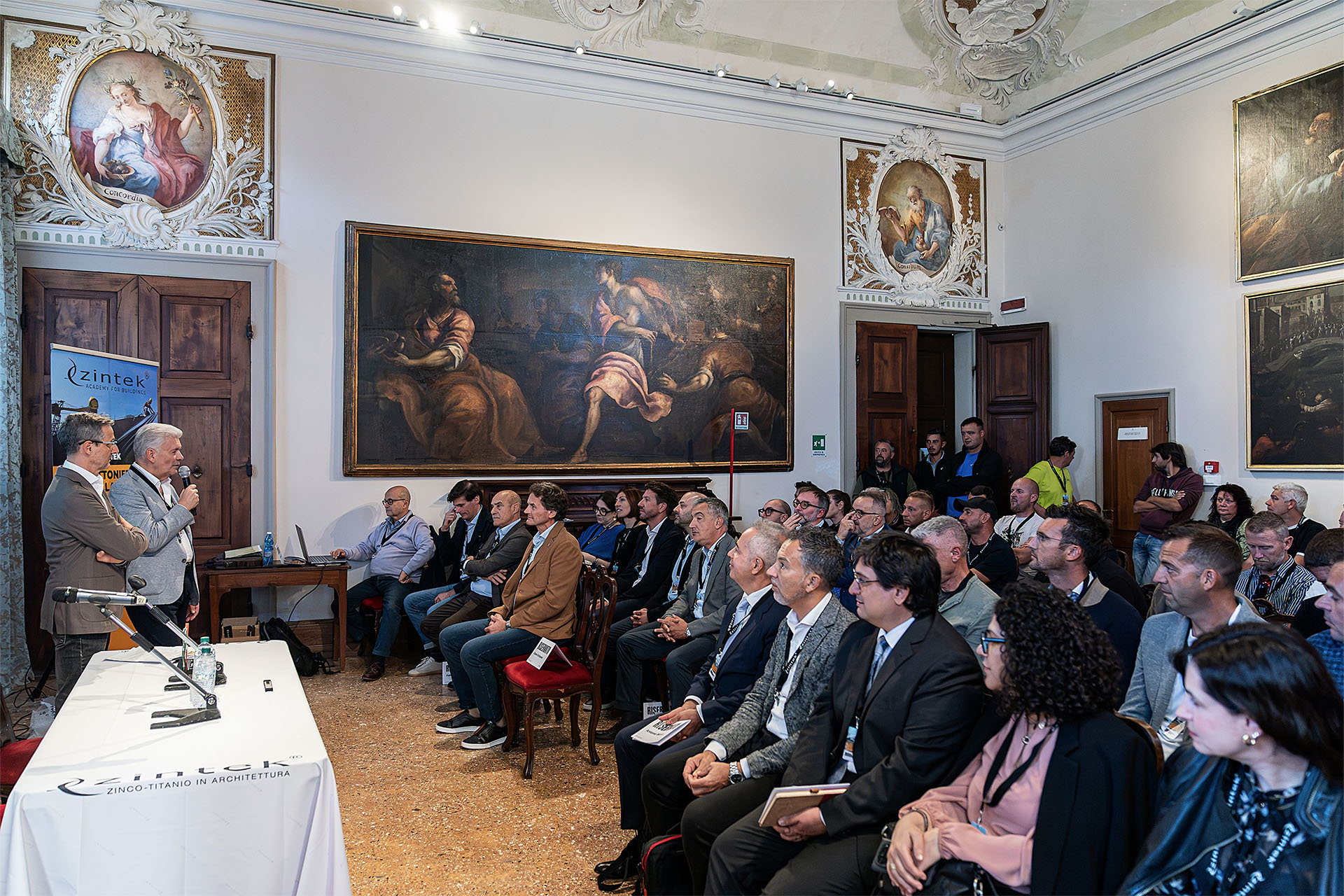
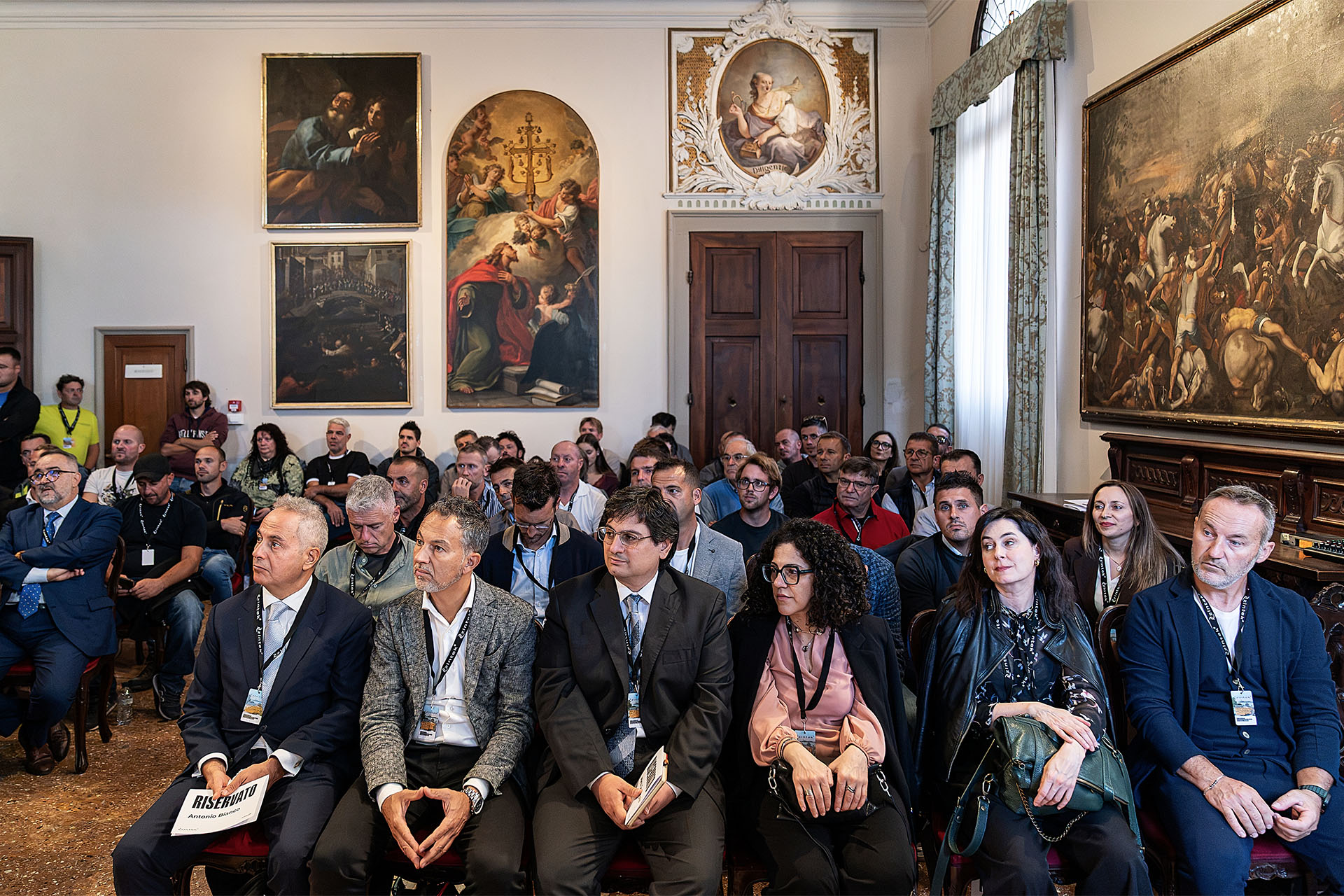
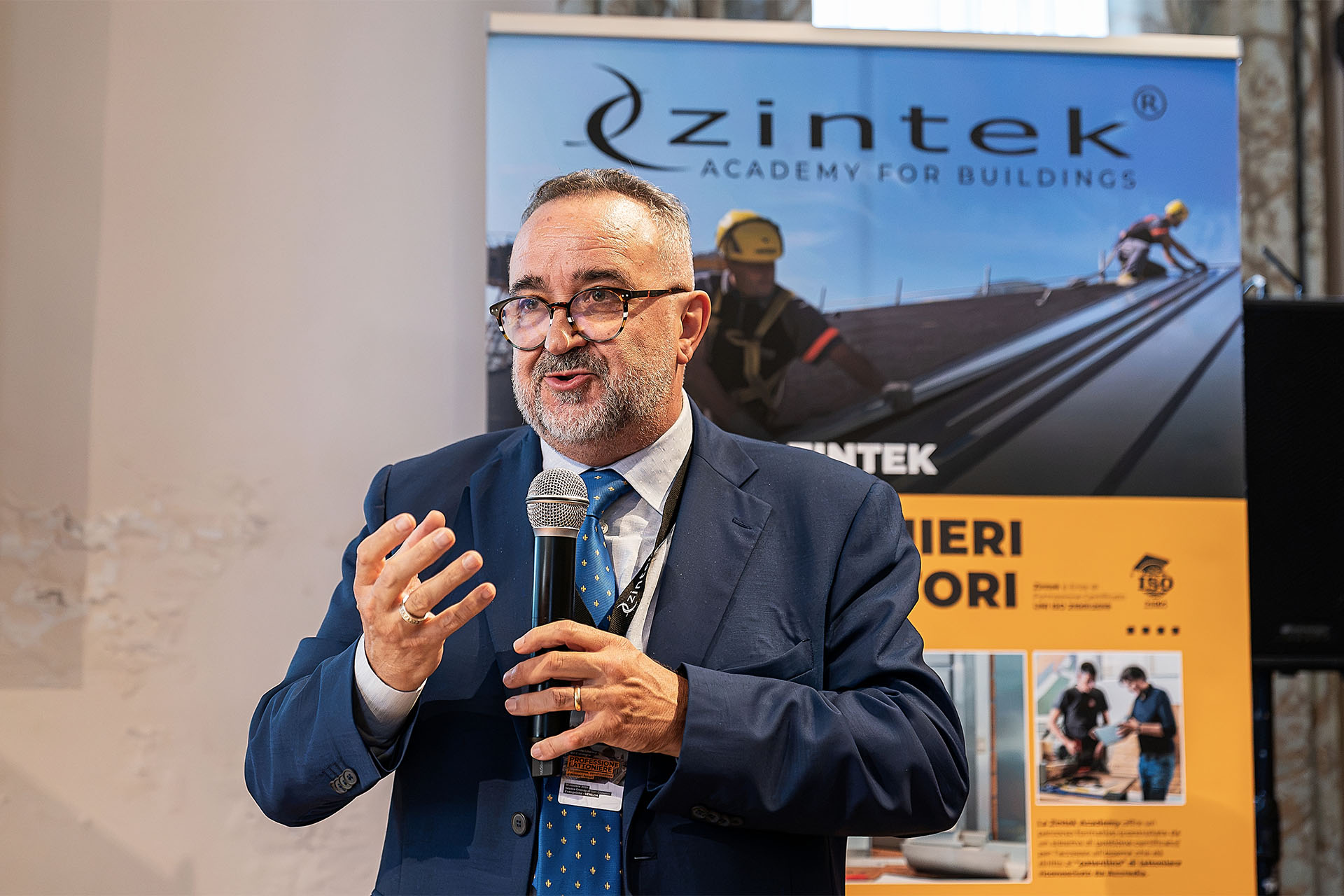
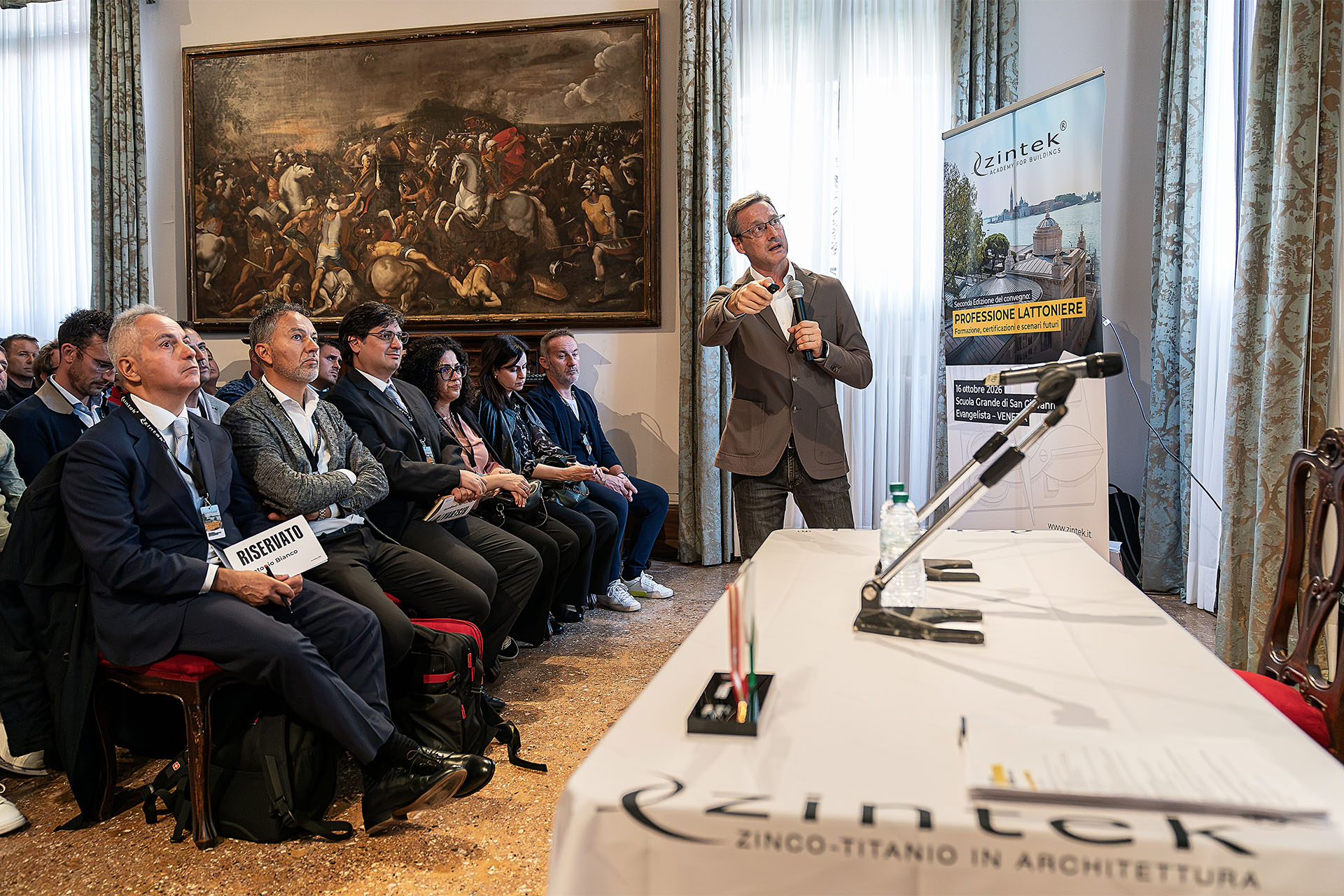
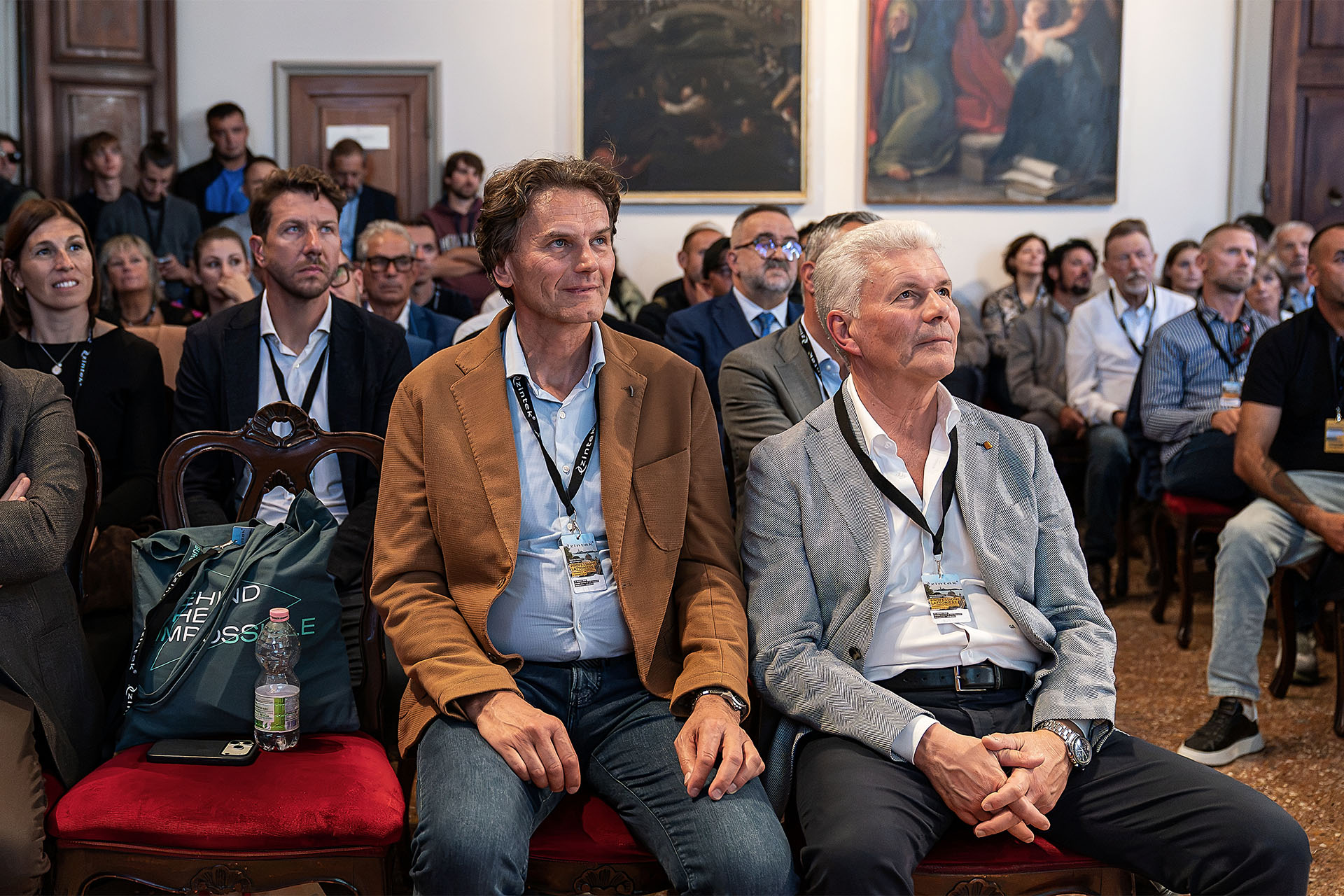
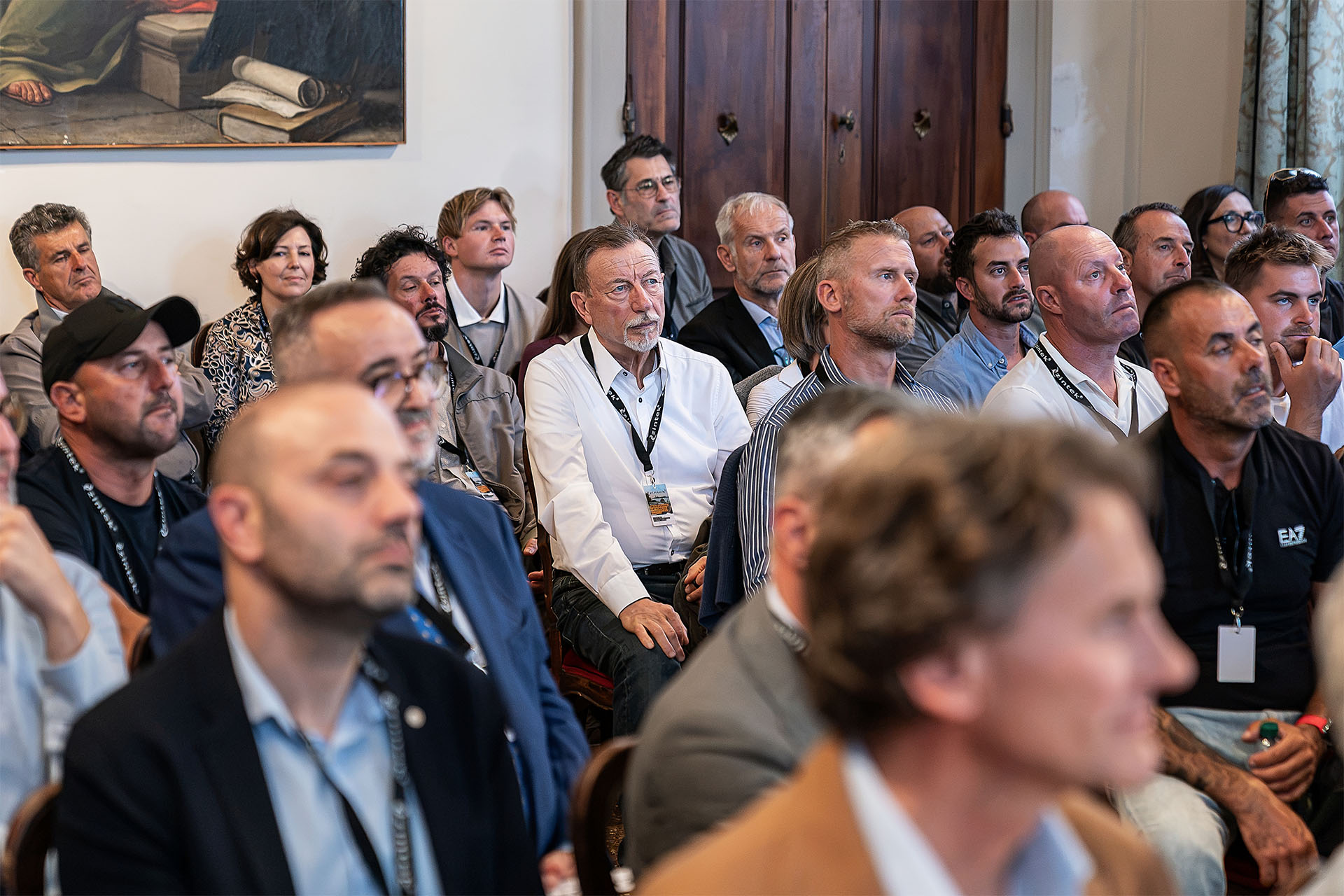
Moderated by Marco Imperadori, Professor at the Department of Architecture, Built Environment and Construction Engineering of the Politecnico di Milano, the event brought together around a hundred people, alternating technical insights, business testimonials, and updates on qualification pathways. Running through all the contributions was a focus on a profession that must tackle the difficulty of finding new skilled workers and growing technical complexity, while preserving a wealth of knowledge often handed down through the generations.
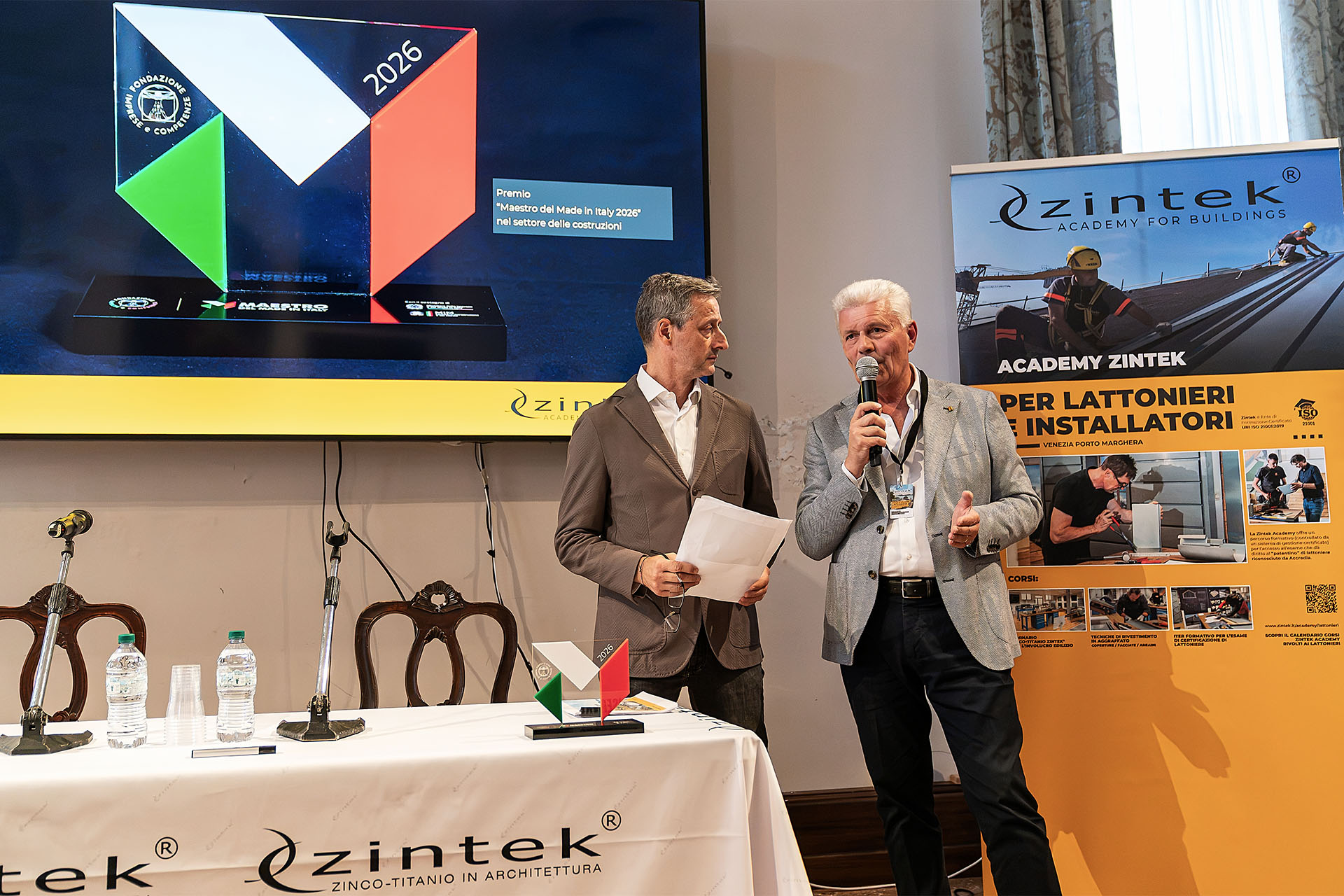
Gianni Schiavon’s opening address and greetings from sector representatives
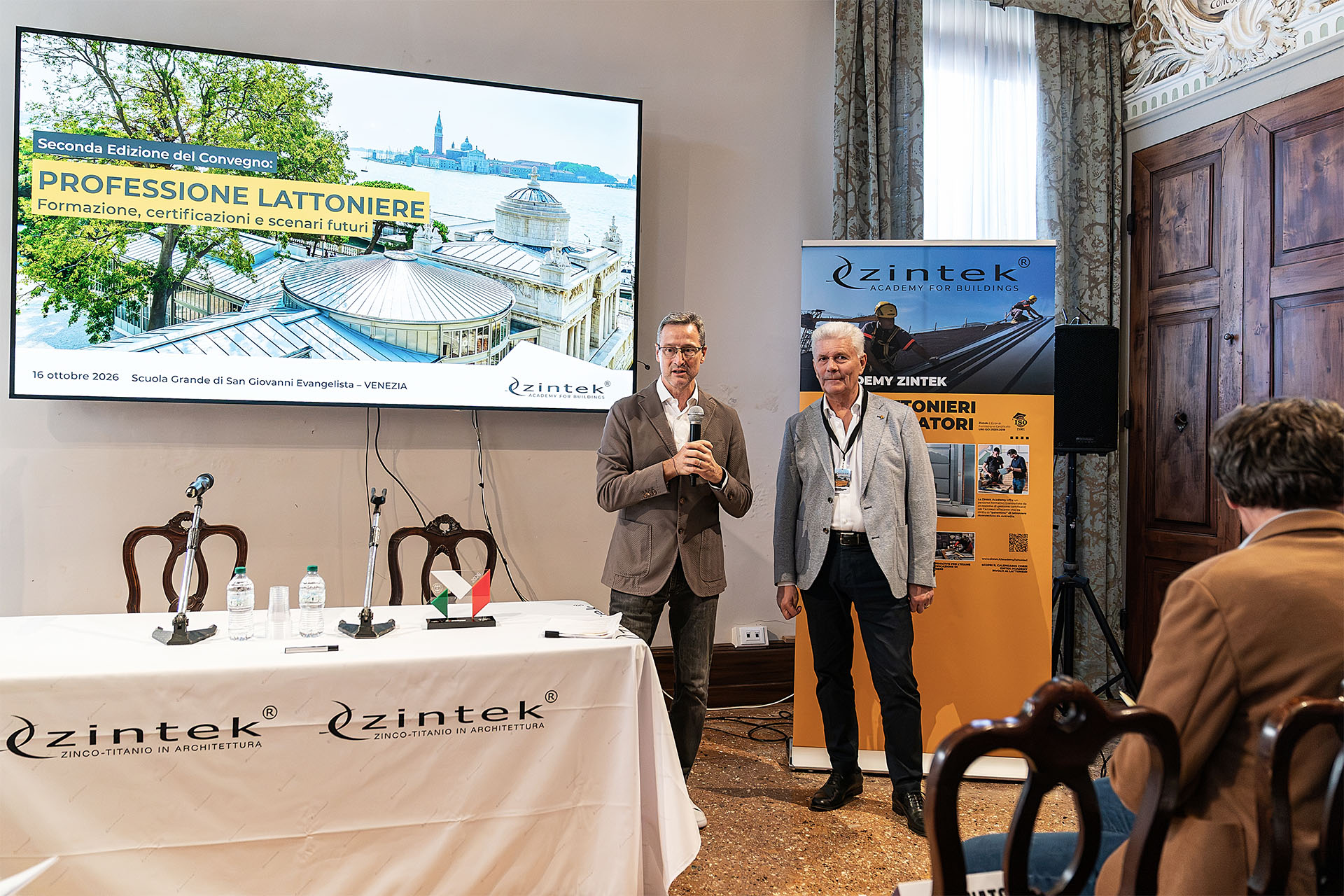
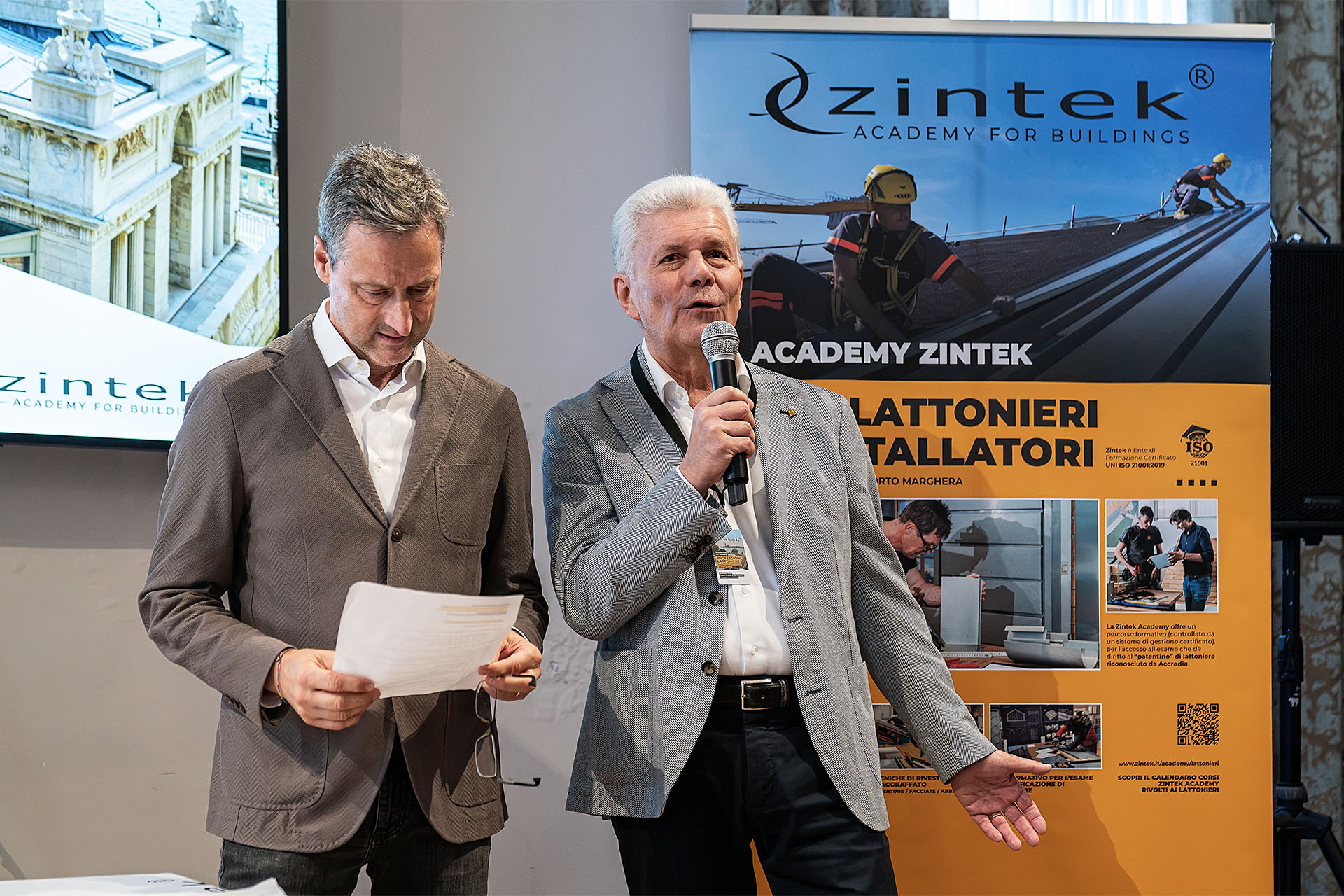
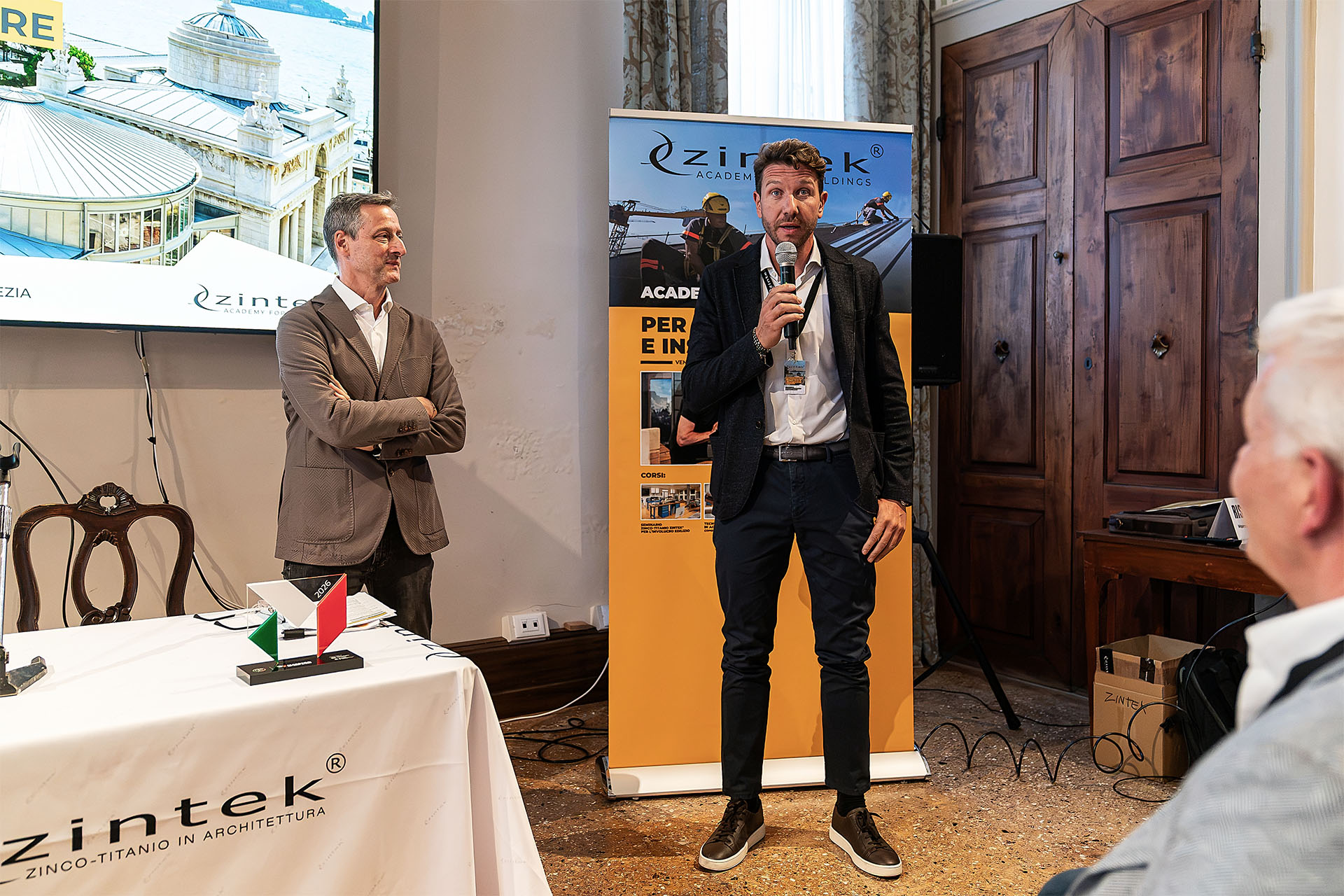
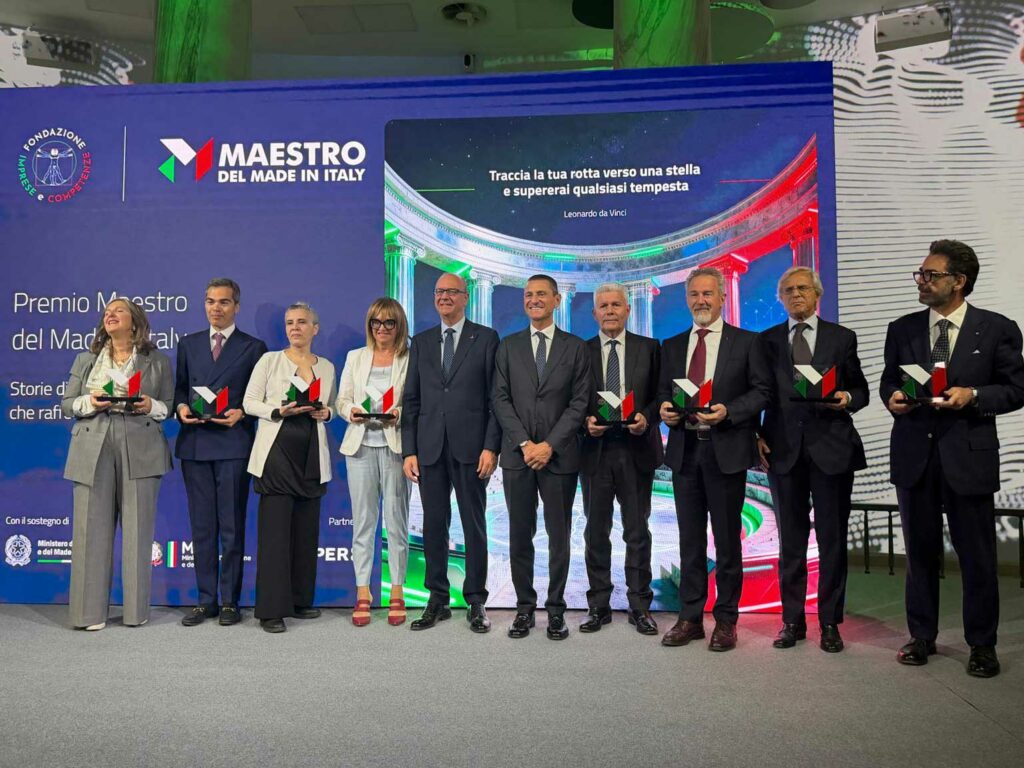
Opening the event, the sole director of Zintek, Gianni Schiavon, recalled the Maestro del Made in Italy award received by the company, highlighting the contribution of its editorial project and training activities to this recognition. He then chose to share it with sheet metal workers, calling them the true masters of Made in Italy for their ability to create unique and long-lasting works. “You, with your daily work, are the true masters”, he said, addressing the audience. Schiavon reaffirmed the Zintek Academy’s commitment to enhancing the standing of the profession, announcing a training programme for 2027–2028.
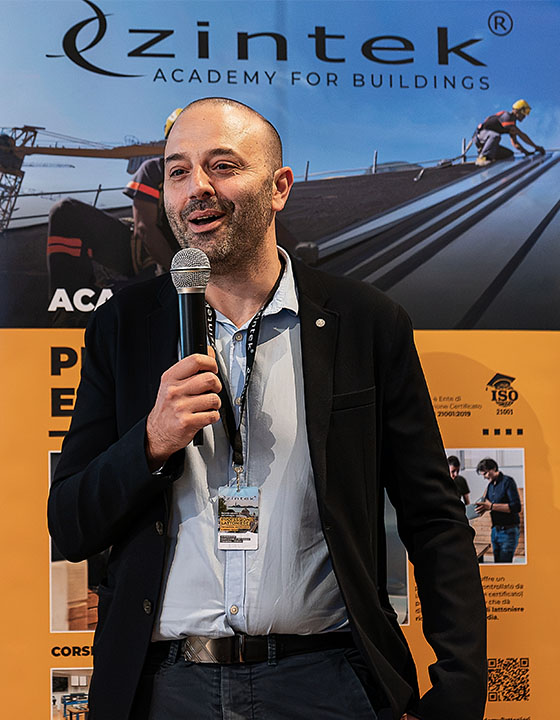
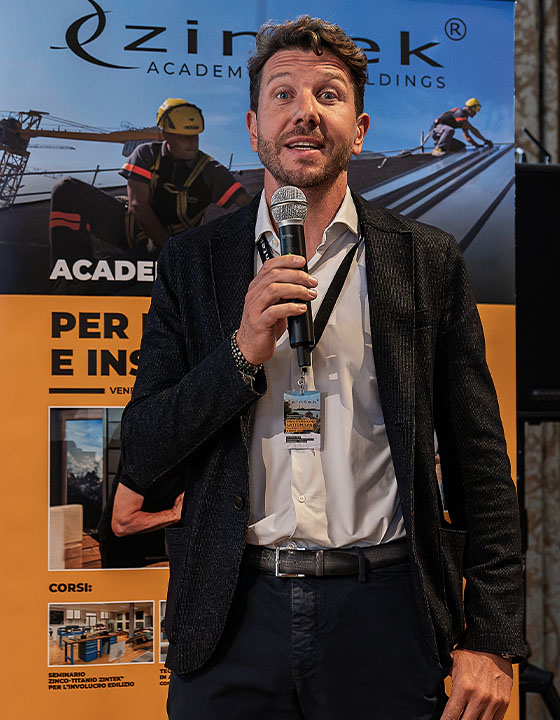
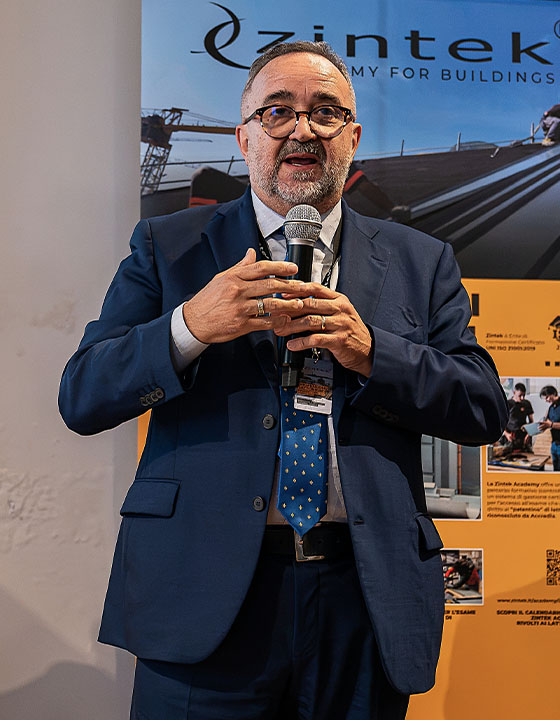
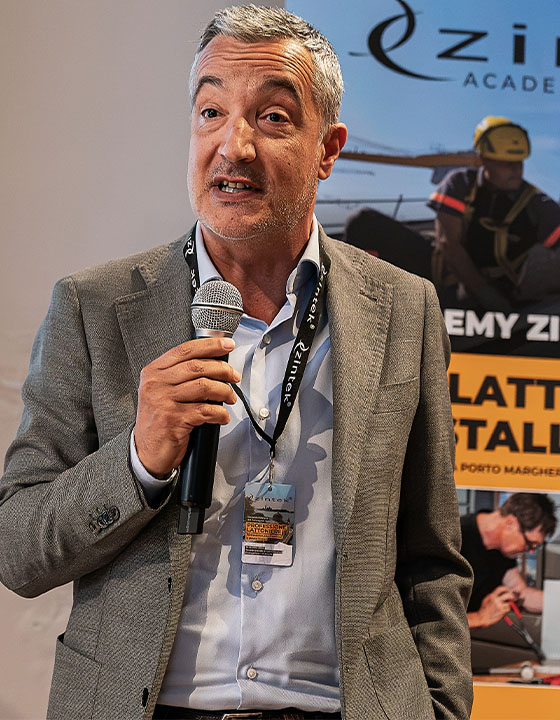
This was followed by greetings from representatives of trade associations and vocational training.
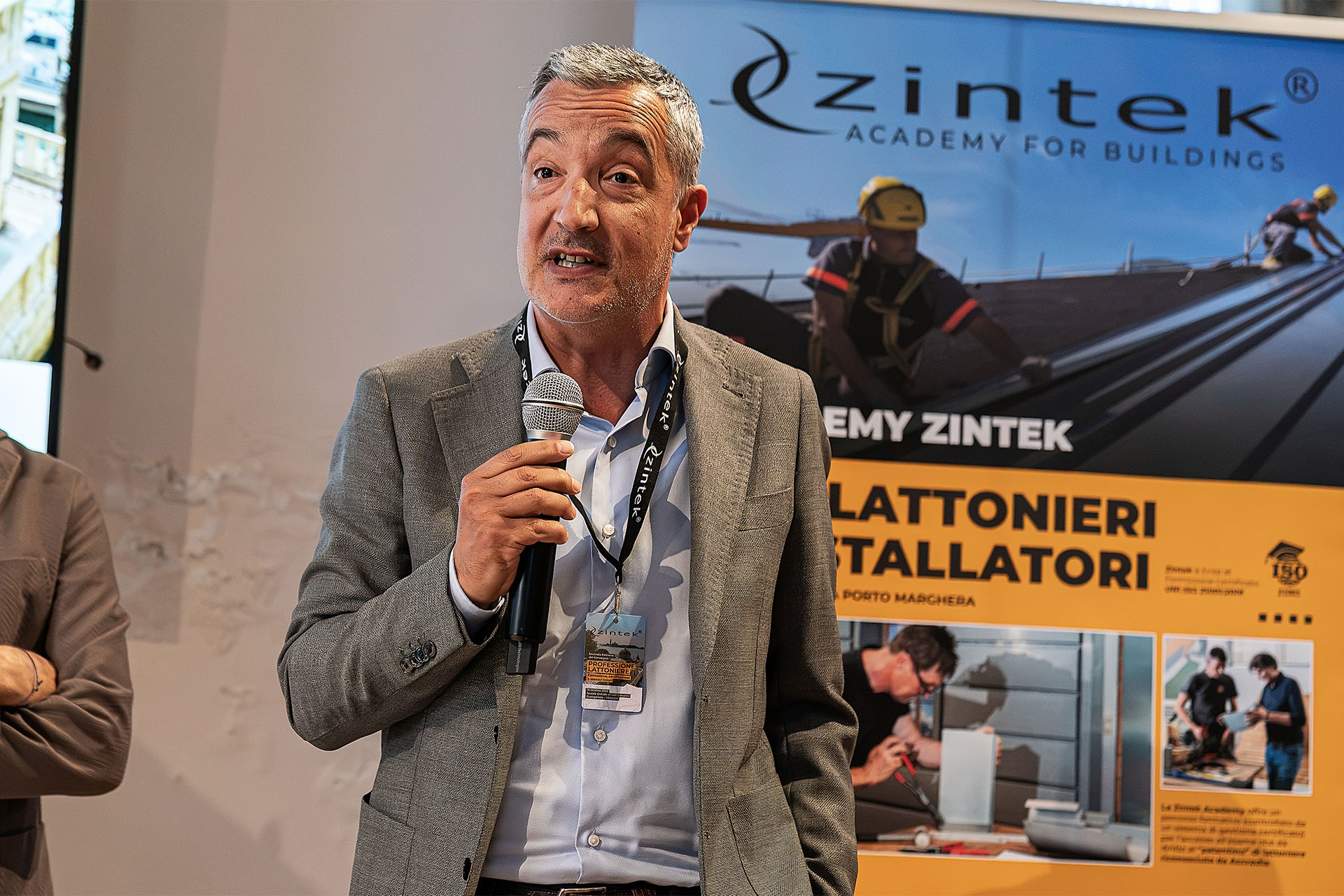
Andrea Cerentin, President of CNA Belluno, described the collaboration with Zintek to host courses locally as part of the qualification pathway for sheet metal workers, noting the growing popularity of standing seam metal roofs.
Francesco Revolti, speaking on behalf of the Associazione Lattonieri Trentino, highlighted the value of collaboration in the practical part of the courses and of companies making their premises available for training.
Matteo Masat, Director of Confartigianato Venezia, linked the protection of skilled craftspeople to the very identity of the city: training and attracting young people means ensuring business continuity and contributing to the vitality of the places where they operate.
Giovanni Colombo, Director of ENAIP Lombardia, emphasized the motivational dimension of training: technical skills must go hand in hand with the ability to convey passion and make the craft attractive to new generations.
Architecture and quality of detail
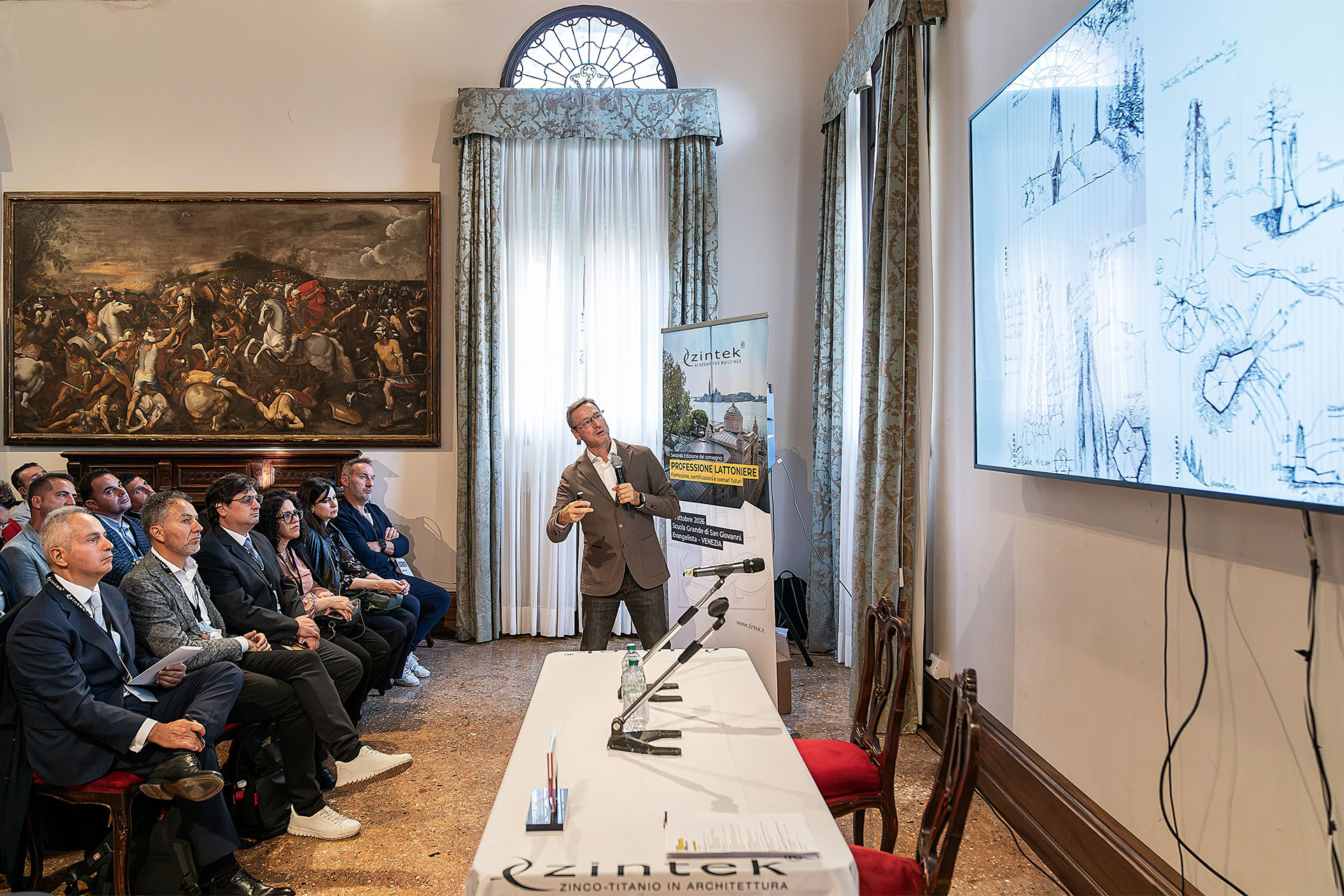
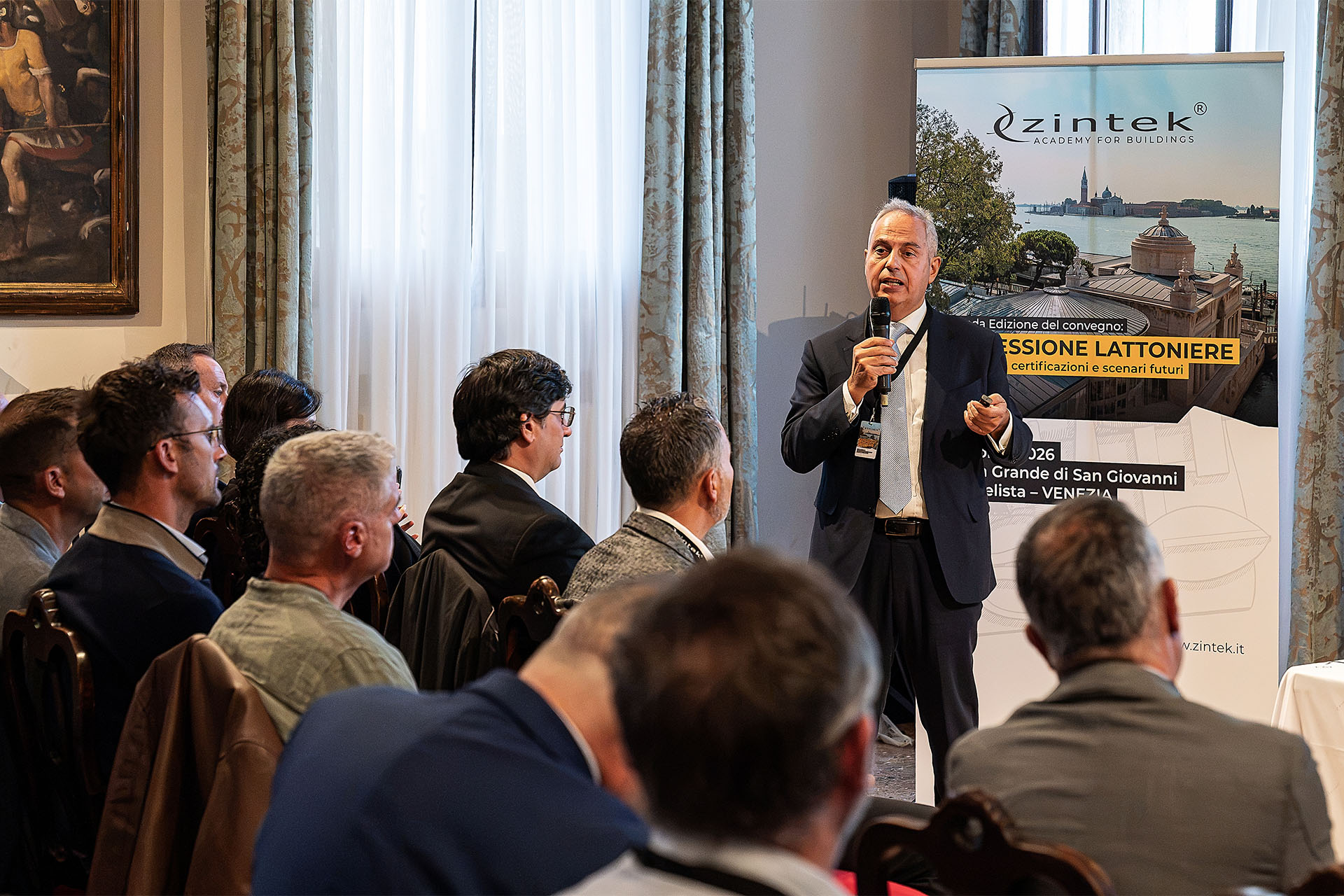
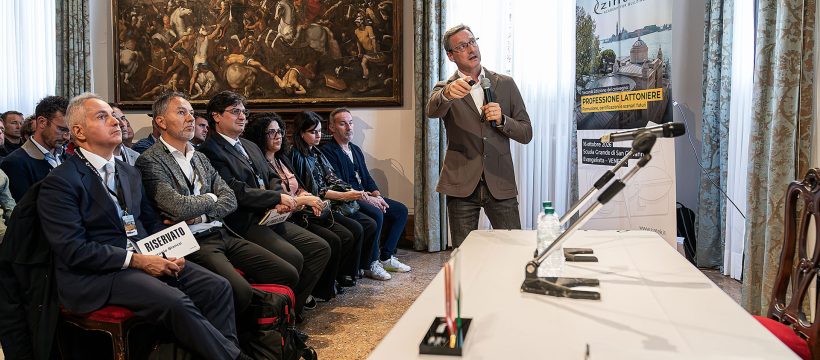
Imperadori opened the in-depth session with a reflection on the relationship between art, research, and the use of titanium-zinc zintek®. Through projects such as Sean Godsell’s chapel on the island of San Giorgio Maggiore and the works at Arte Sella, he showed how architectural quality also depends on dialogue between designers and craftspeople. He likened the work of sheet metal workers to that of tailors, given the precision required to create one-off pieces and resolve details.
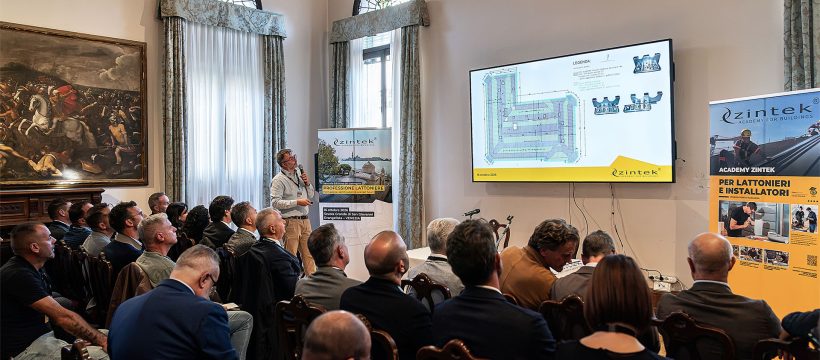
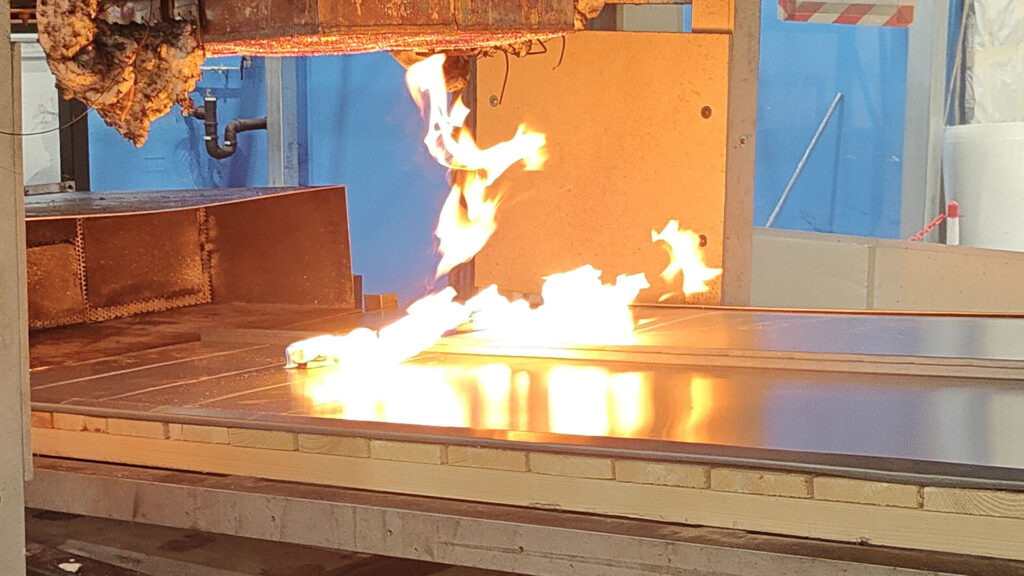
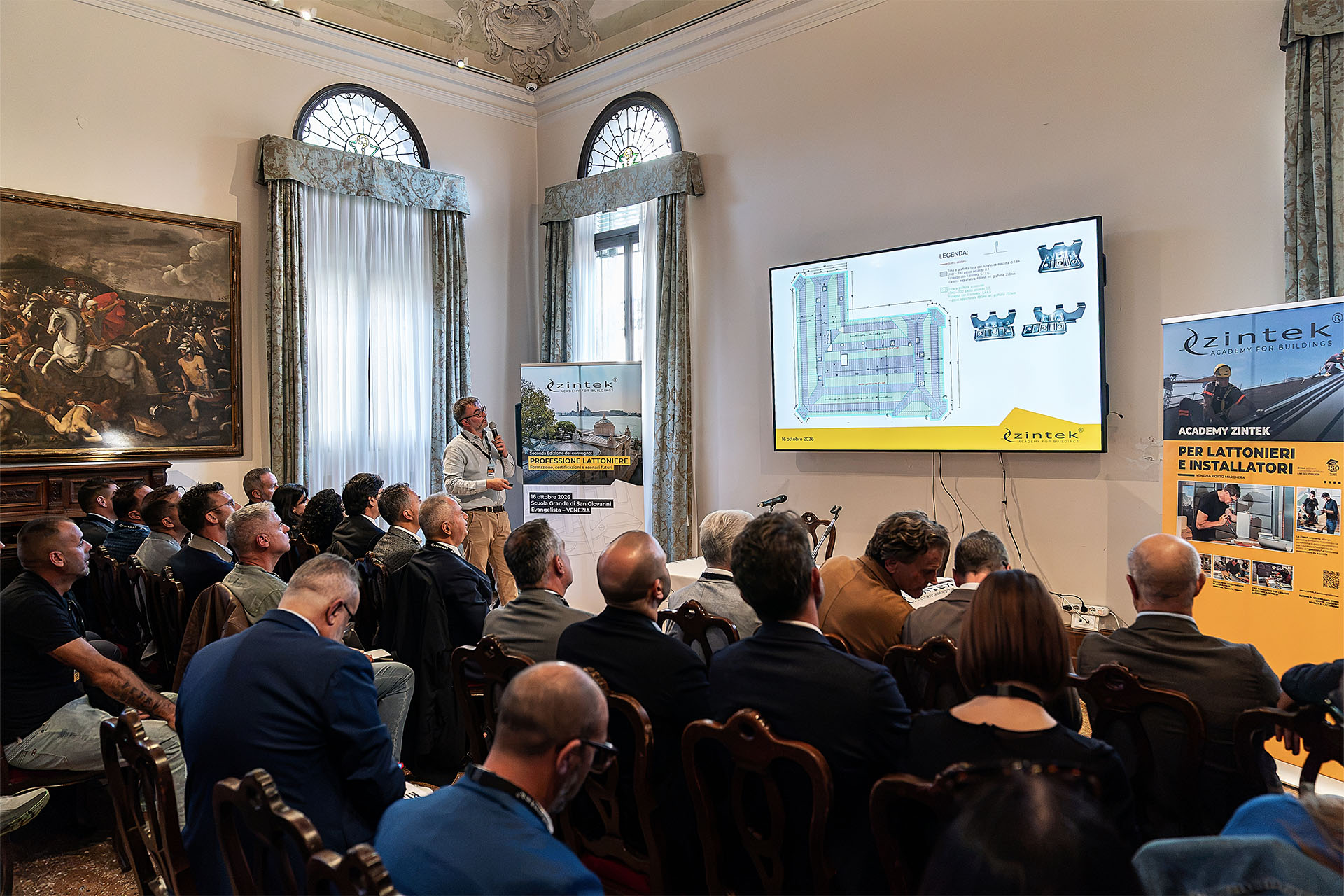
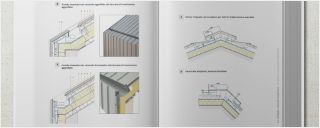
In the following session, devoted to photovoltaics and fire prevention, Donini discussed the behaviour of roofs exposed to external fire and the related test and classification documentation. The talk drew attention to the assessment of the roofing system and to titanium-zinc zintek® roof build-ups classified BROOF (t3).
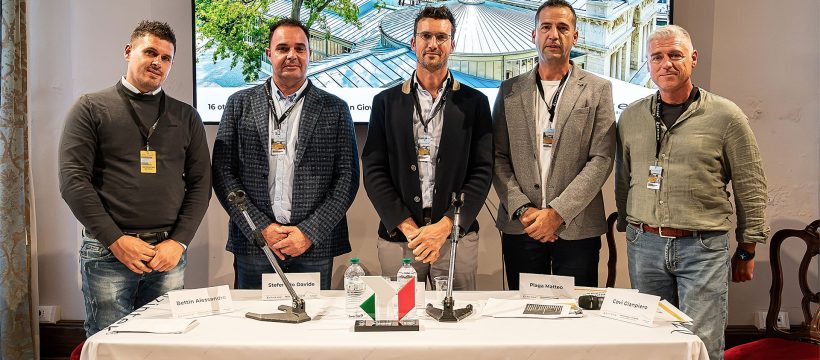
The round table with sheet metal workers
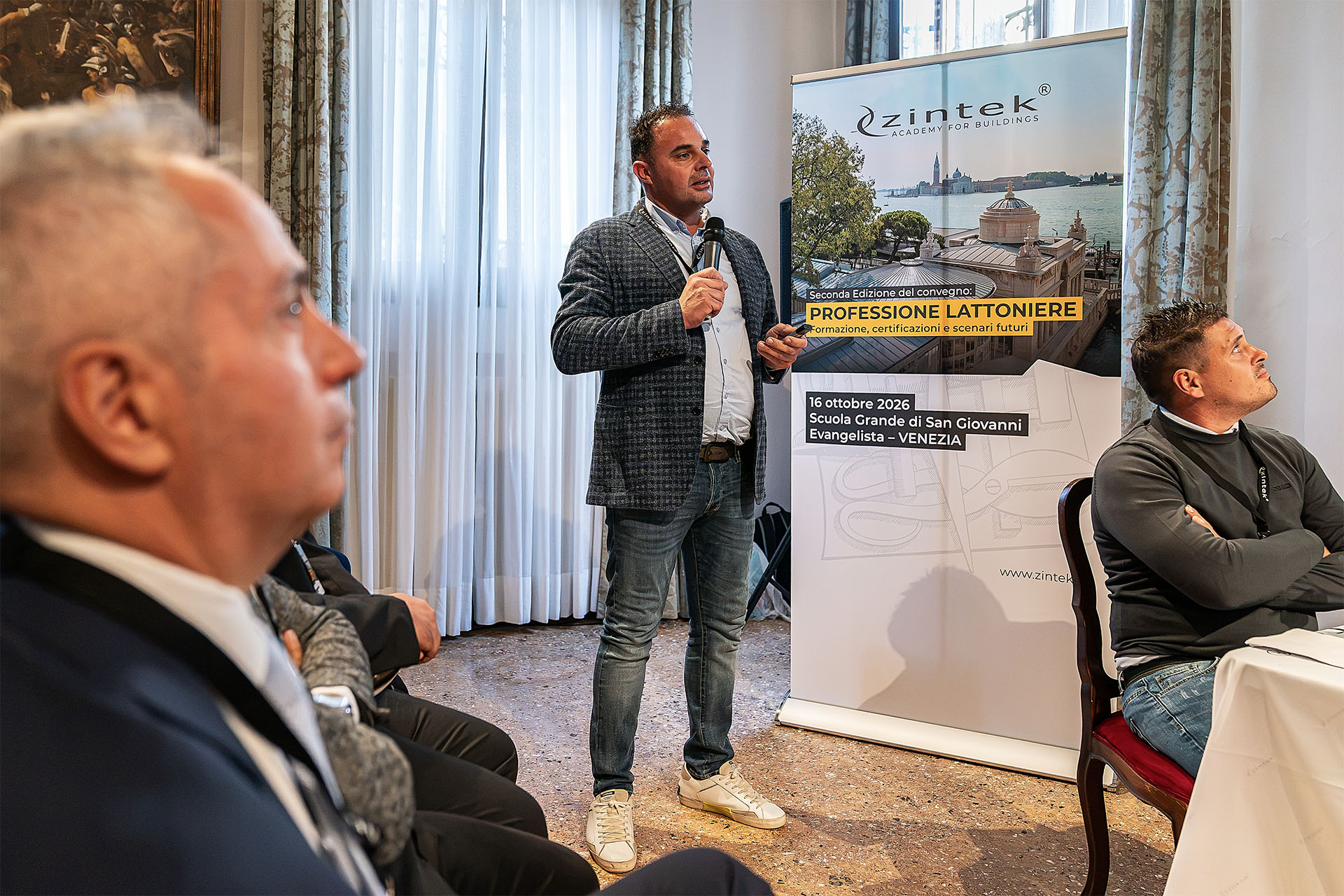
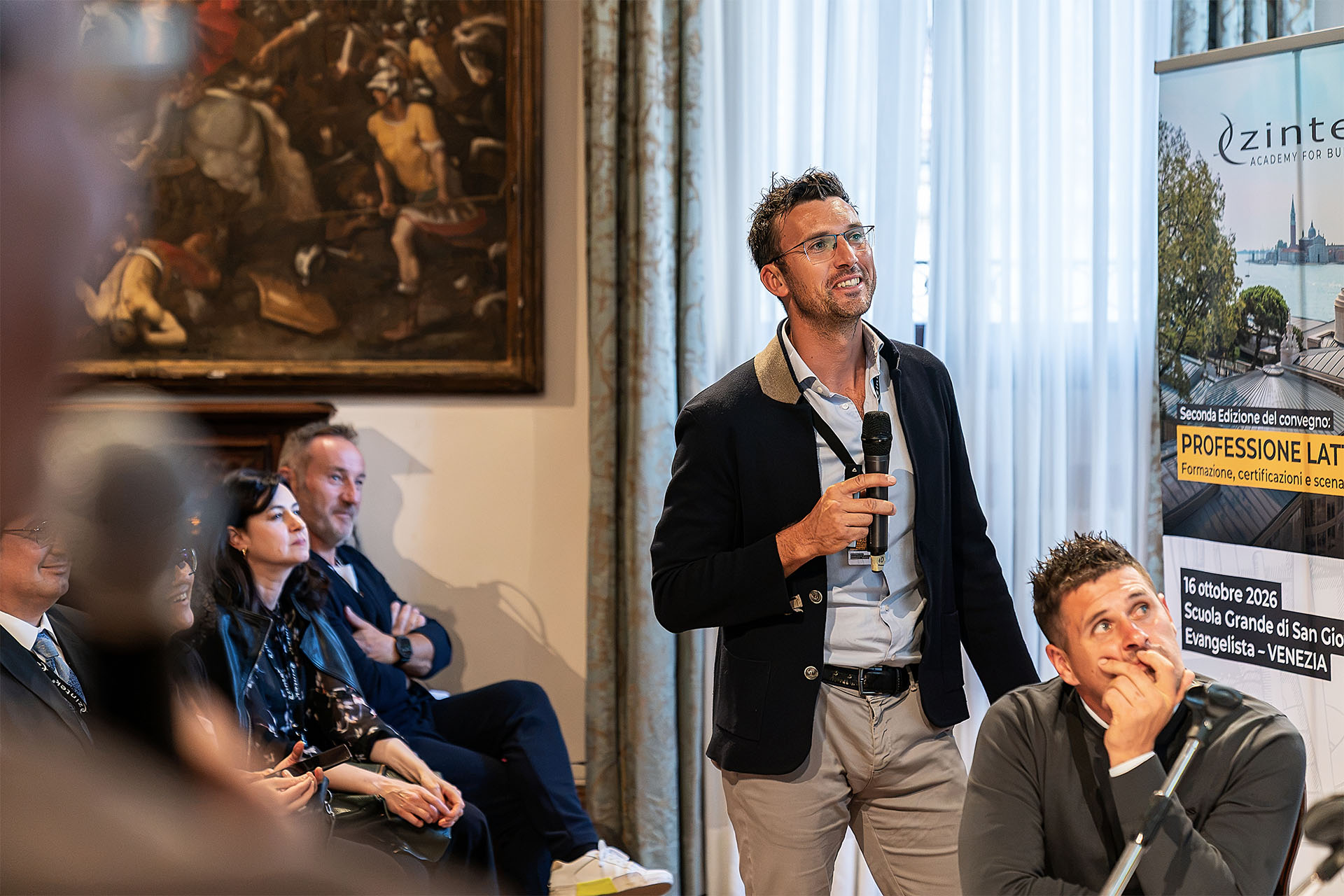
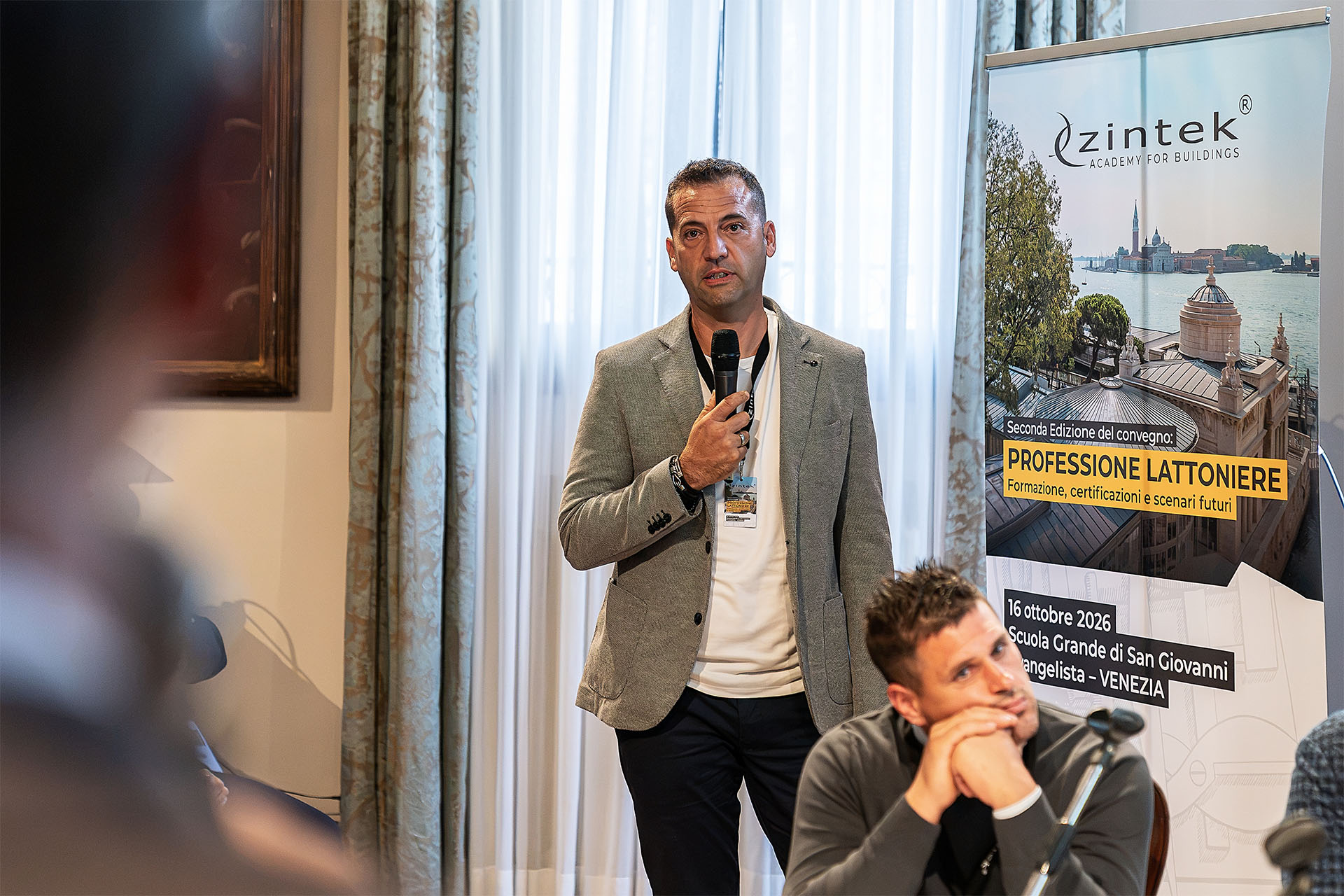
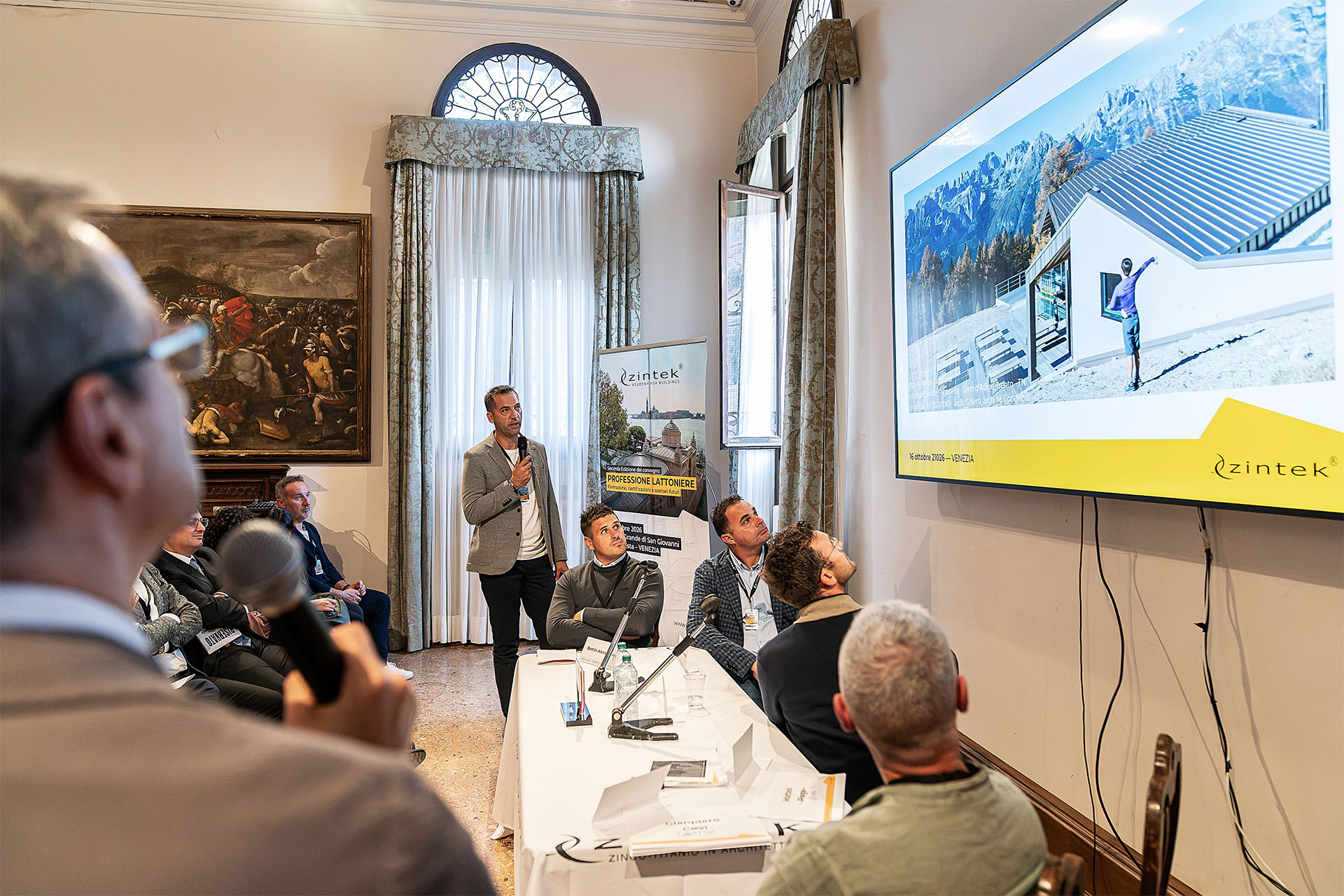
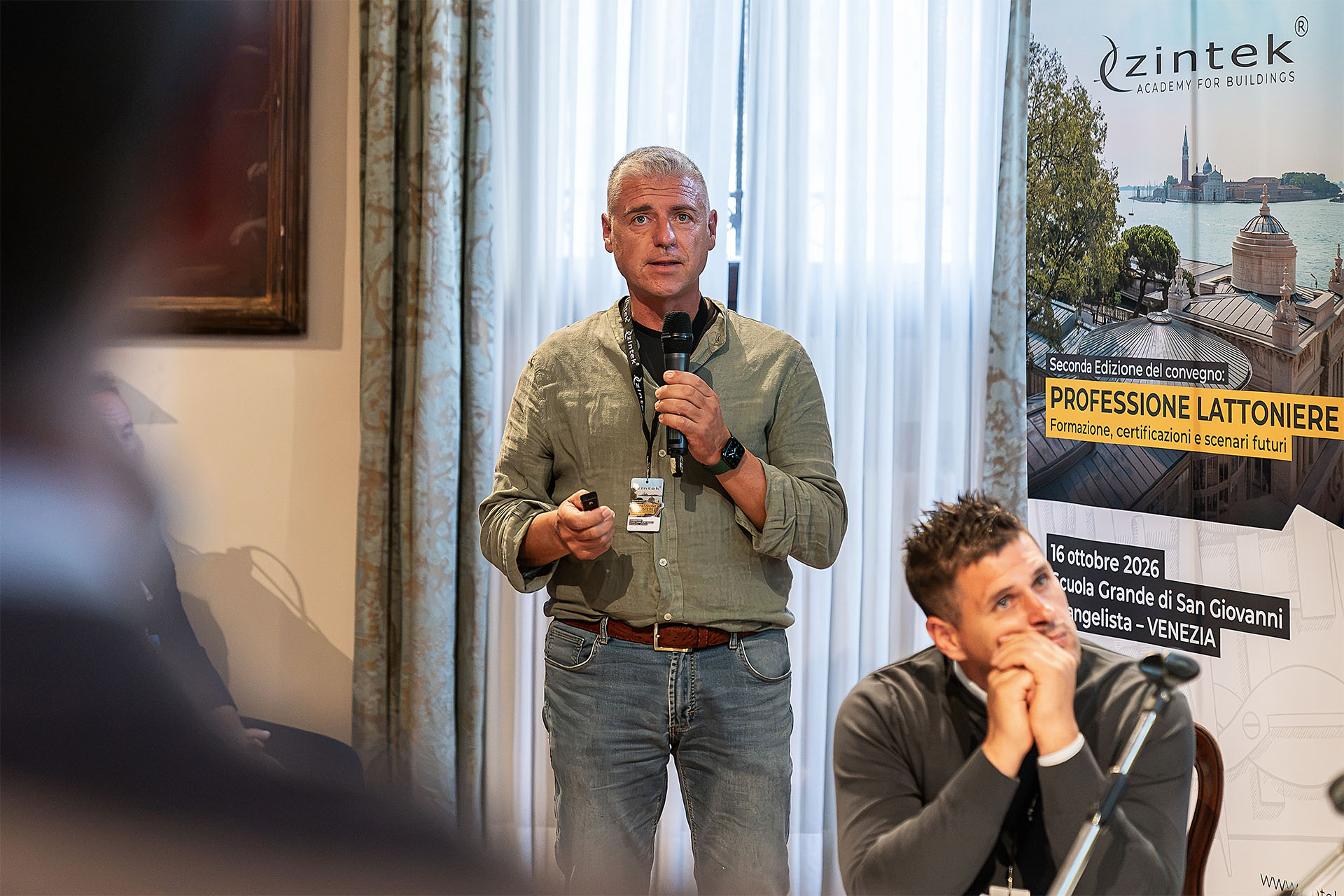
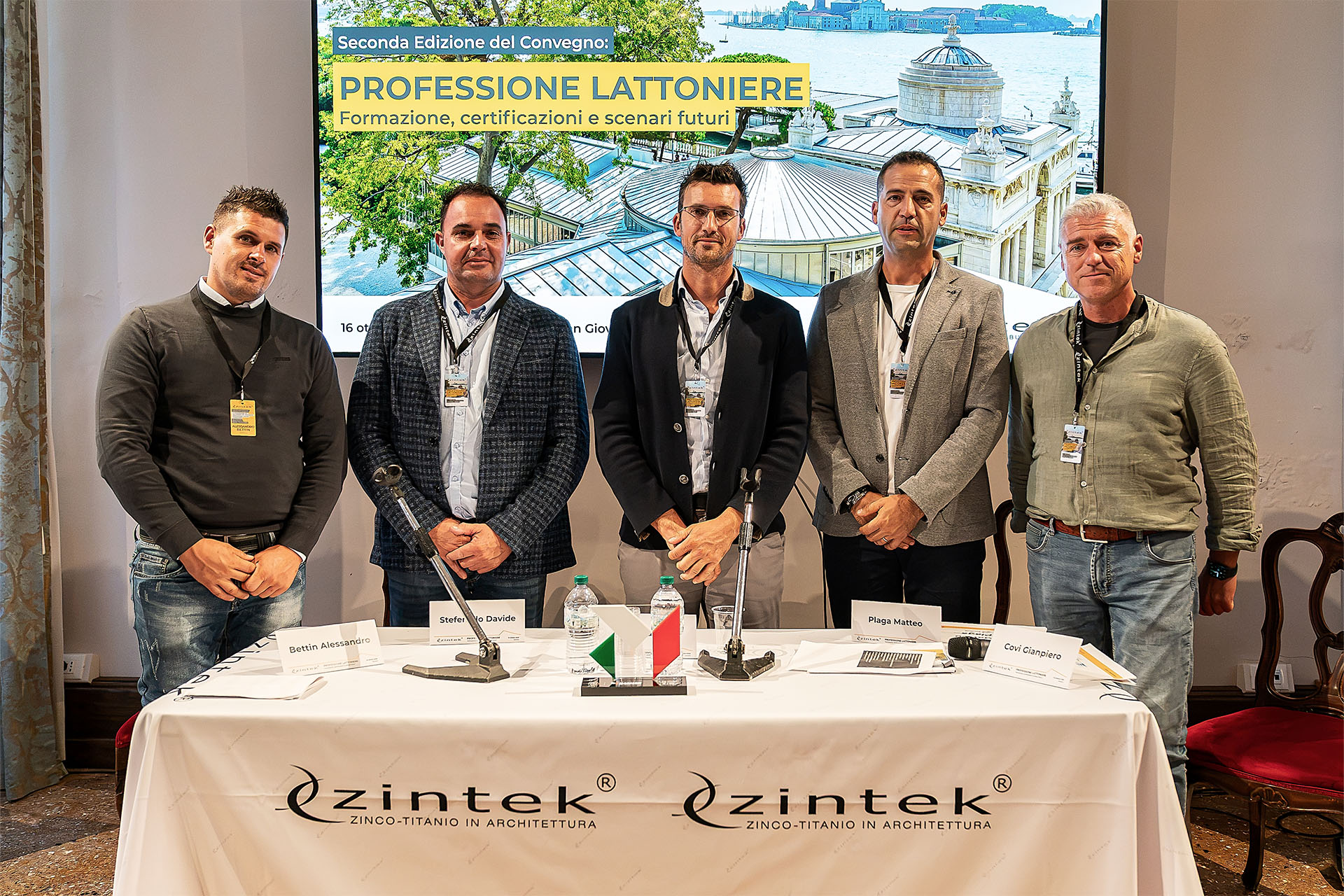
The round table placed the direct experience of five sheet metal businesses at the heart of the event, through stories of growth, generational handovers, and complex building sites.
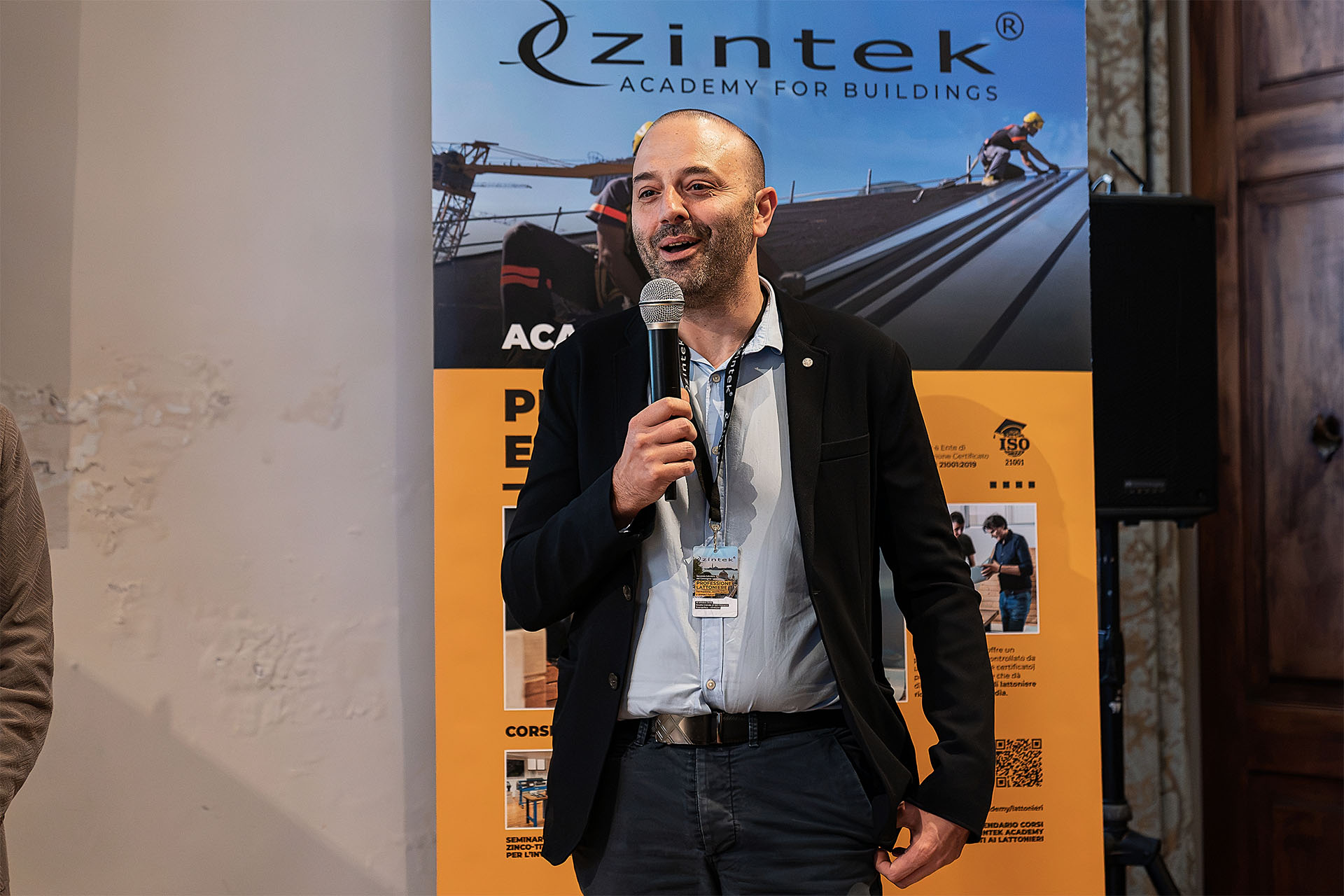
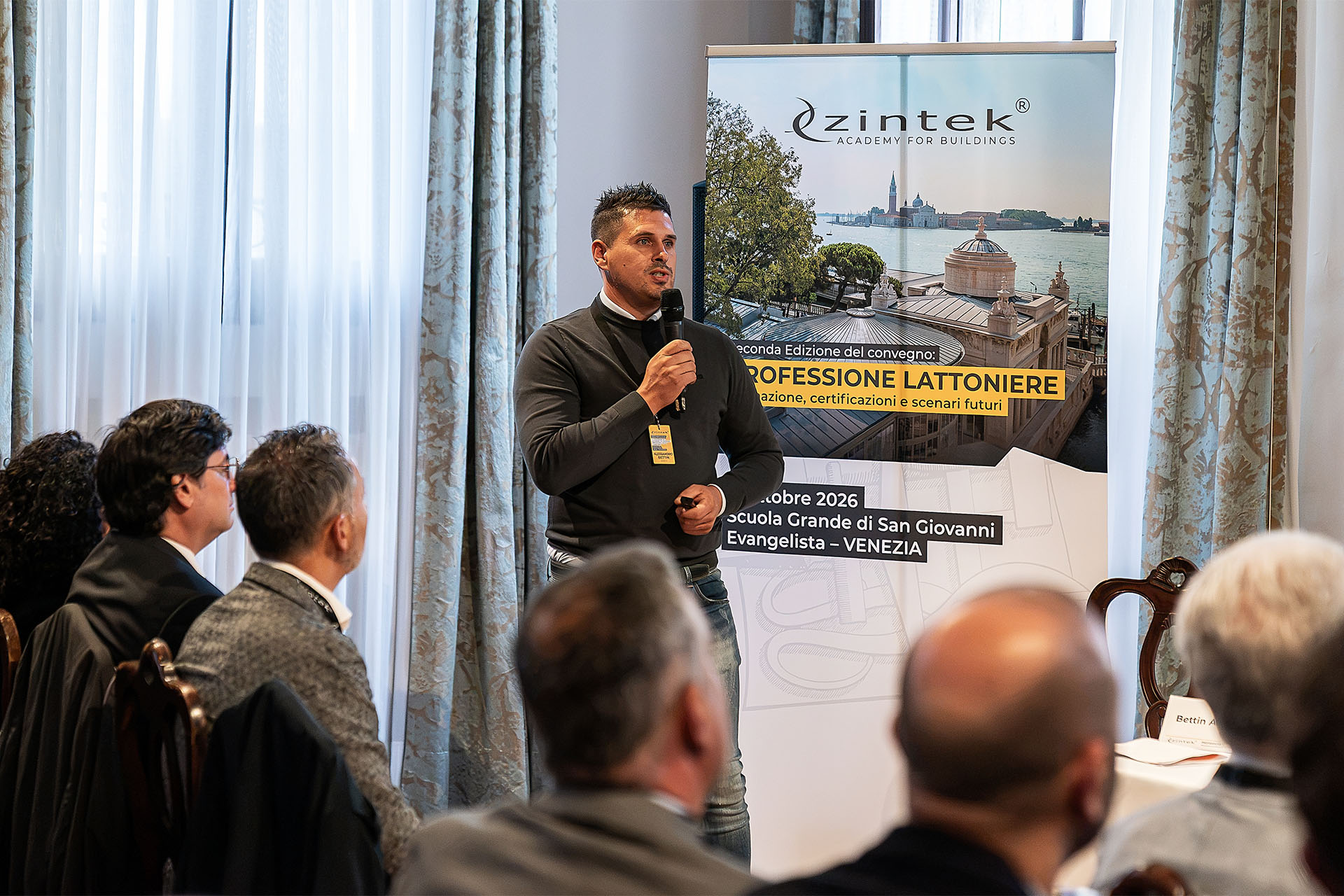
Alessandro Bettin of 2B, Ceggia (Venice), talked about the work he shares with his brother and the passion inherited from his father, who has now reached fifty years in the sector. He then presented the design and construction features of the roof of the Venice Heritage Tower in Venice Porto Marghera, completed by the company around eighteen years ago, when he was at the start of his career, as well as a new project the company is currently working on in the province of Venice. He also spoke positively of the training he completed at the Zintek Academy, praising the expertise of the instructors and the spirit of exchange.
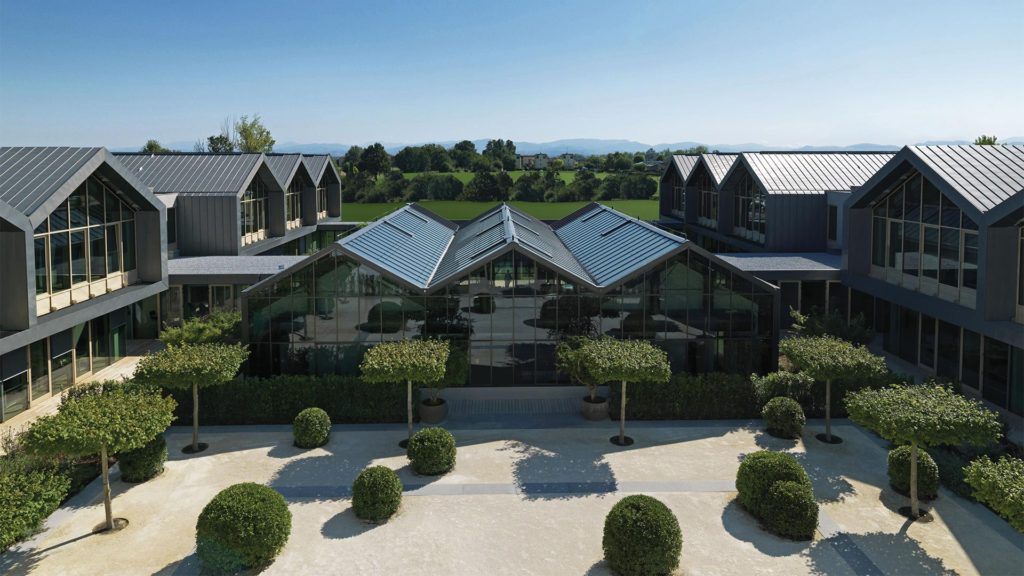
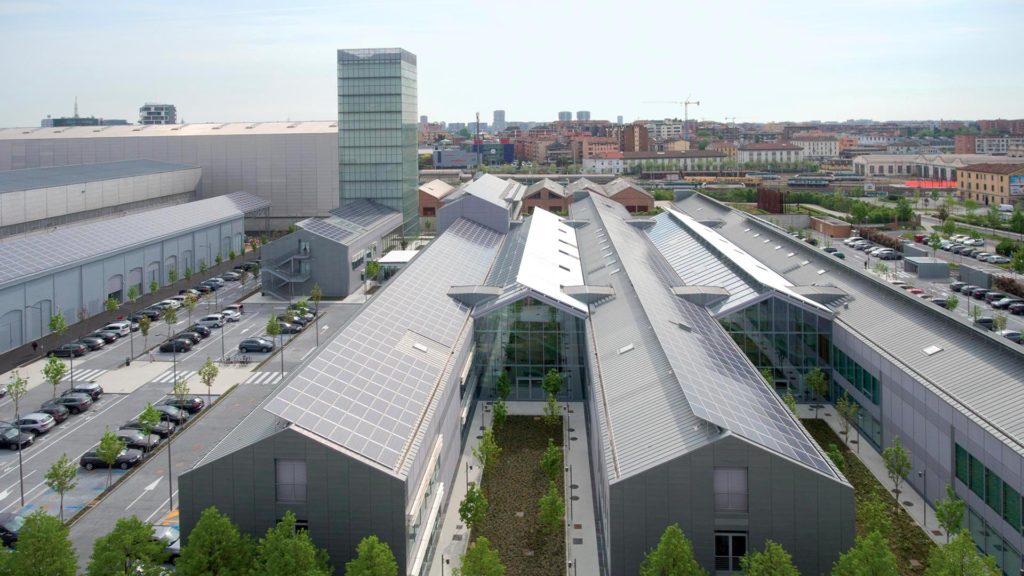
Davide Stefenello of Veneta Lattonerie, Torre di Mosto (Venice), retraced the founding of the business and its evolution from a small village firm into a success story. With two sites and a palmarès of nationally significant contracts, over the past twenty years the company has established itself as one of the most interesting players in the sector. Among the many projects completed, he presented the Prysmian headquarters in Milan and an ongoing project for a prestigious hotel in the Venice area.
Damiano Rova of Rova Lattonerie, Cappella Maggiore (Treviso), presented the company he inherited from his father through two projects: a private home in the province of Treviso and the cladding of the Lattebusche store in Longarone. His talk highlighted the importance of controlling geometries and of design support, including through digital tools.
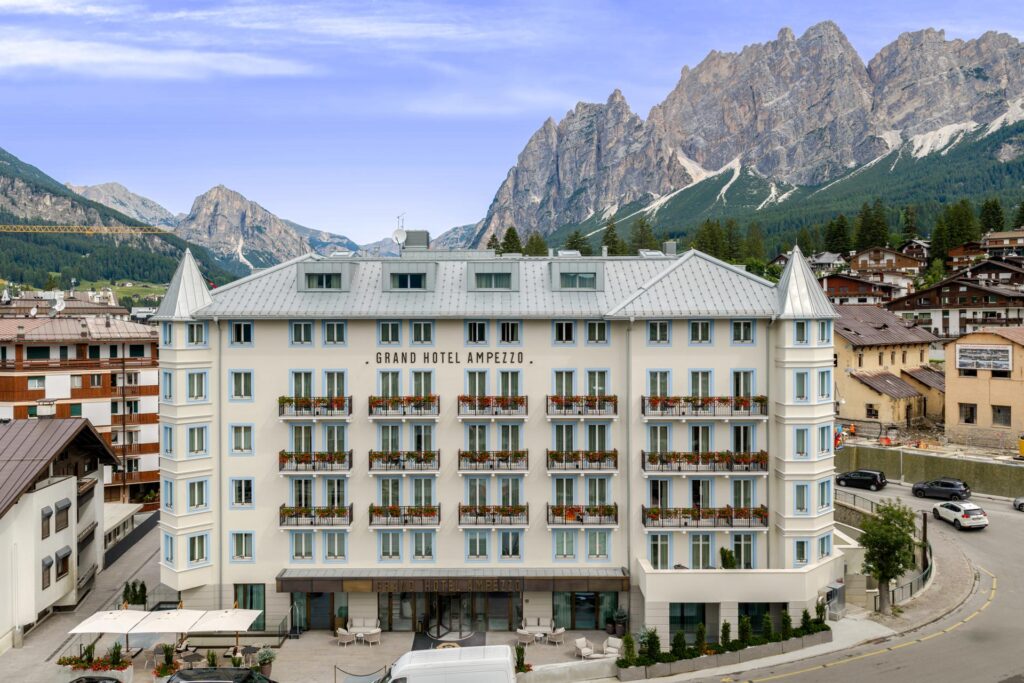
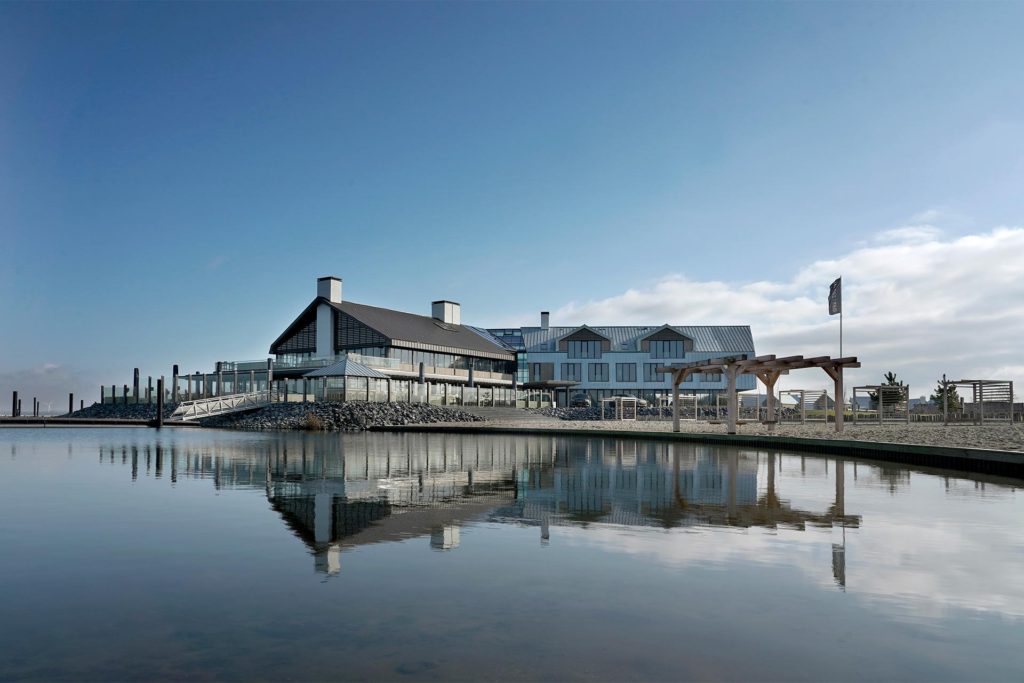
Matteo Plaga of Plaga Lattonerie, Salter (Trento), shared the story of a family business that has been working with sheet metal since 1934, passed down from his grandfather to his father and then to his generation. The project at Malga Zambana, a mountain hut on Monte Paganella, provided an opportunity to describe the value of working with Zintek to resolve construction details.
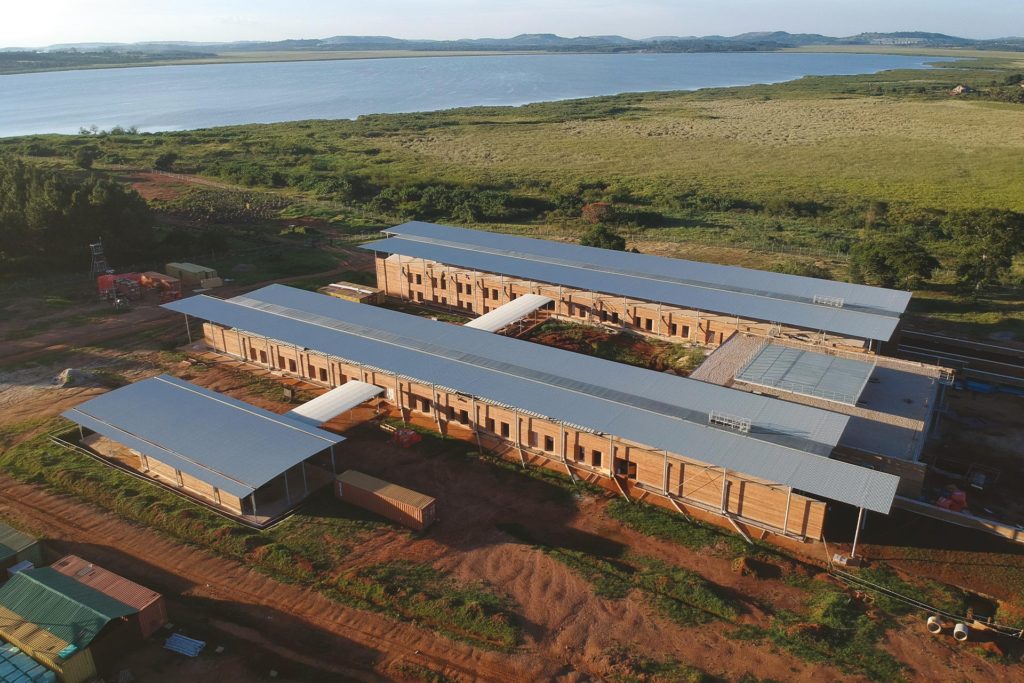
Gianpiero Covi of Lamtex, Cles (Trento), lastly described the work for EMERGENCY’s Children’s Surgical Hospital in Entebbe, Uganda, designed by Renzo Piano. On top of the technical and climatic difficulties came the personal challenges of a building site far from home. Preparing the sheet metal components in the workshop and then shipping them in containers required careful preliminary work, carried out with Zintek’s support.
Commenting on the testimonies, Imperadori stressed the need to safeguard this wealth of knowledge, which grows through experience, collaboration, and transmission between generations.
Remembering Michele Mistro
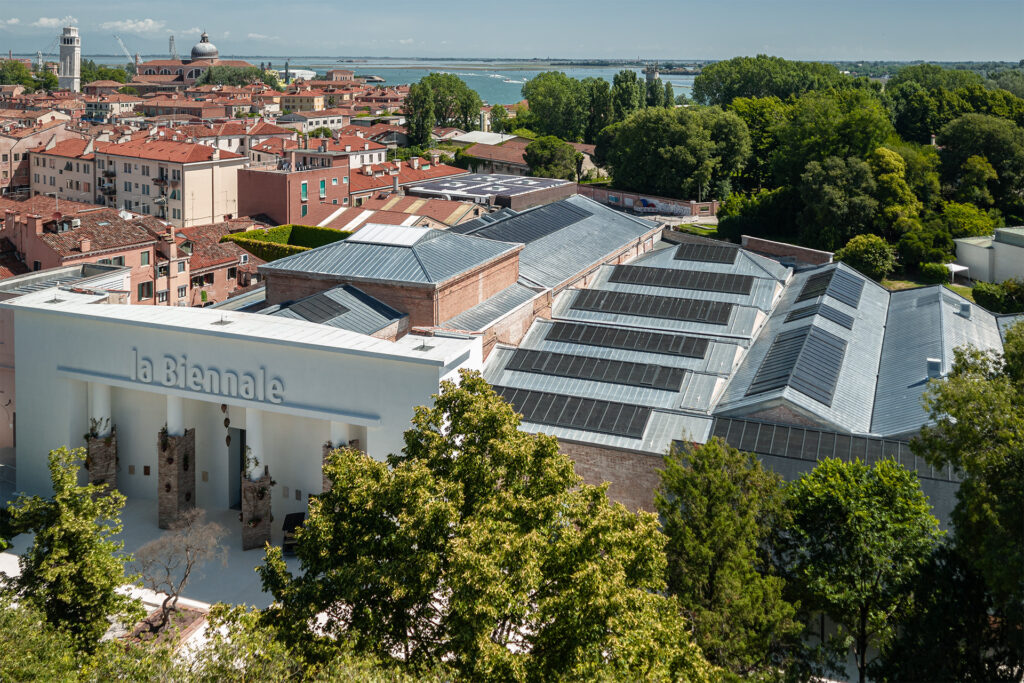
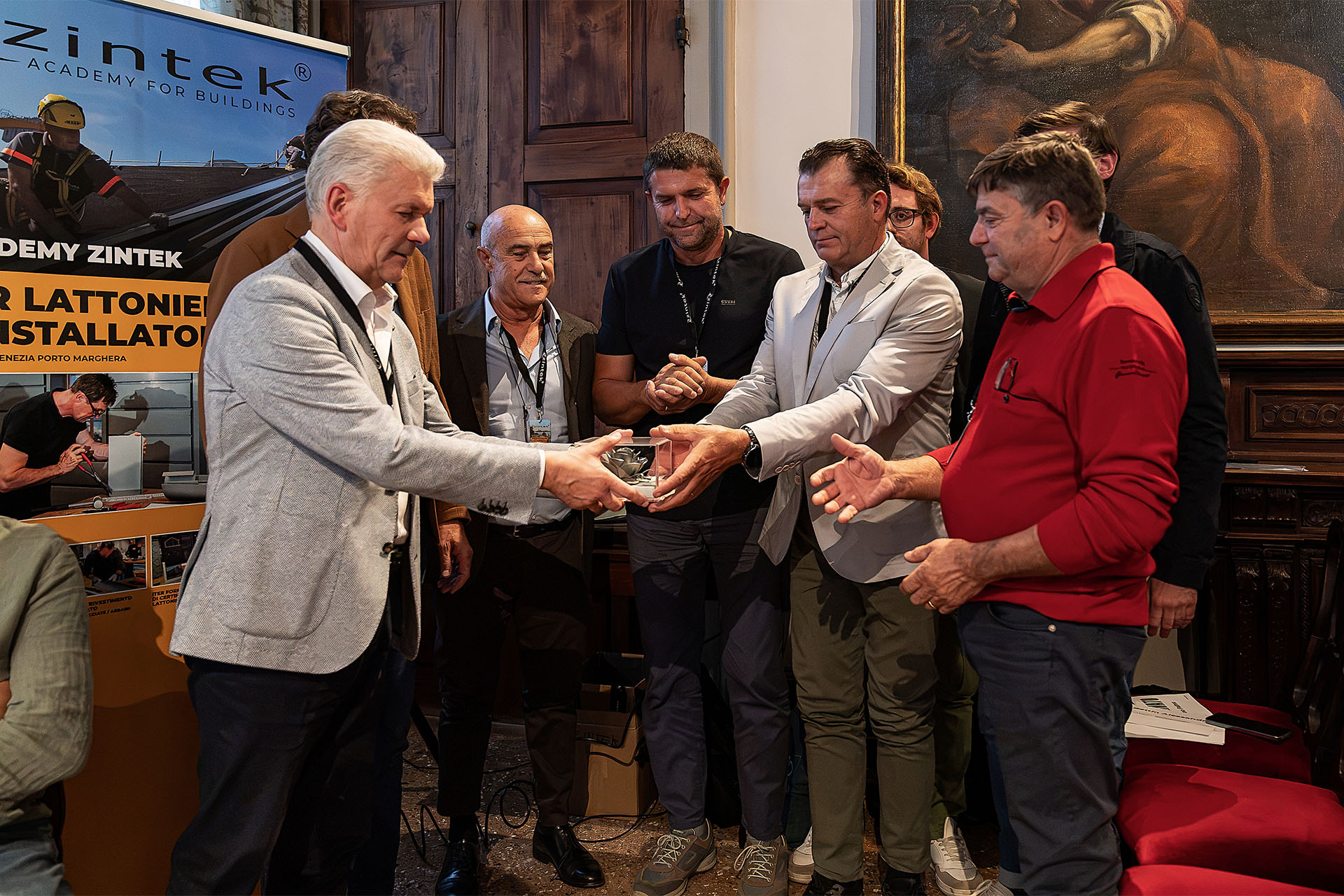
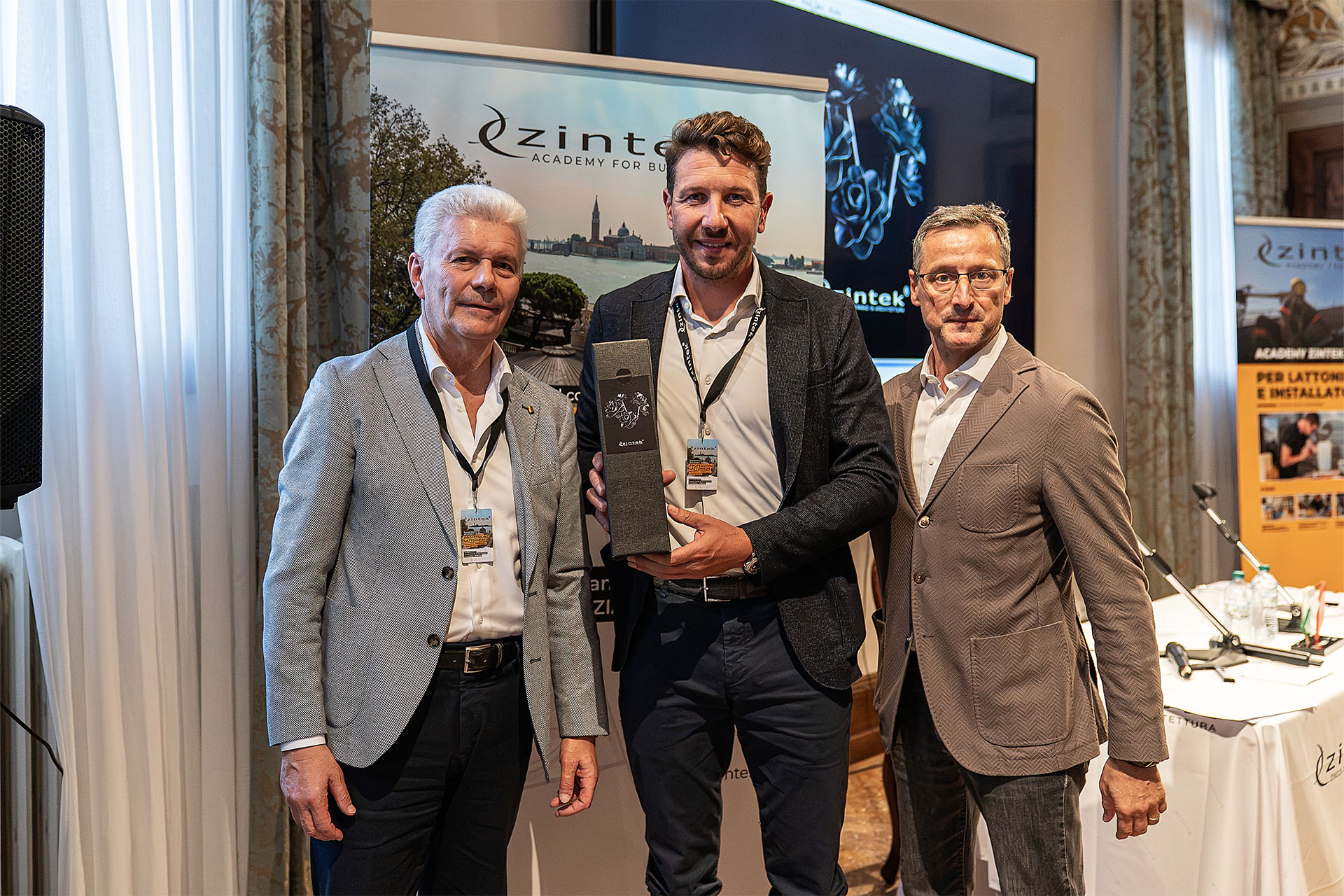
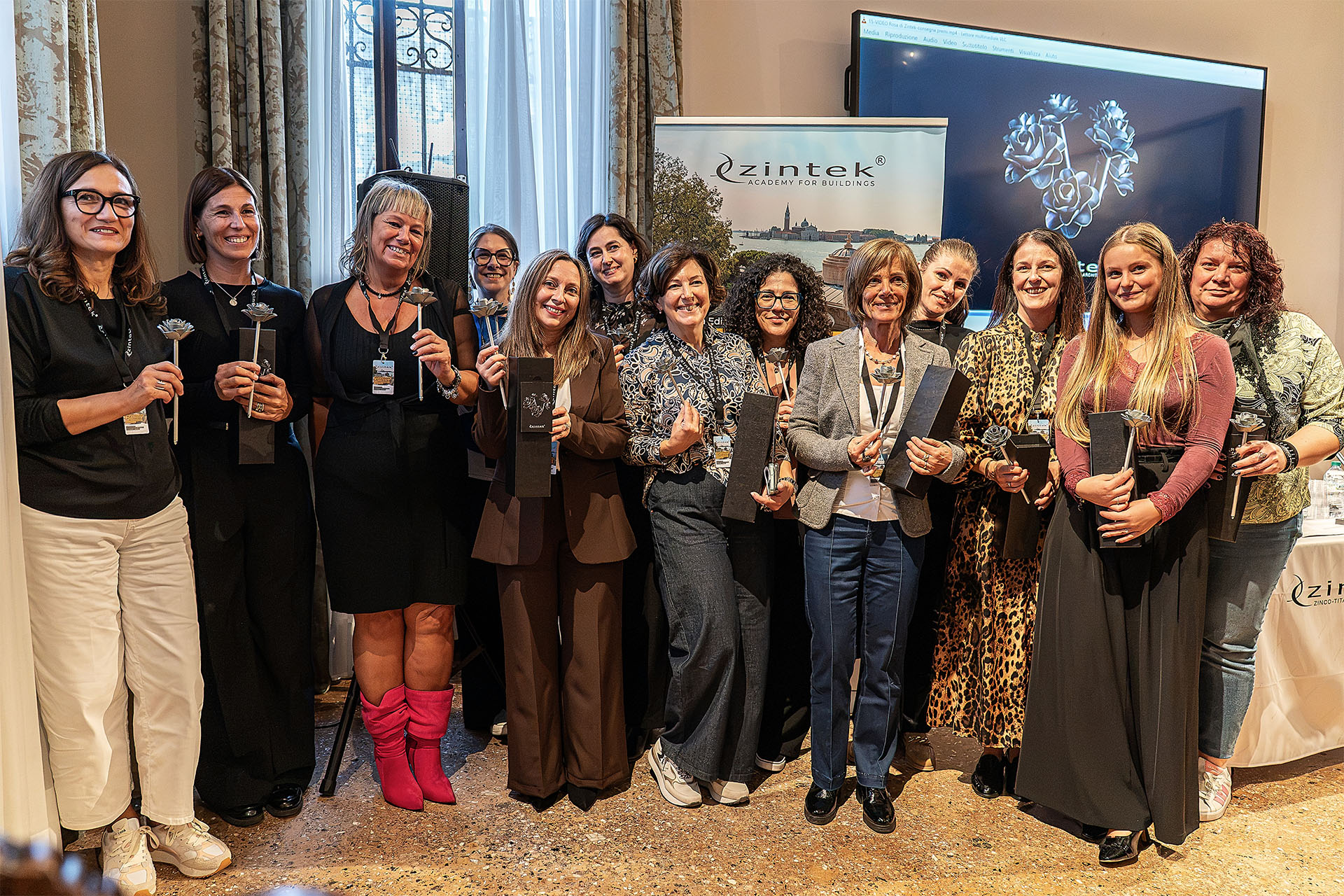
After the round table, the conference set aside a moment to remember sheet metal worker Michele Mistro, who passed away last year. A video about the renovation of the Central Pavilion of the Venice Biennale, on which he had worked, accompanied the tribute, followed by the presentation of a display case containing a zintek® rose. The emotion in the room conveyed the strength of the personal bonds that are forged through work and that endure beyond professional collaboration.
Quality of training and certification of skills
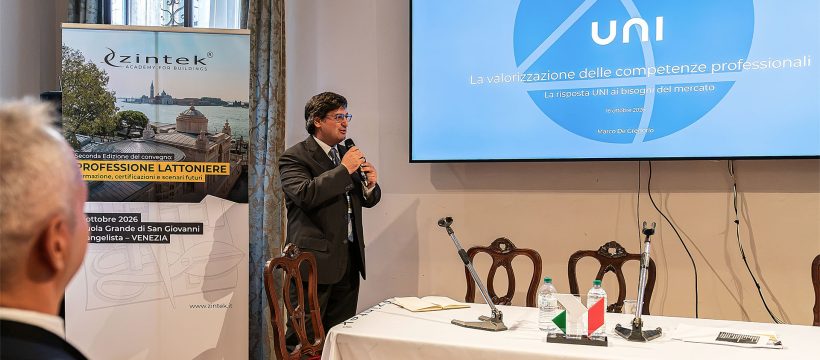
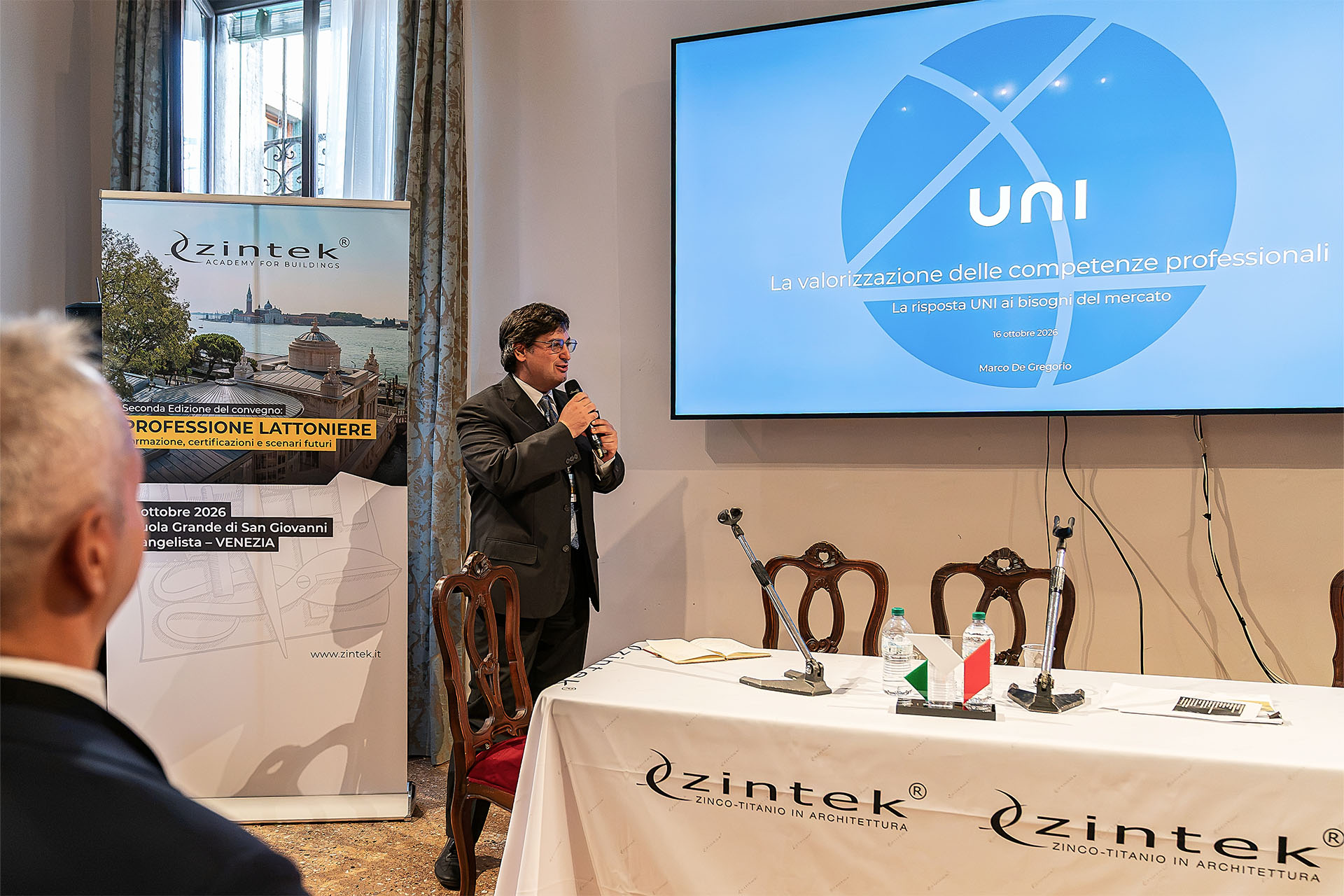
The programme continued with Marco De Gregorio of the Italian Standards Body (UNI), who outlined the drafting process for the new reference practice setting out the minimum requirements for delivering training courses for building sheet metal workers. At the time of the conference, the document was in its final stage, with publication possibly expected in early November. The stated aim is to provide a shared benchmark for the quality of training pathways, from course design to the requirements for organizations and for the spaces used for theoretical and practical activities.
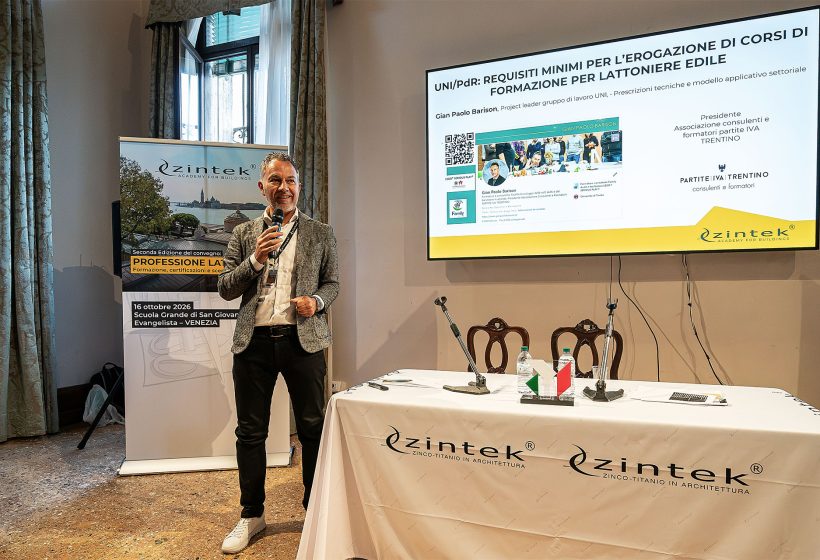
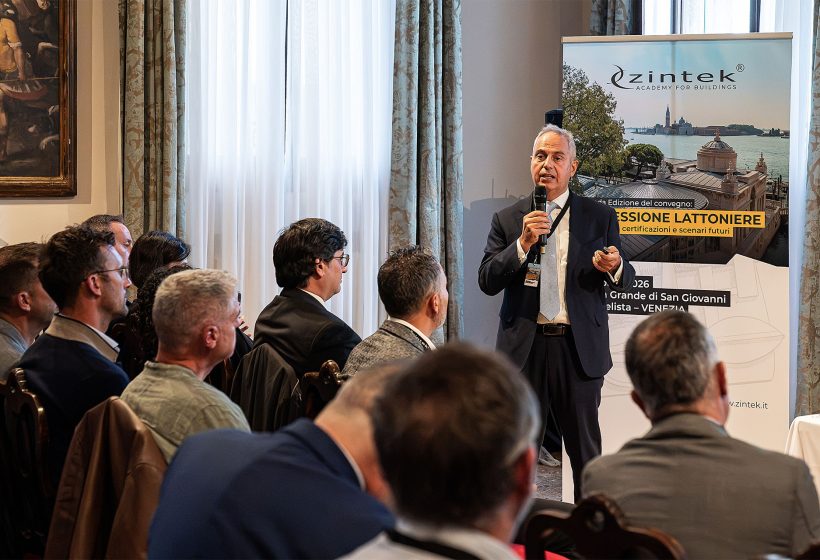
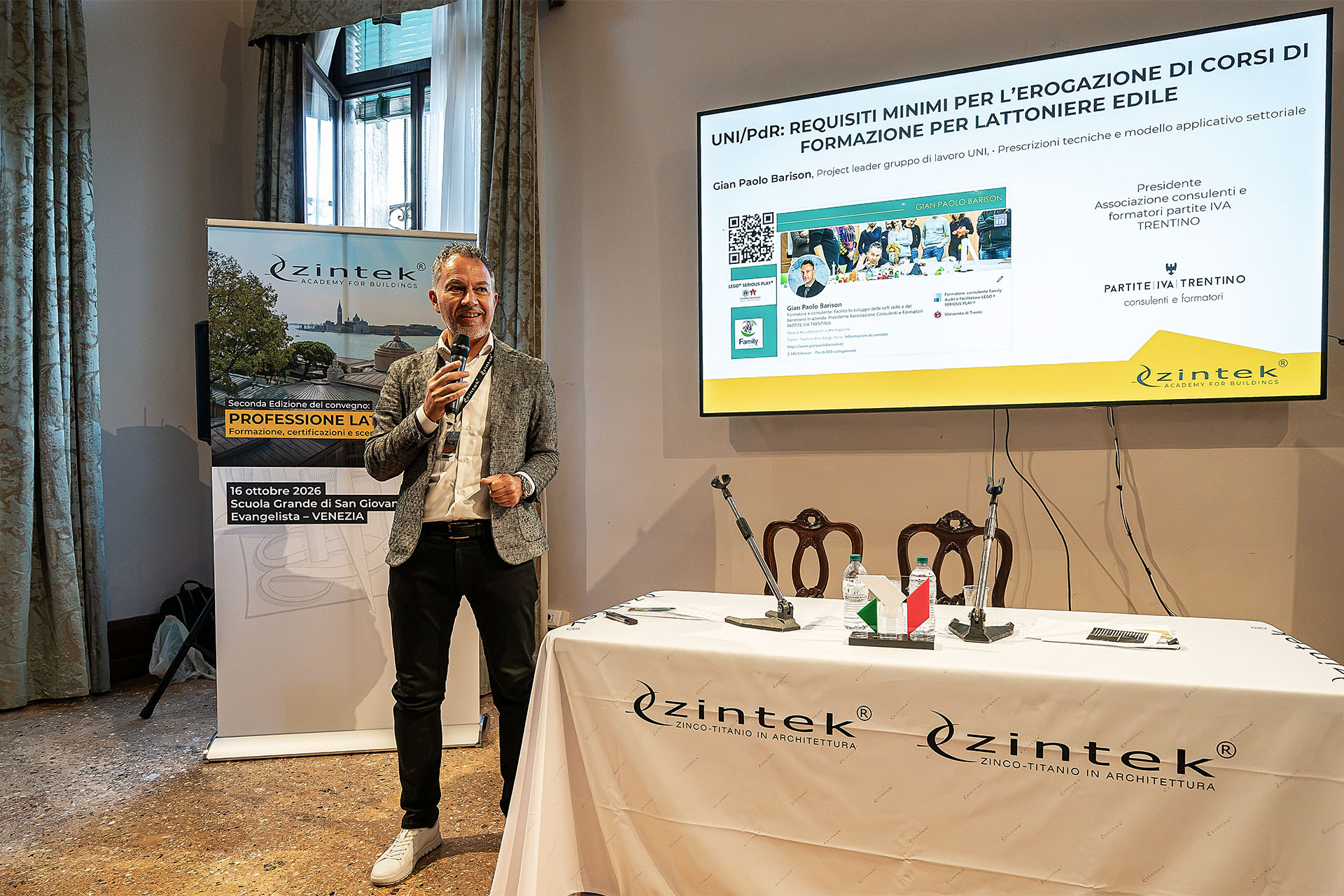
Gian Paolo Barison, project leader of the UNI working group and President of the Associazione formatori e consulenti partite IVA Trentino, which brings together self-employed trainers and consultants, examined the role of expert instructors, workshops, and course design. He also reflected on the meaning of the event: a craft is passed on thanks to the commitment of a community made up of businesses, professionals, and people who care about the sector.
Antonio Bianco, Director of ABICert, then addressed the value of certification as a tool for making sheet metal workers’ skills recognizable on the market. He recalled the pathway developed with Zintek and the importance of offering designers, clients, and contractors evidence of professional capabilities through third-party assessment. Training and certification were presented as complementary steps to support quality of workmanship and to recognize the value of those working in the sector.
The new licences and lifetime achievement awards
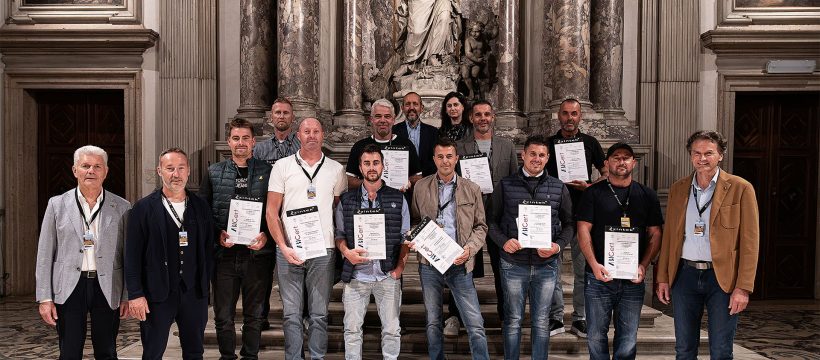
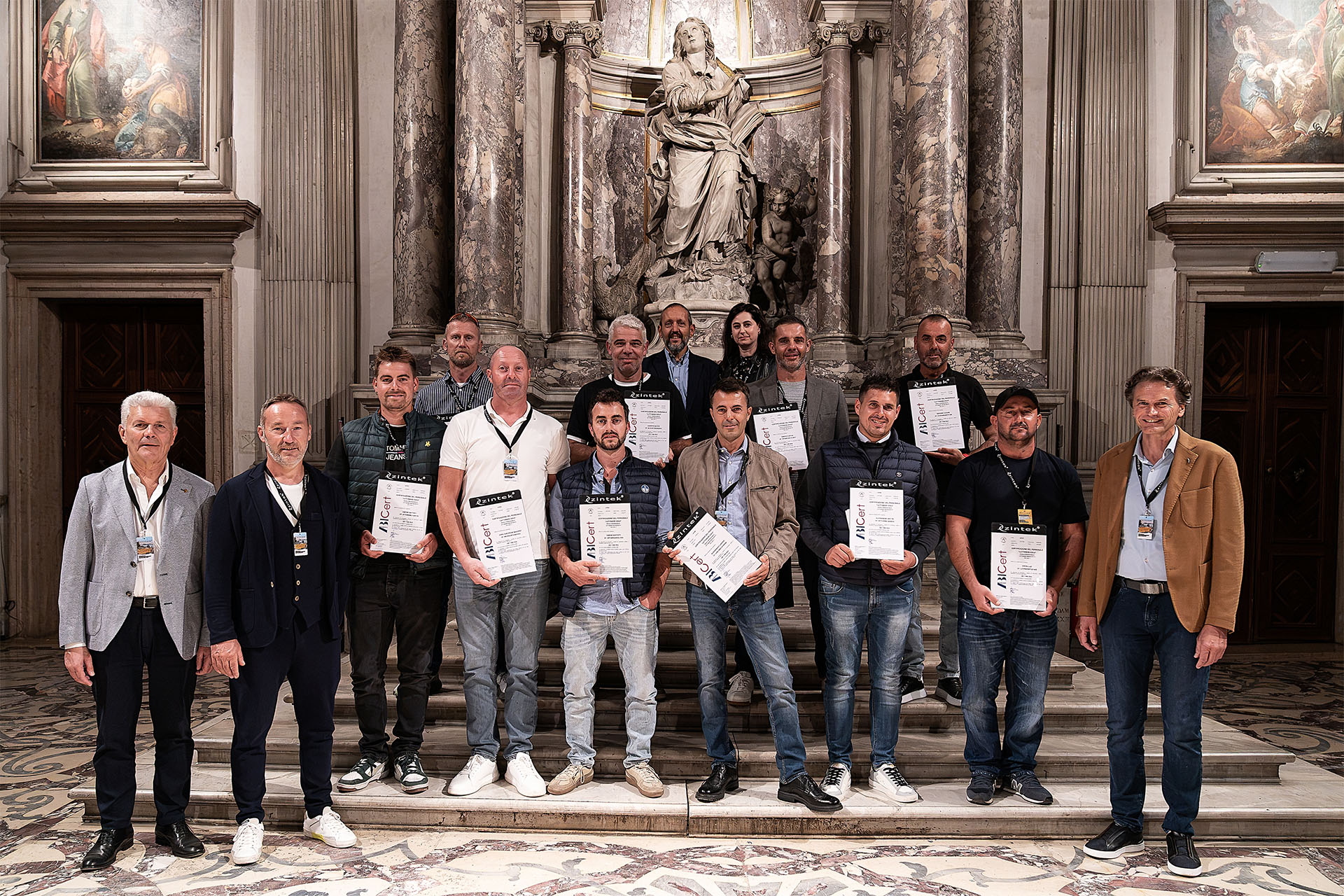
The presentation of the new UNI 11966:2024 certified sheet metal worker licences, introduced by the examiners and handed over by Zintek together with the company owners, put a concrete face to the topics discussed. The warm support of colleagues accompanied the professionals who had reached this milestone, sharing in their satisfaction.
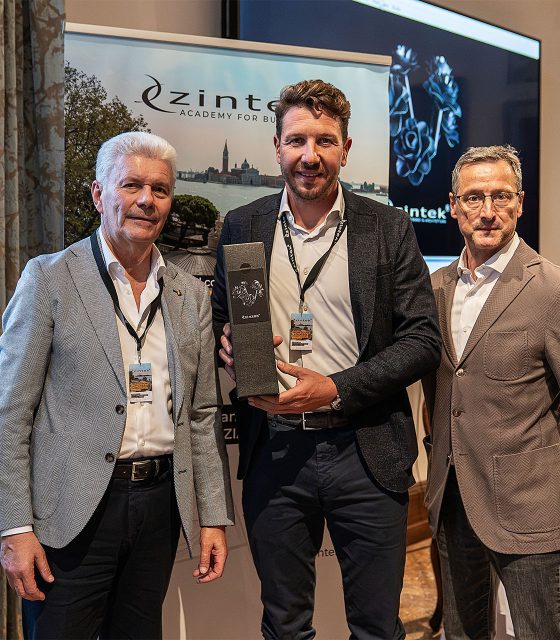
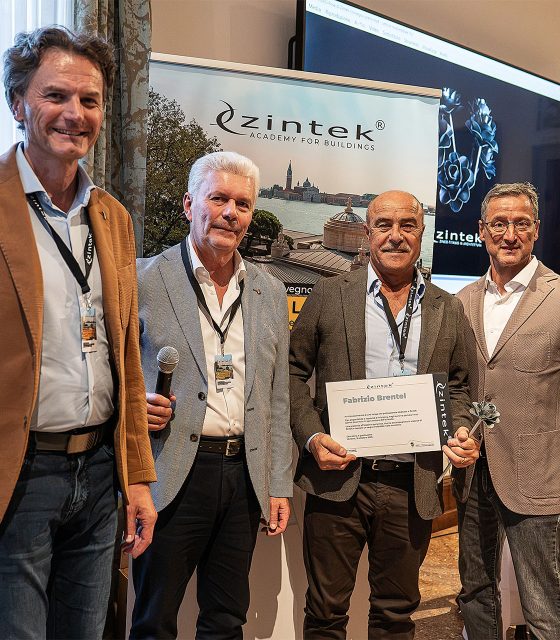
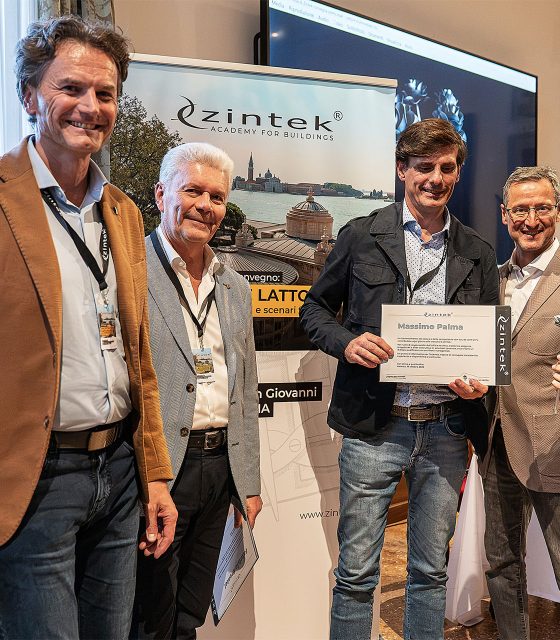
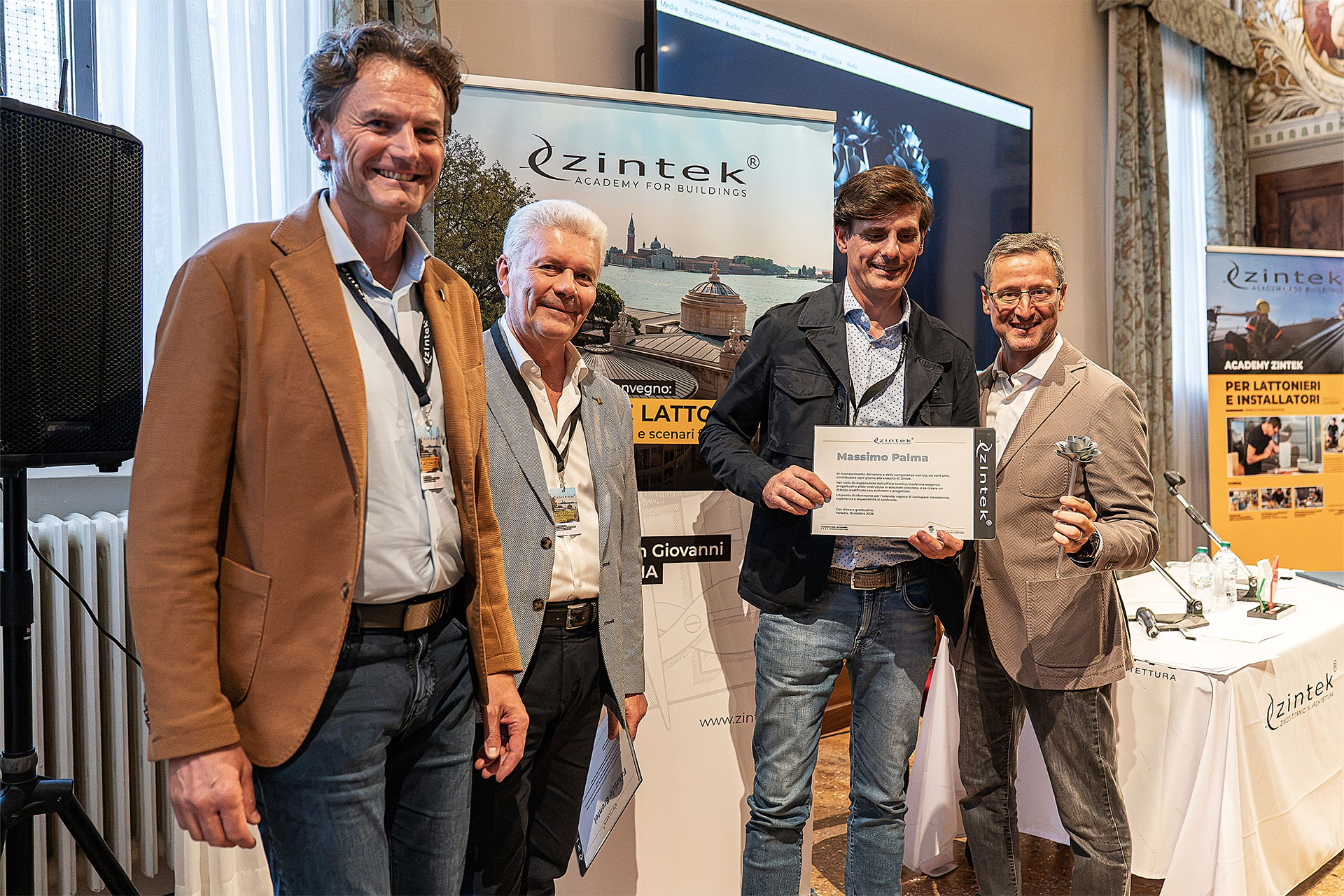
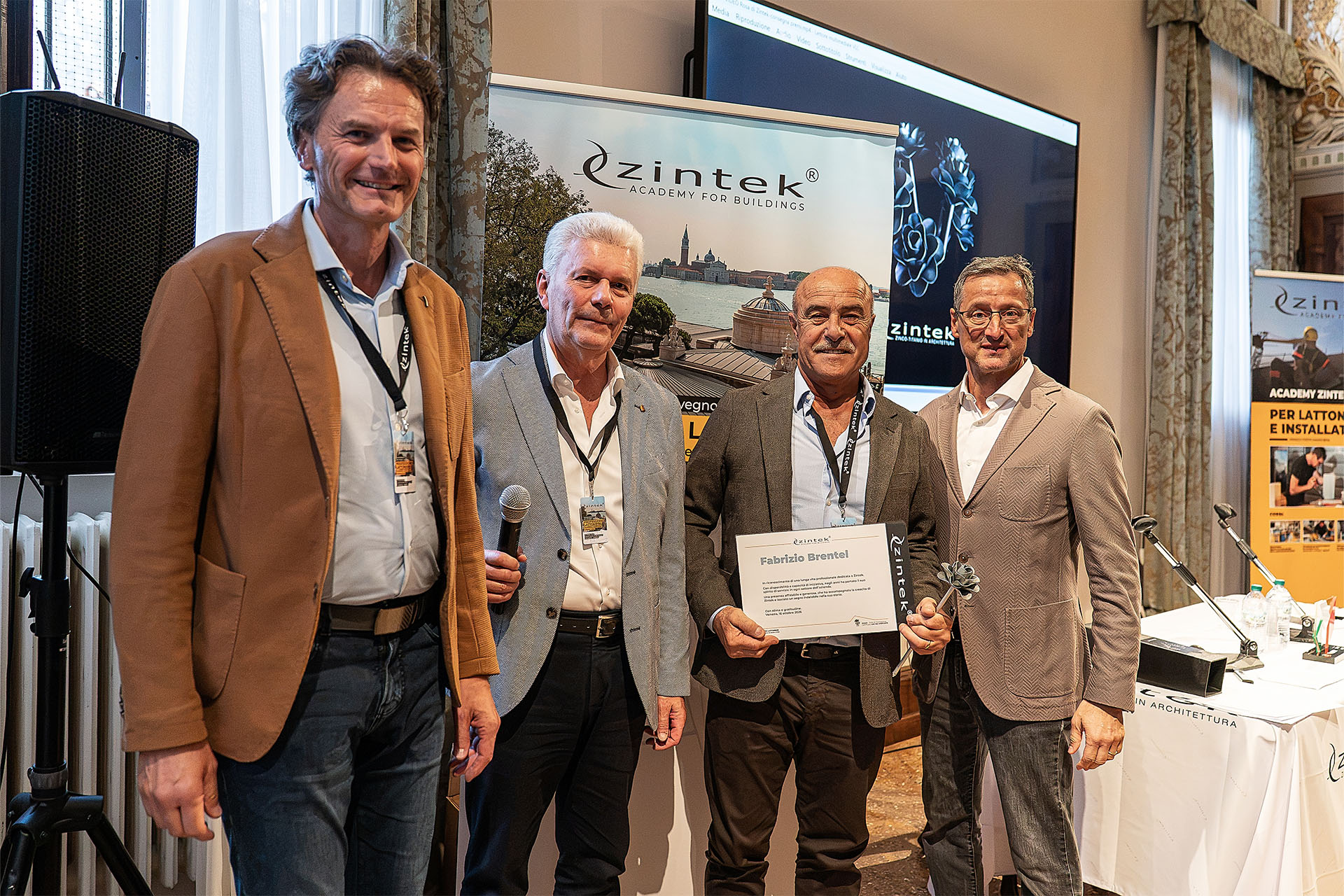
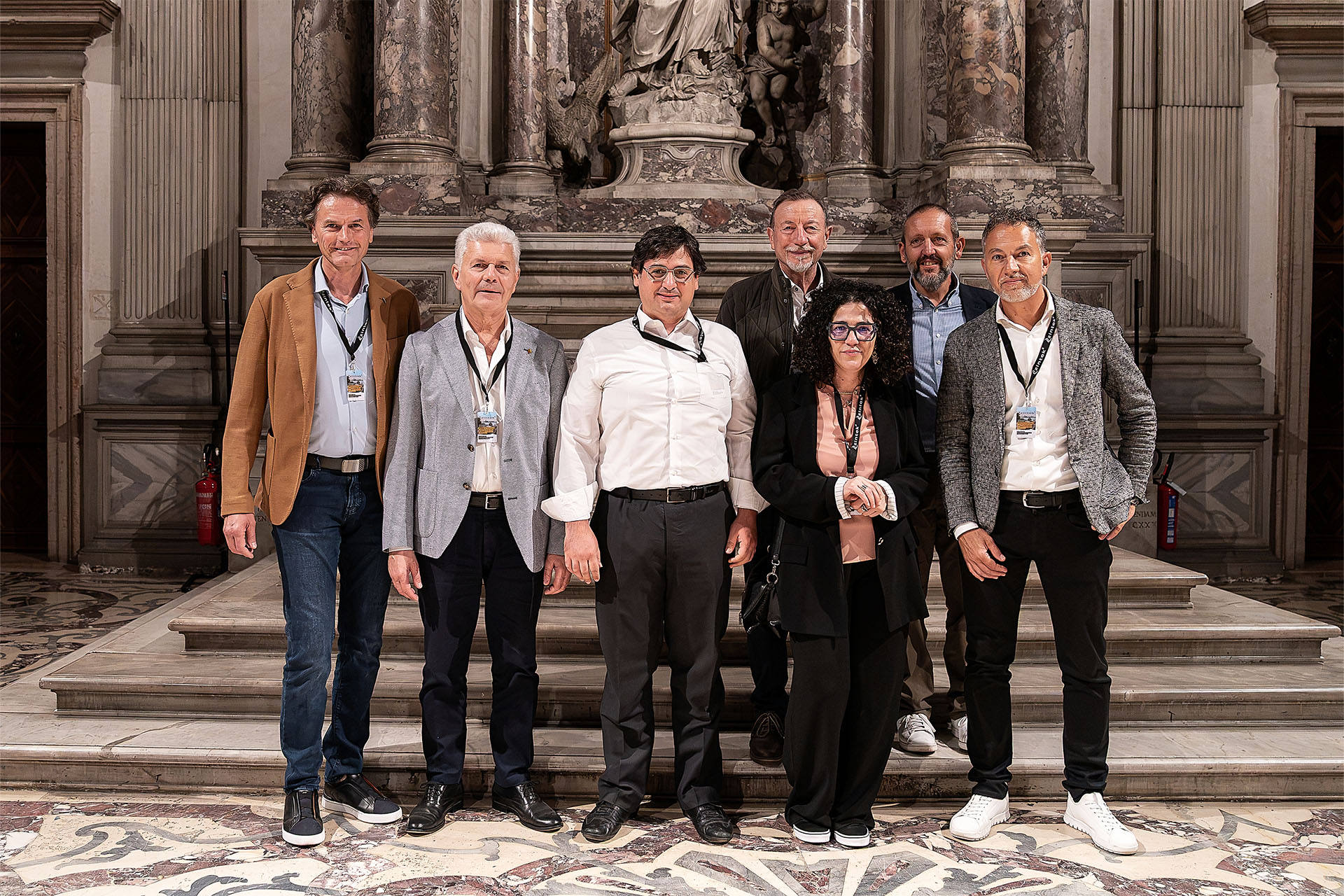
This was followed by the lifetime achievement awards to Marco Revolti, representing the second generation of the family business, now carried on by his son Francesco, and to Fabrizio Brentel and Massimo Palma for their contribution to Zintek’s history and growth. On this occasion too, the involvement of the audience underlined how much individual achievements belong to the history of a community.
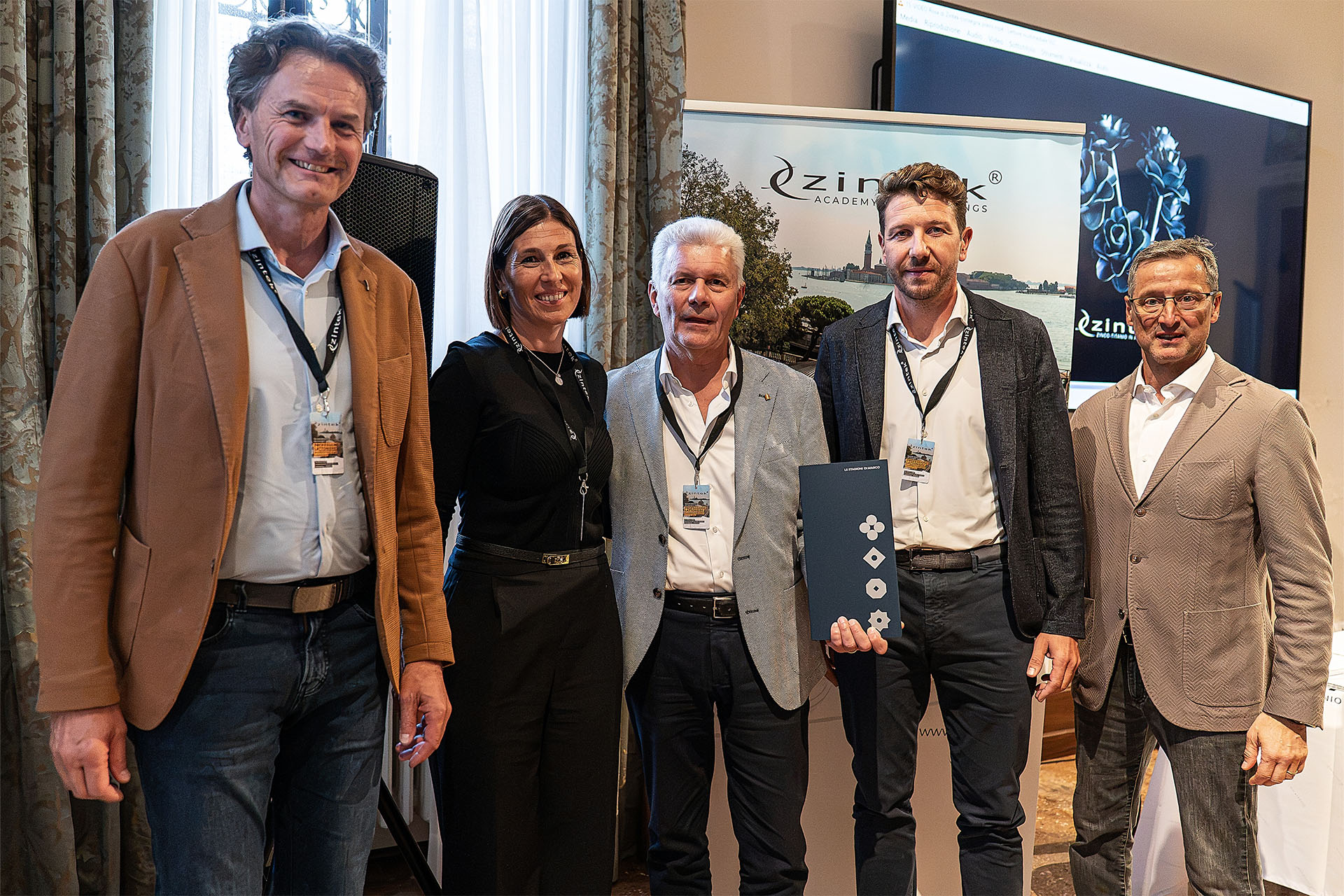
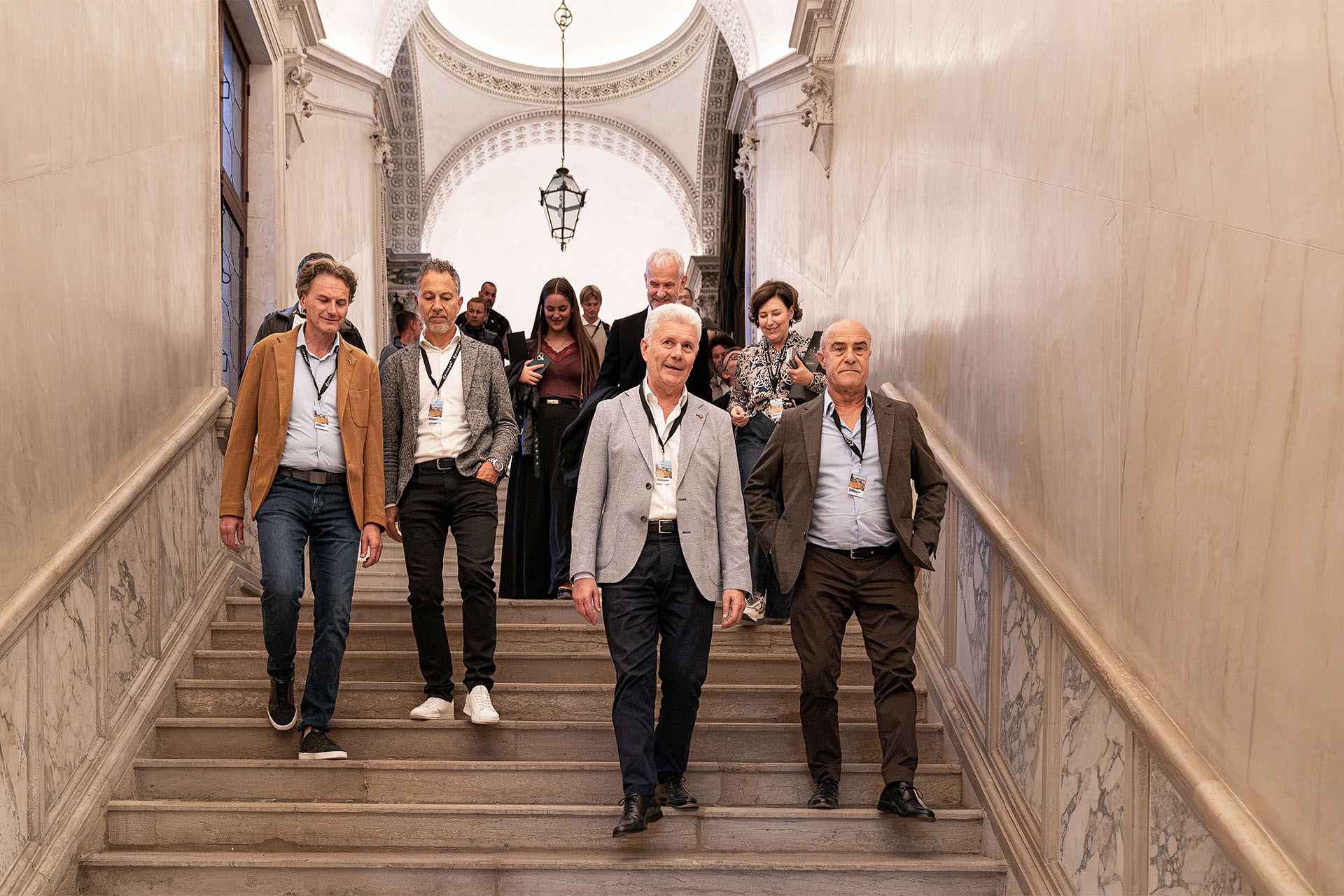
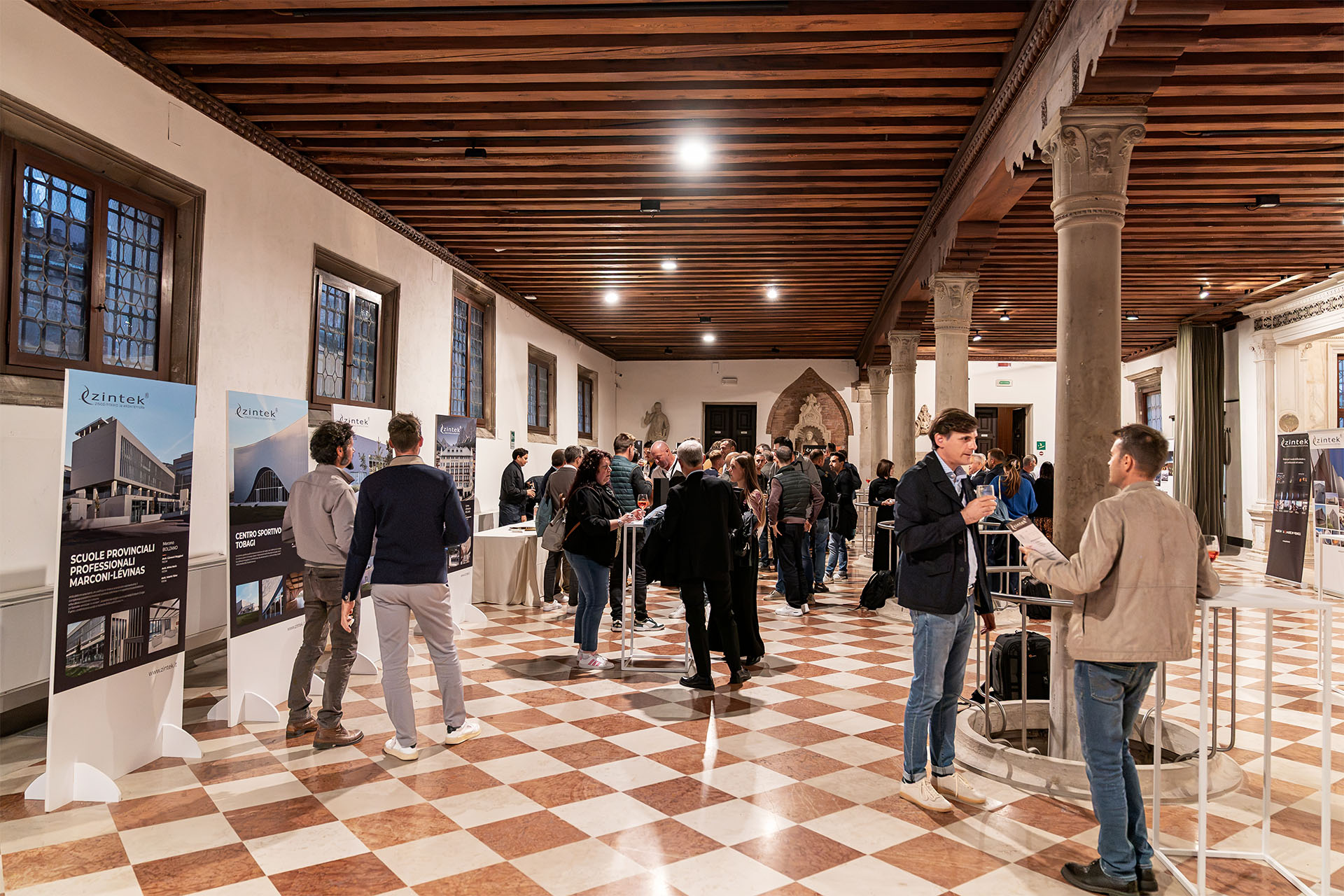
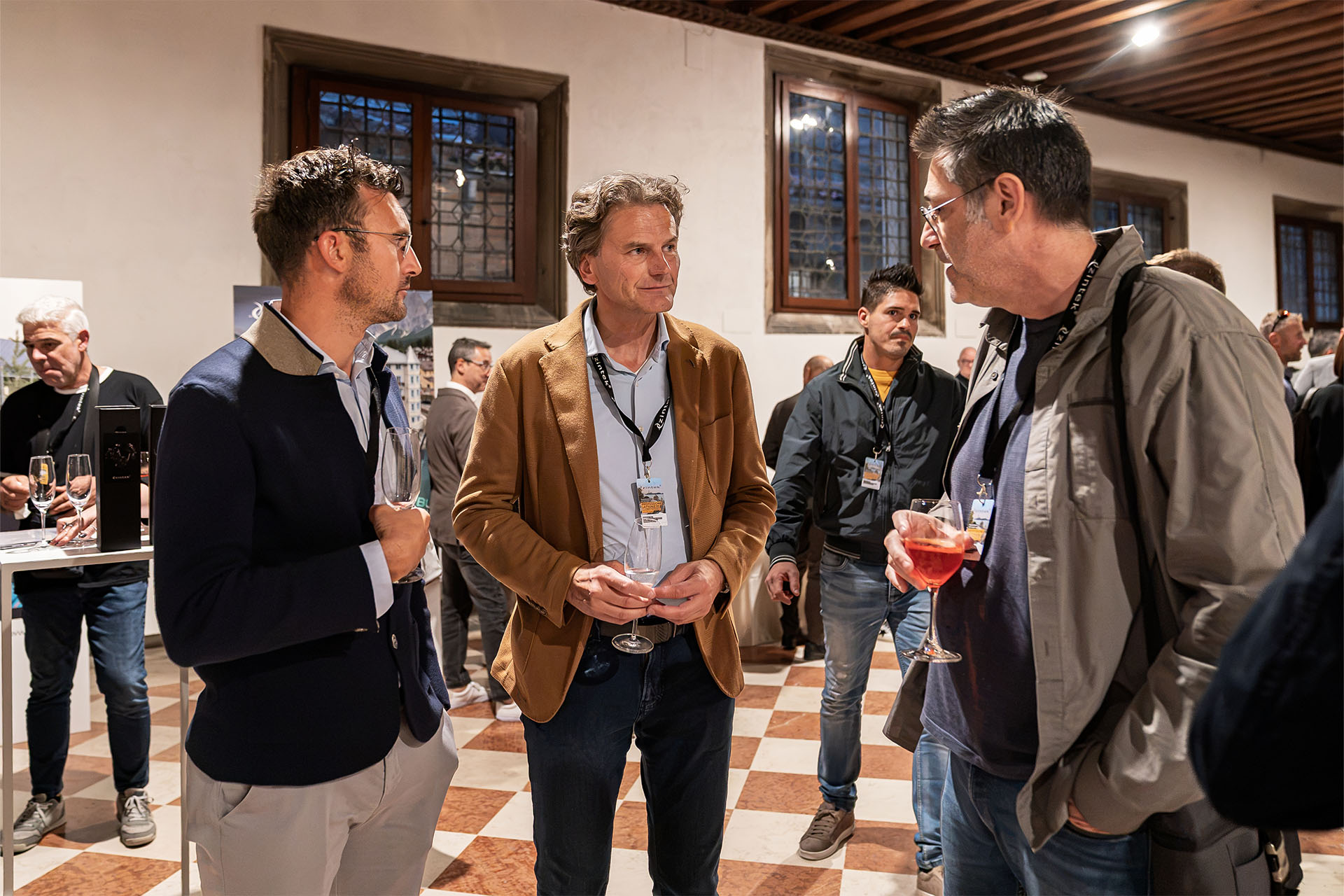
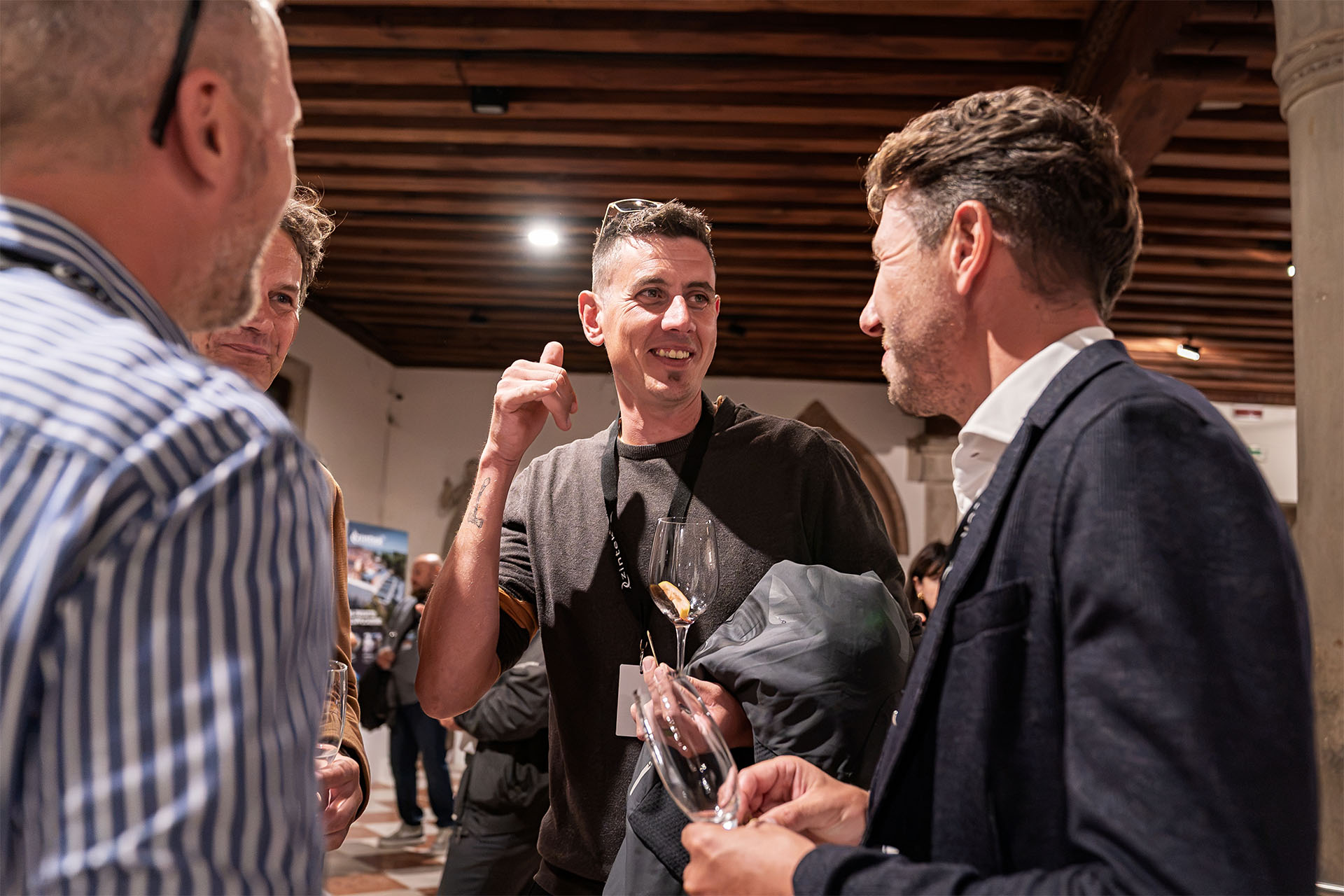
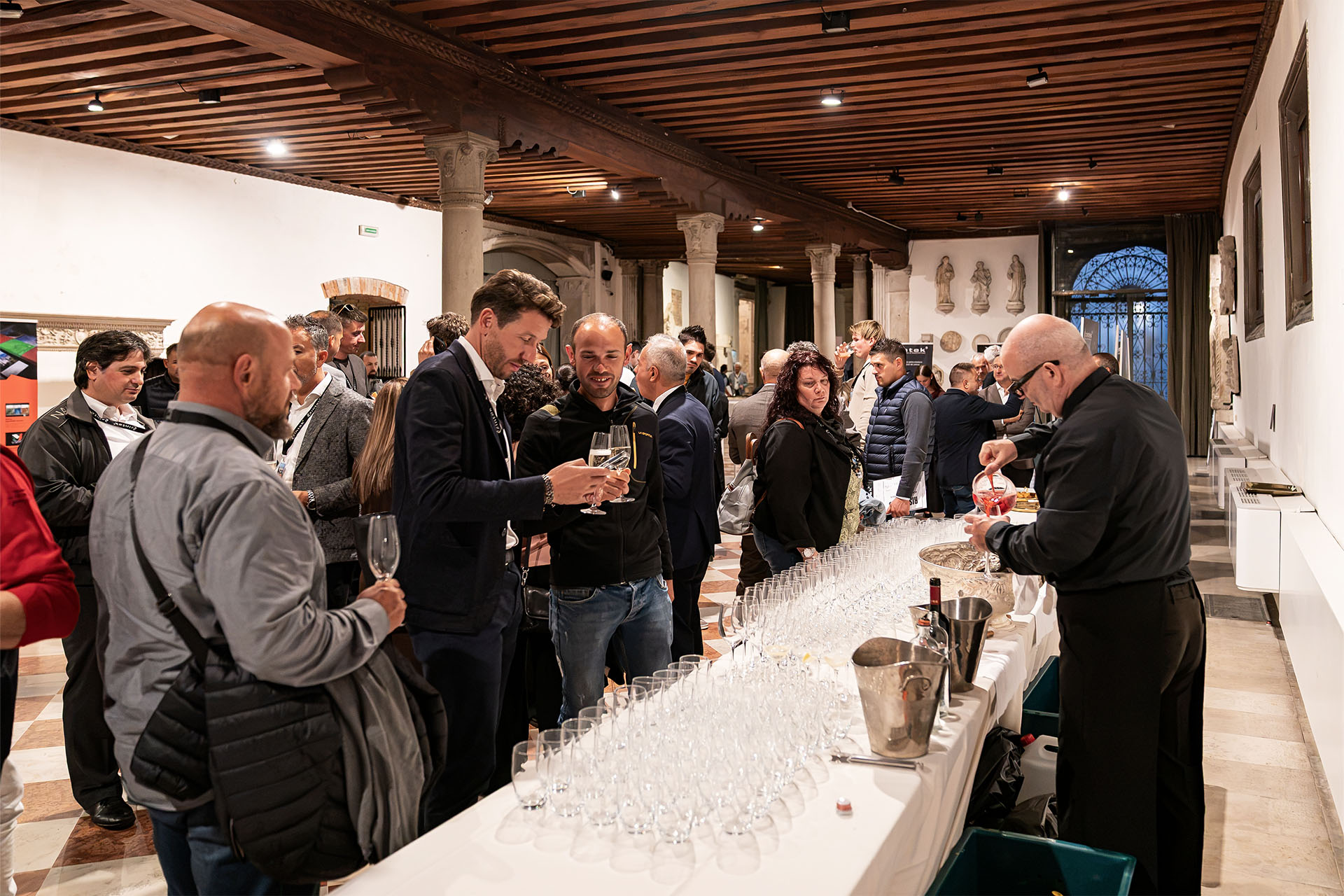
Closing remarks from Schiavon brought the conference to an end. The event was rounded off by a short visit to the council chamber of the Scuola Grande di San Giovanni Evangelista, with a celebratory group photo, followed by a convivial gathering.
The event conveyed a shared determination to keep growing together, supporting training and ensuring continuity for a craft in which technical skill, responsibility, and passion remain closely intertwined.