







Borgo Banditaccia: contemporary architecture and landscape in the Tuscan Maremma
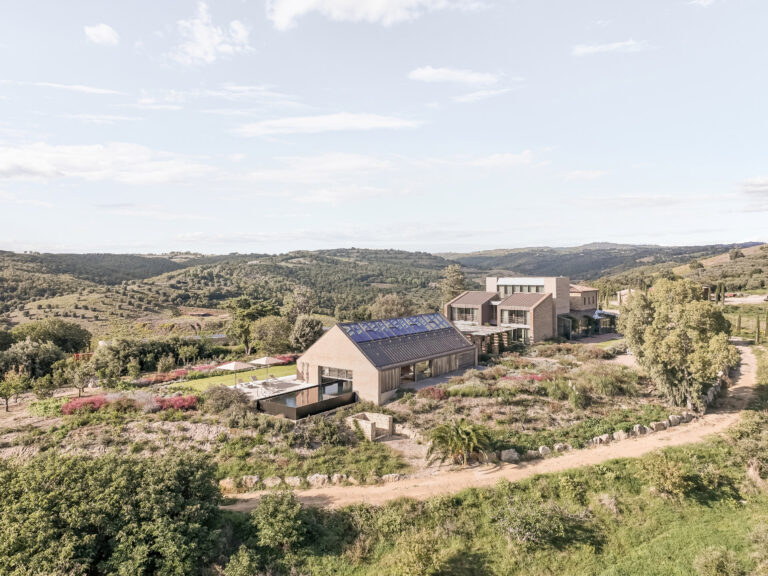
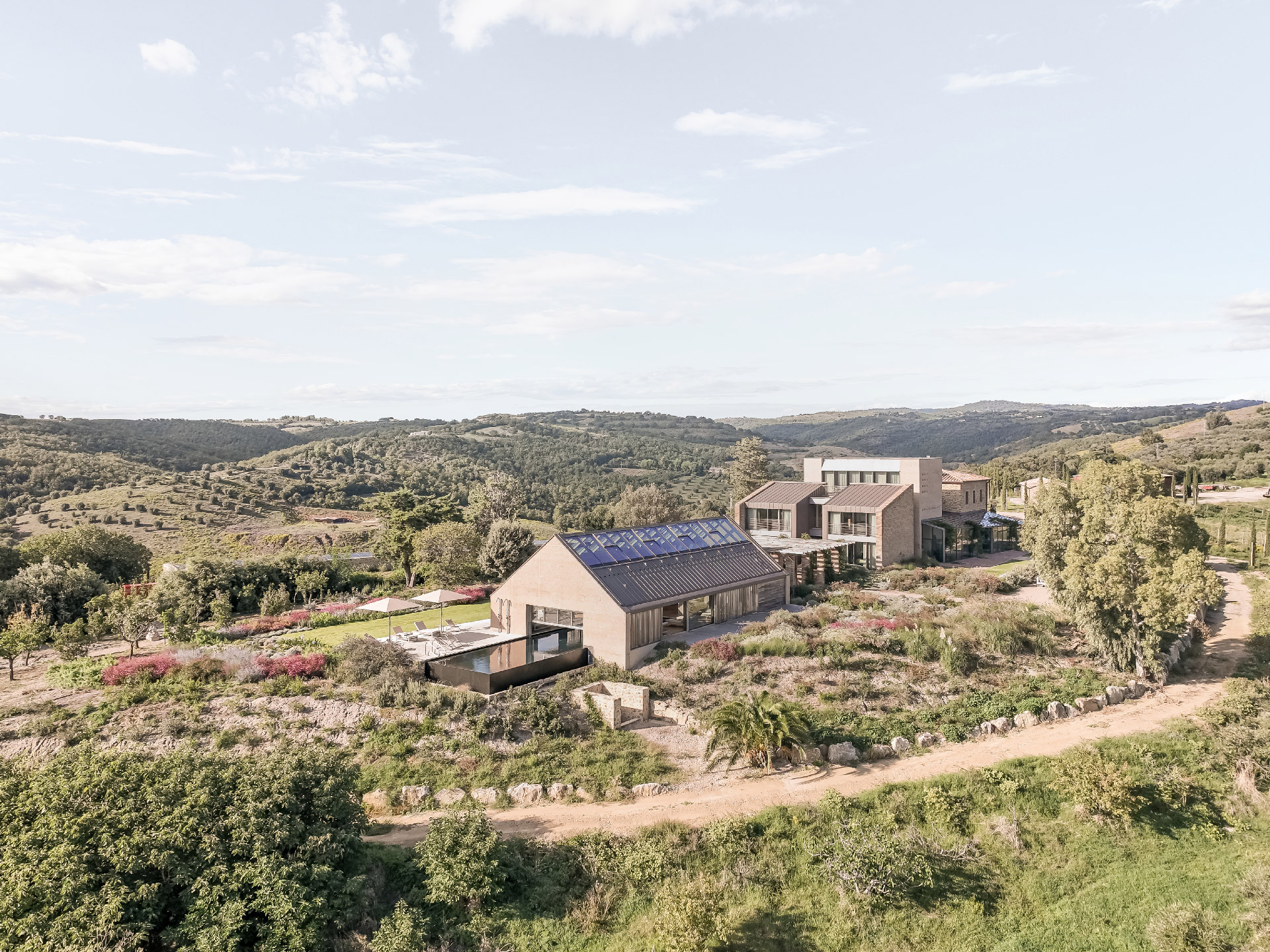
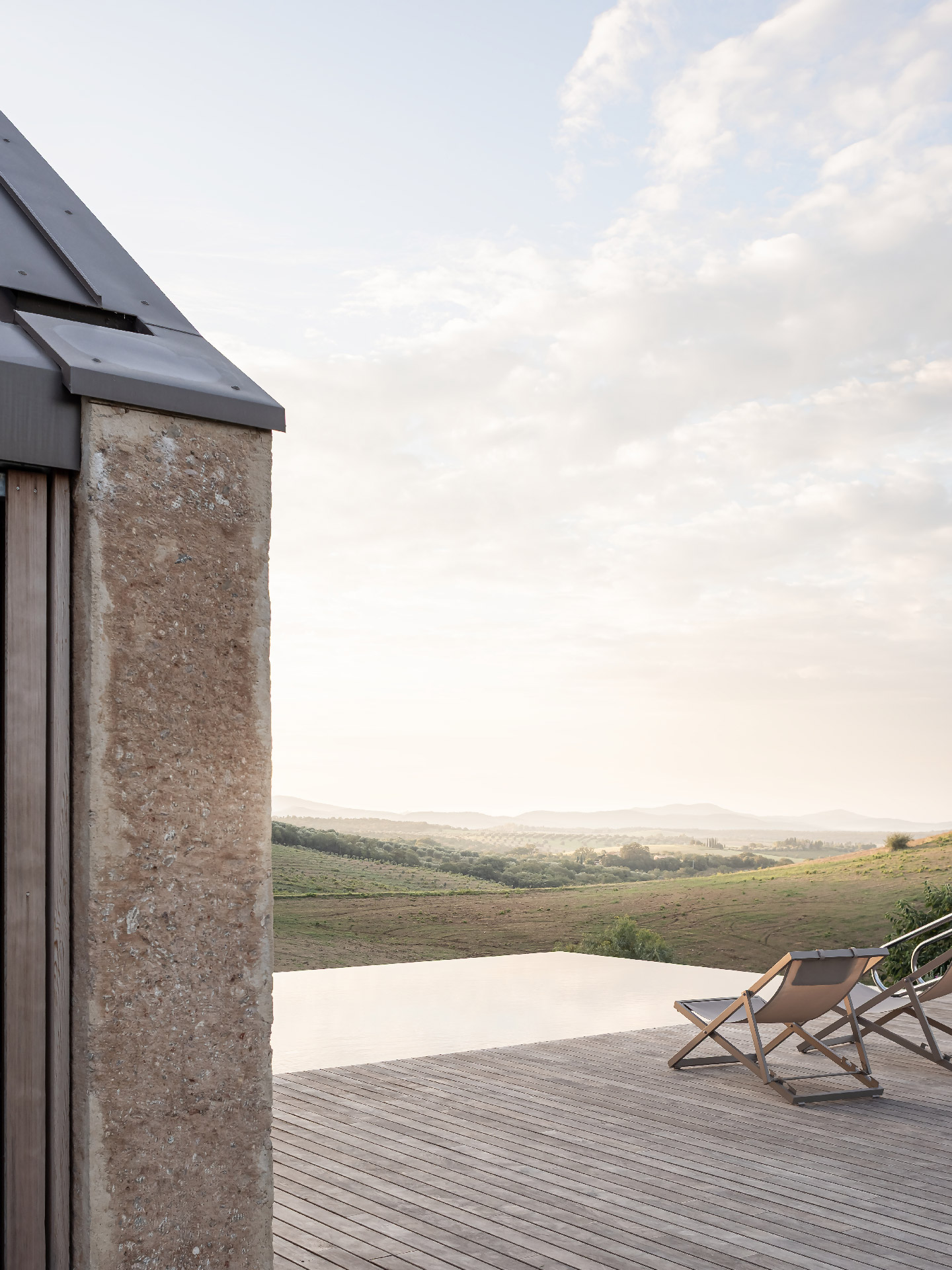
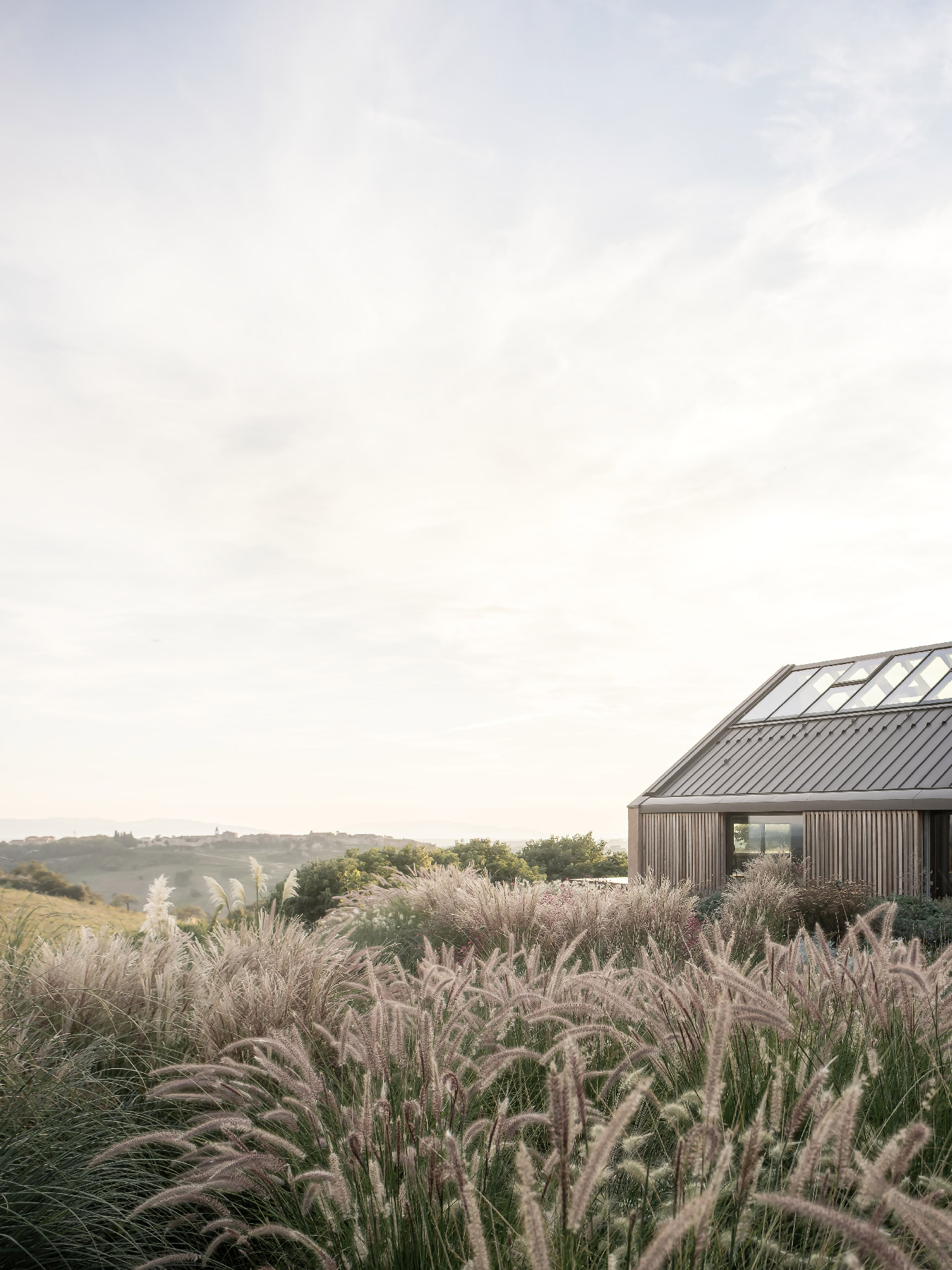
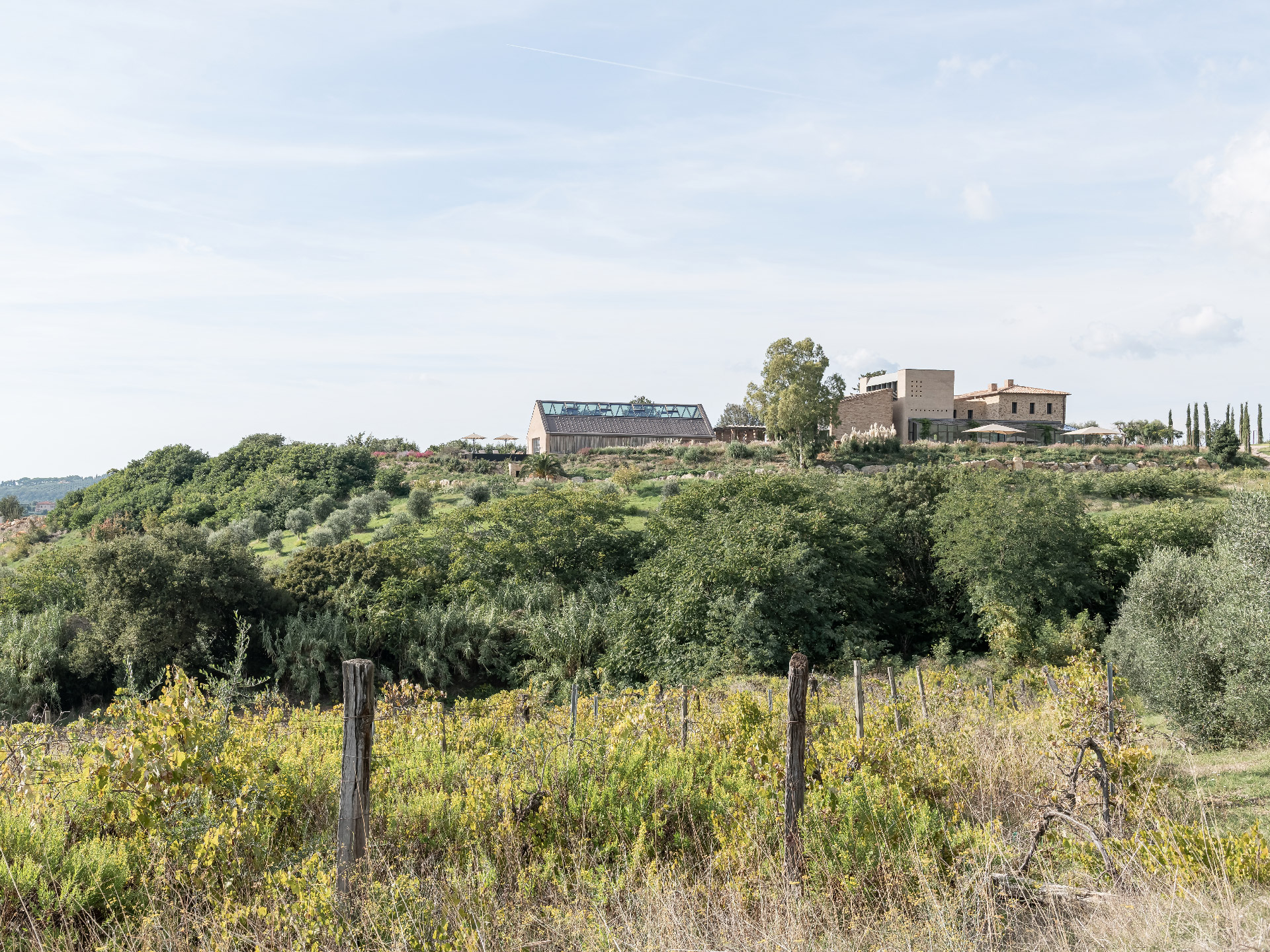
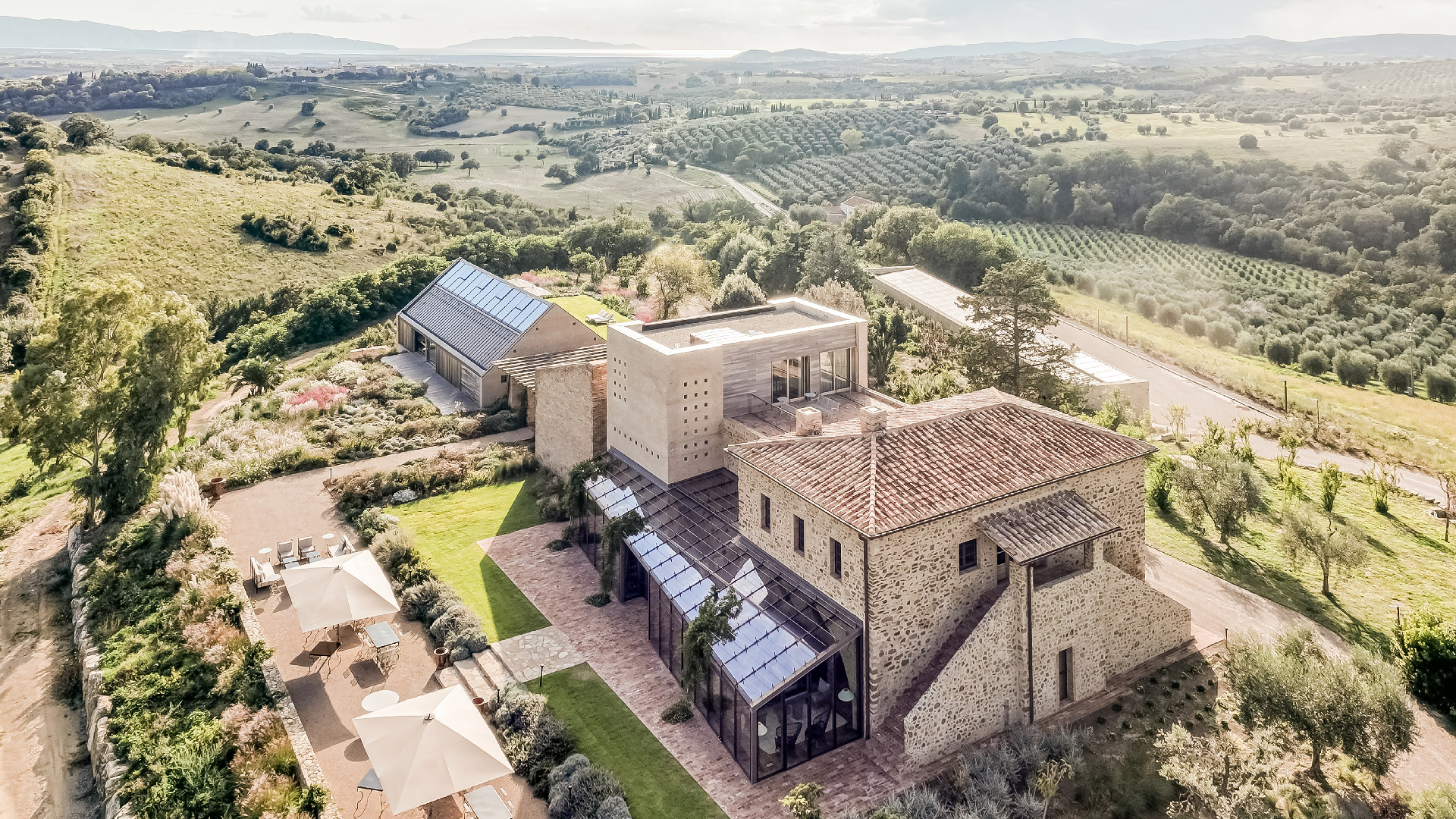
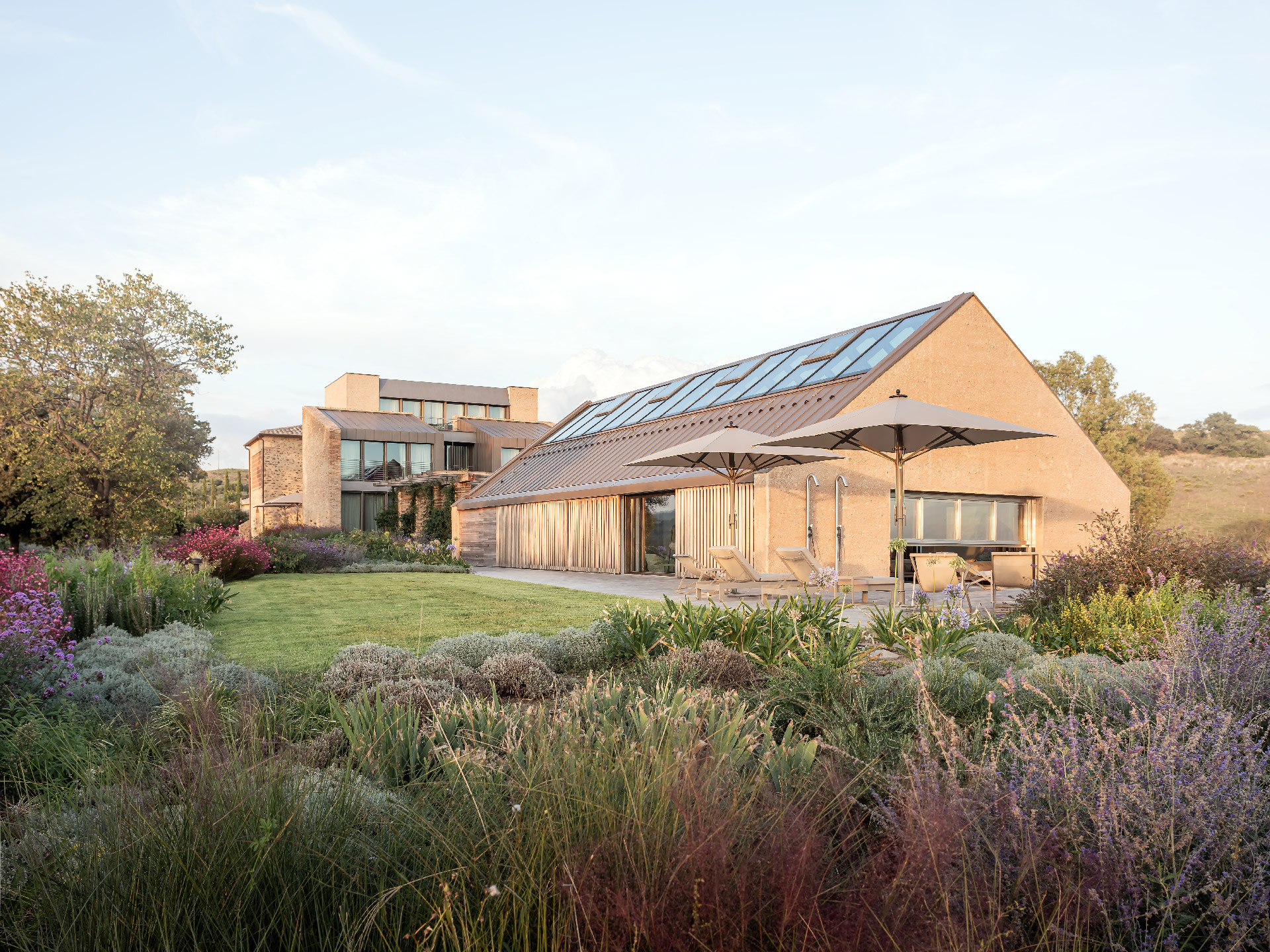
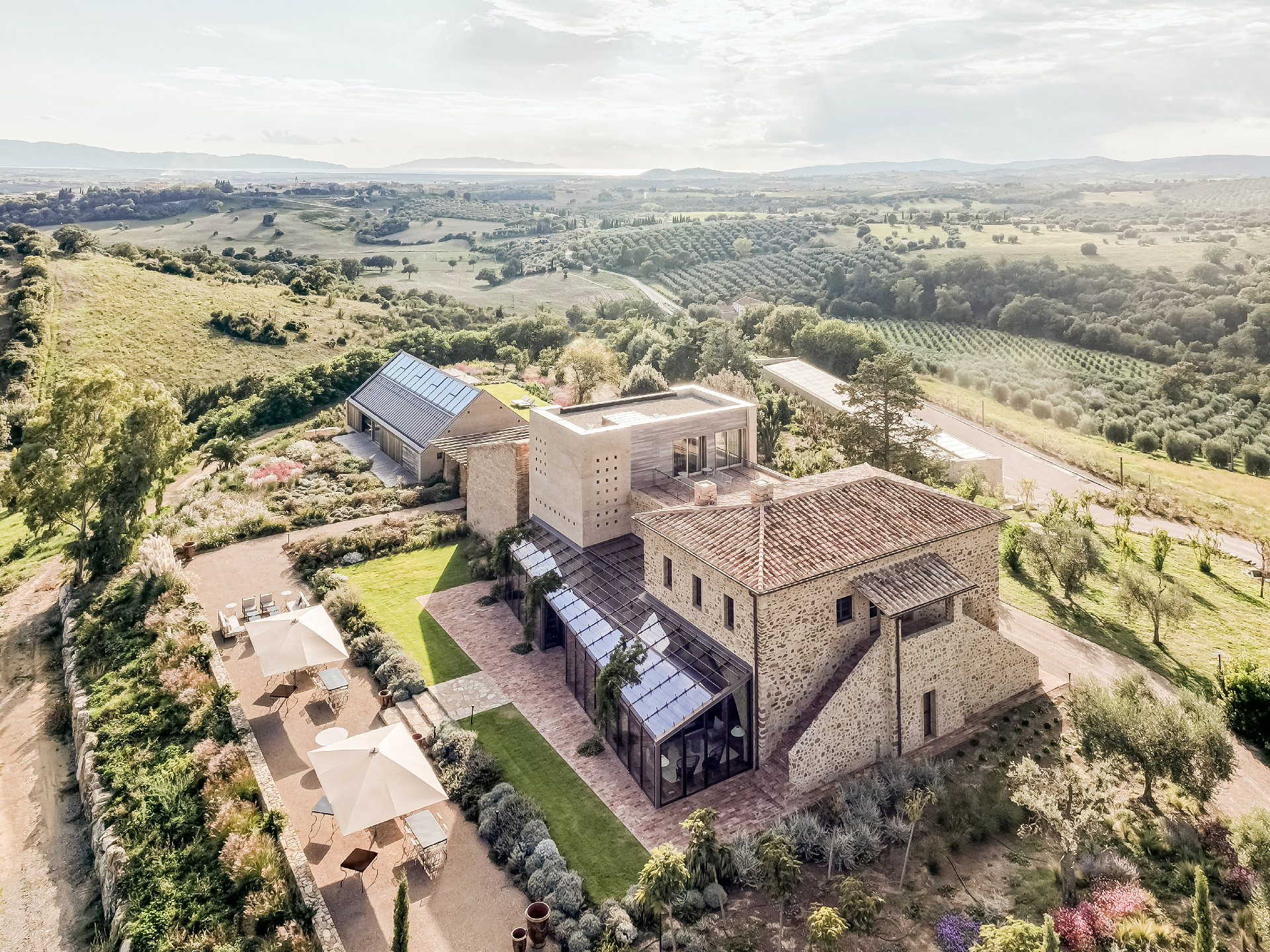
Sat between two valleys atop a ridge in the Maremma area of southern Tuscany, and overlooked by the town walls of Magliano in Toscana, Borgo Banditaccia is once again a single, unified organism. This place has left its mark on the region’s agricultural landscape for over a century, first as a cornerstone of the area and then as an isolated fragment. And now it has been reborn, thanks to a renovation project masterminded by the architecture firm Edoardo Milesi & Archos.
The project has received national recognition in the form of the 2025 Premio RĒGULA — one of Italy’s most prestigious contemporary architecture awards — in the Restoration, Renovation, and Regeneration category.
It exemplifies how restoring rural heritage provides an opportunity to experiment with new forms of living, while maintaining a close dialogue with the landscape and places’ memory.
Restoring the landscape
The Borgo Banditaccia renovation project went beyond restoring the existing buildings. It approached the complex as one organism, seeking to stitch the myriad layers that have accumulated over time back together.
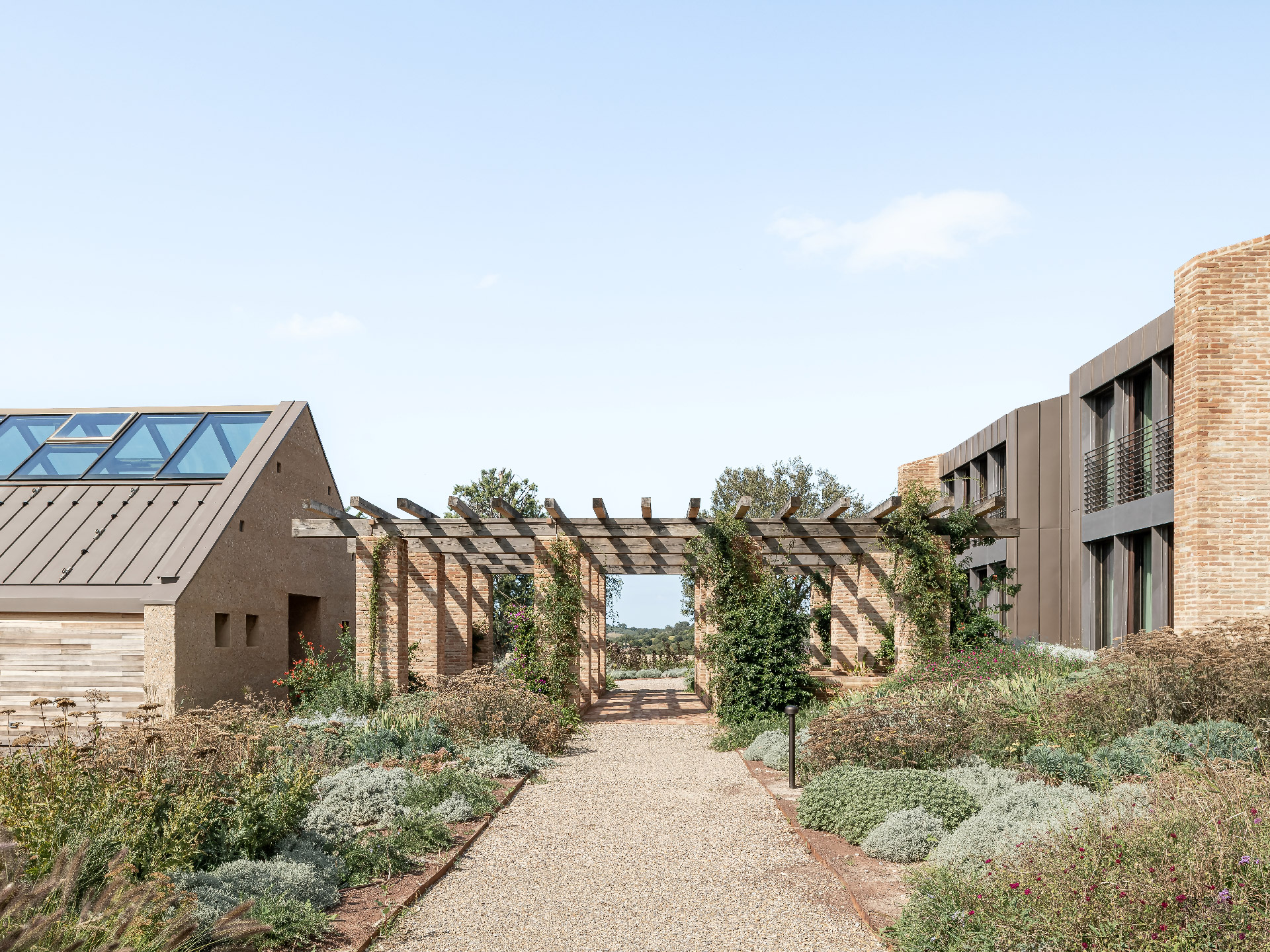
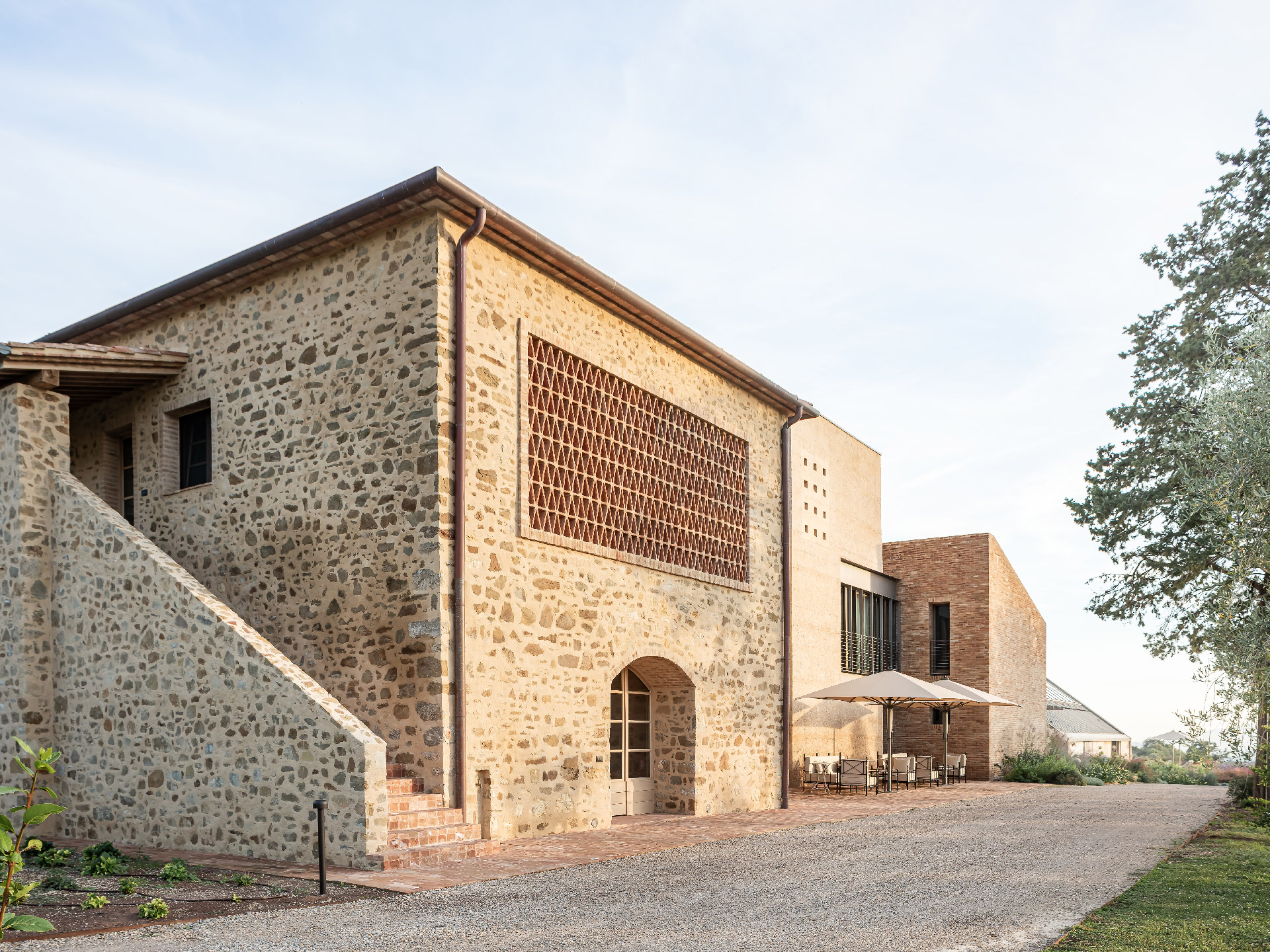
The starting point was the only remaining authentic part of the original complex: the ancient passageways with vaulted ceilings and the small building at the north end. This historic feature provided the inspiration for the new layout, while retaining its own unique identity in terms of both material and design. More recent additions of poor build quality or that detracted from the original layout were demolished, and the various volumes were recalibrated along the settlement’s original axis, perpendicular to the ridge. The result is a small-scale yet permeable architectural system that interacts with the light, the wind, and the surrounding landscape.
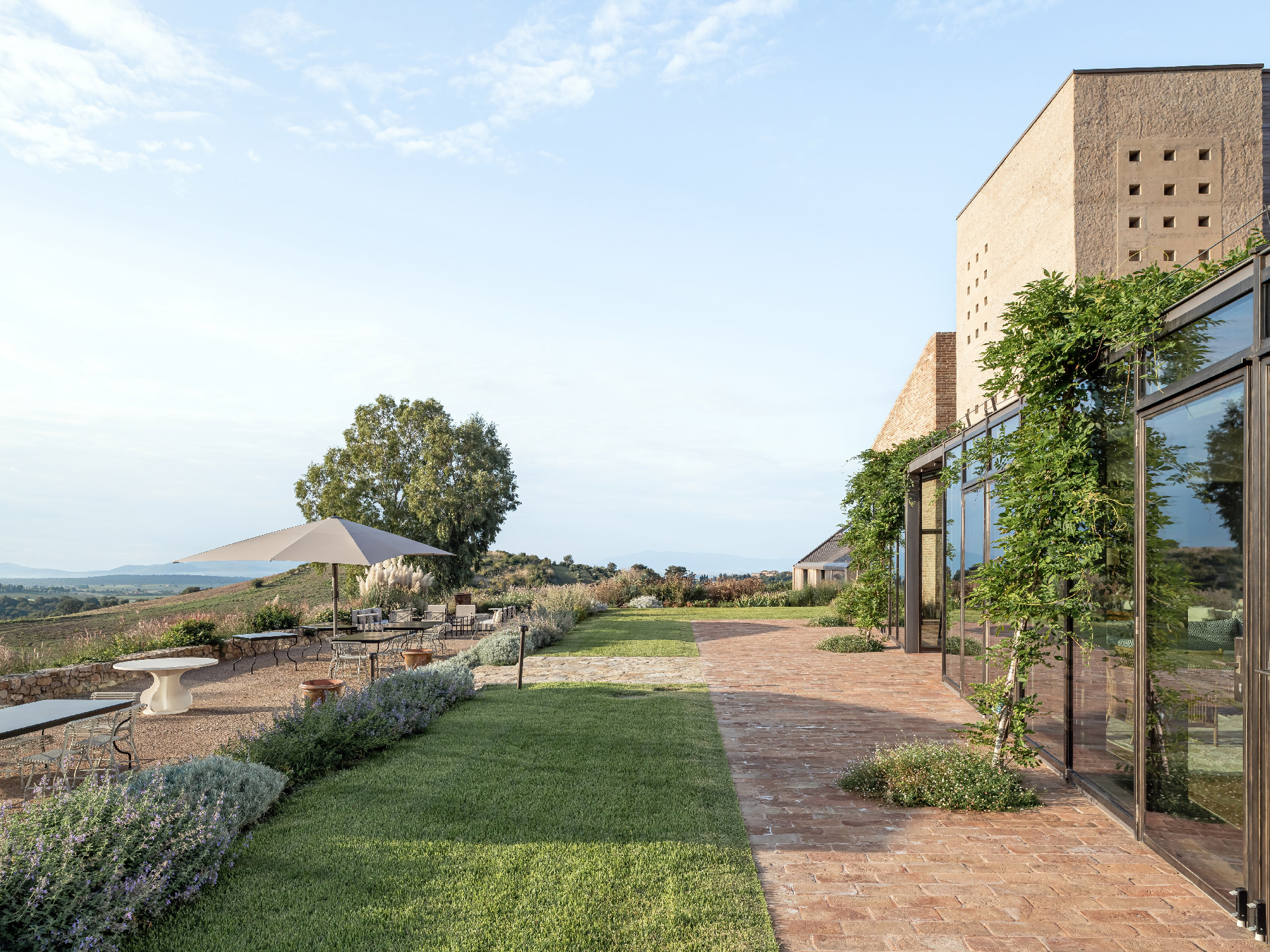
In this cozy, contemporary settlement, buildings, paths, and outdoor spaces perfectly balance protection and openness, architectural density and views of the horizon.
Materials and light: a pared-back architectural language
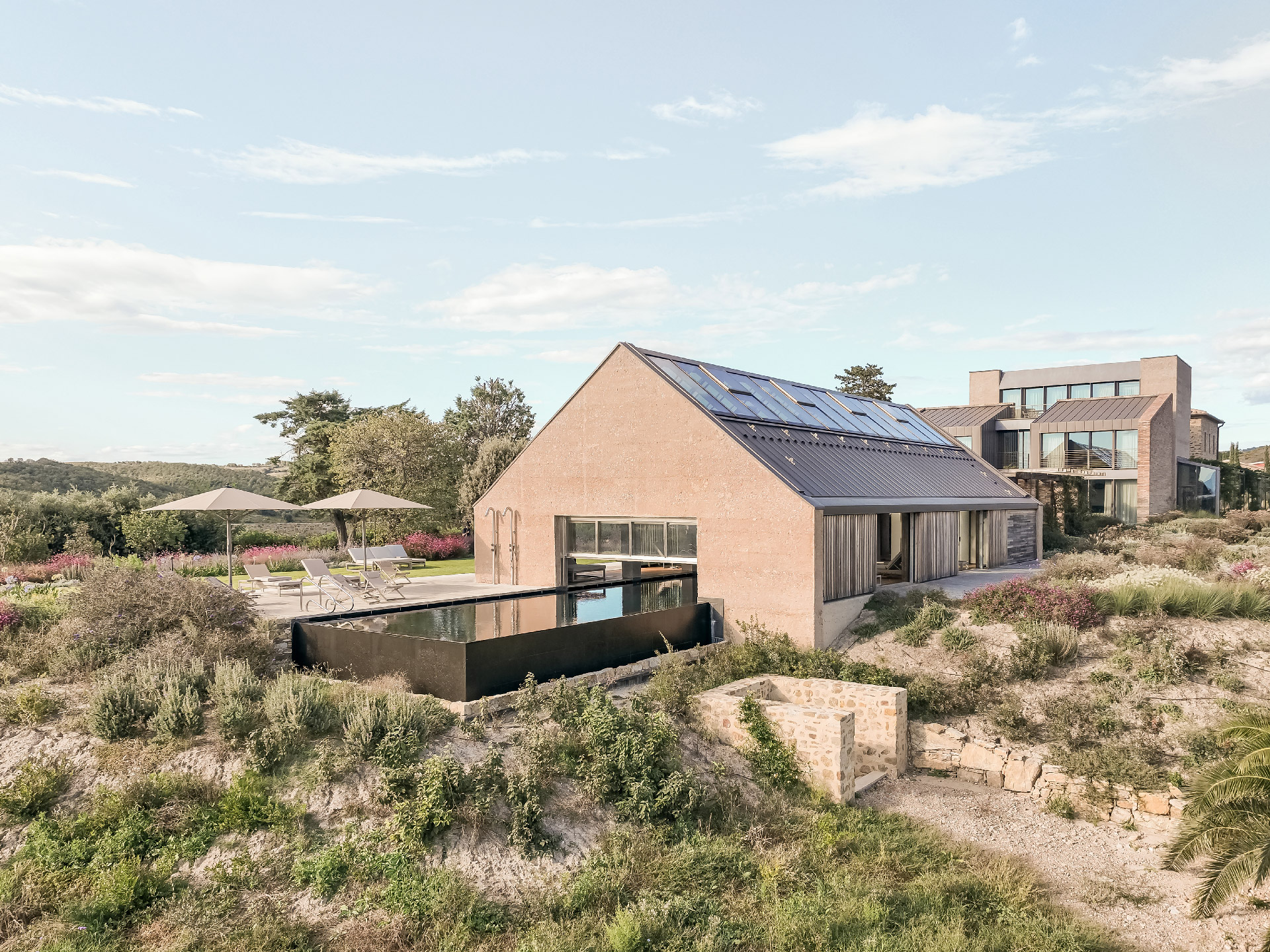
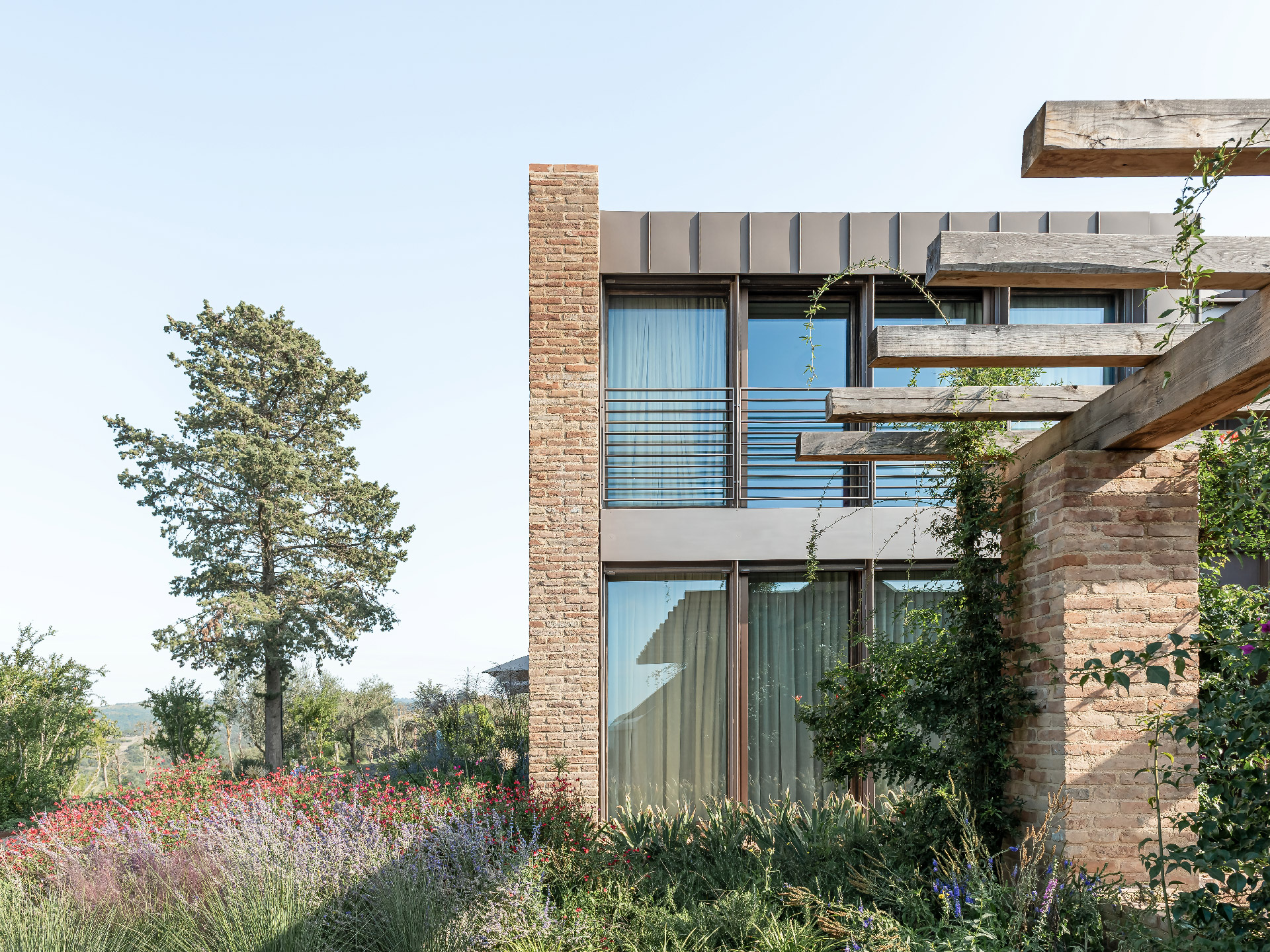
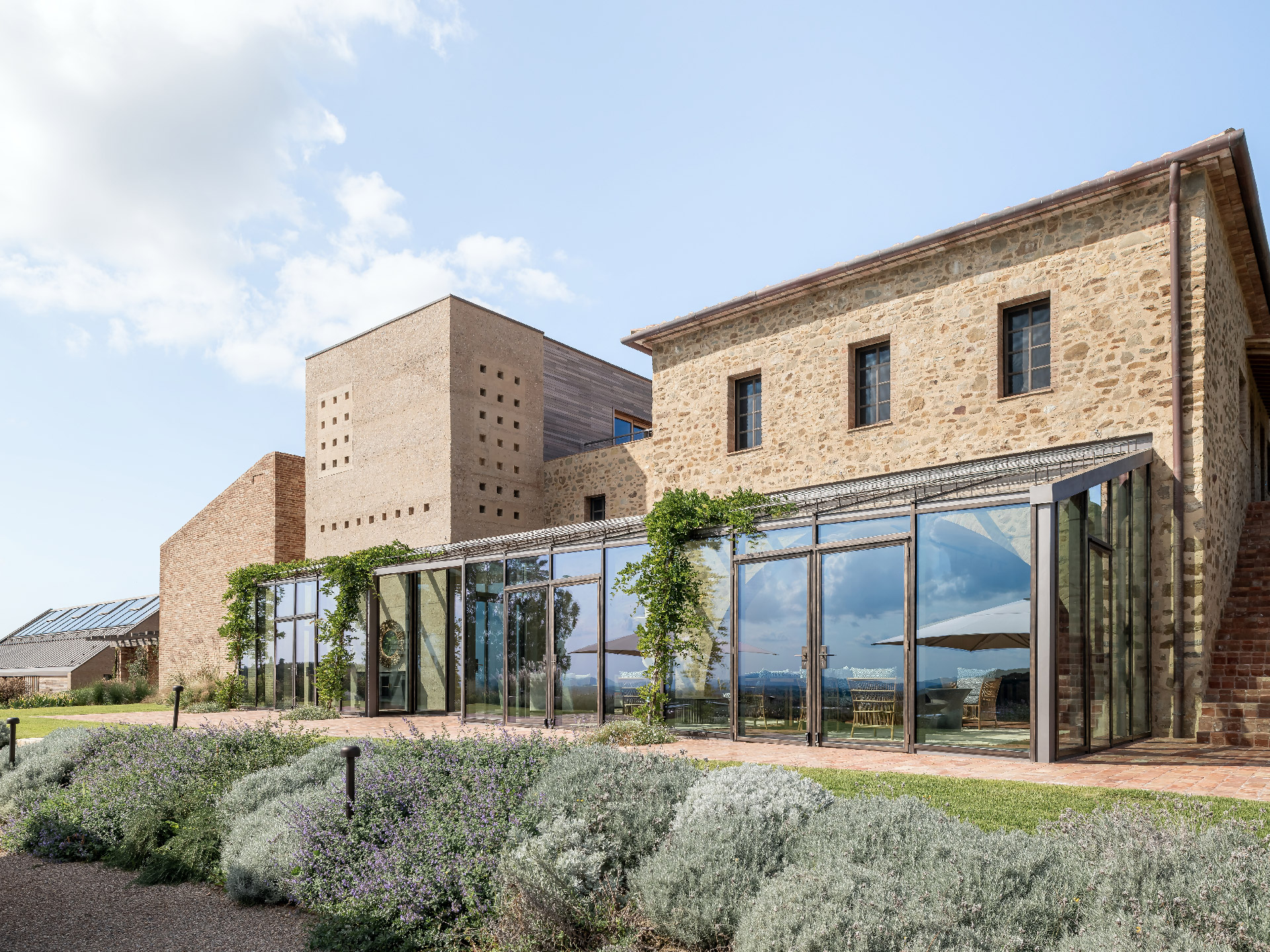
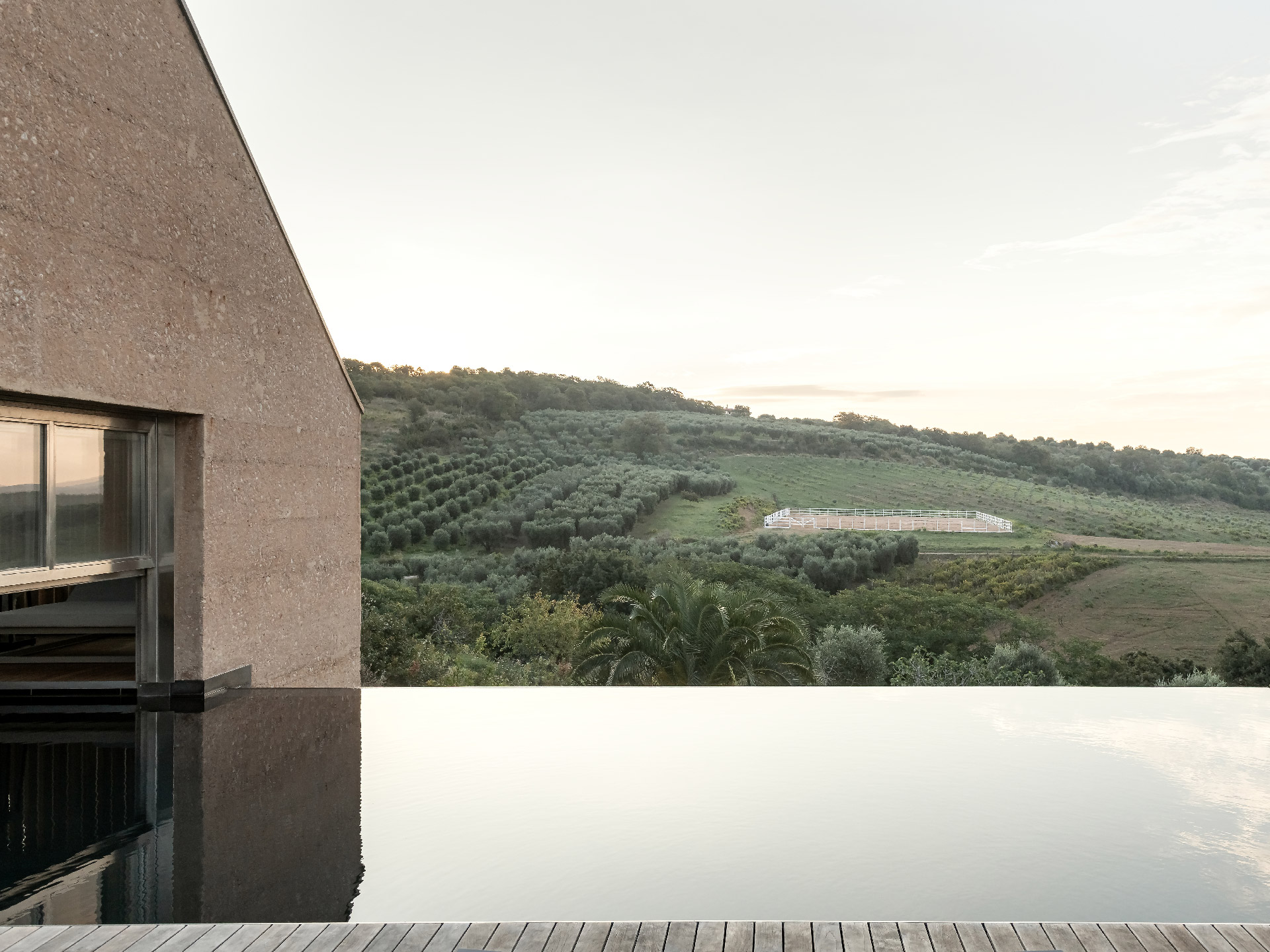
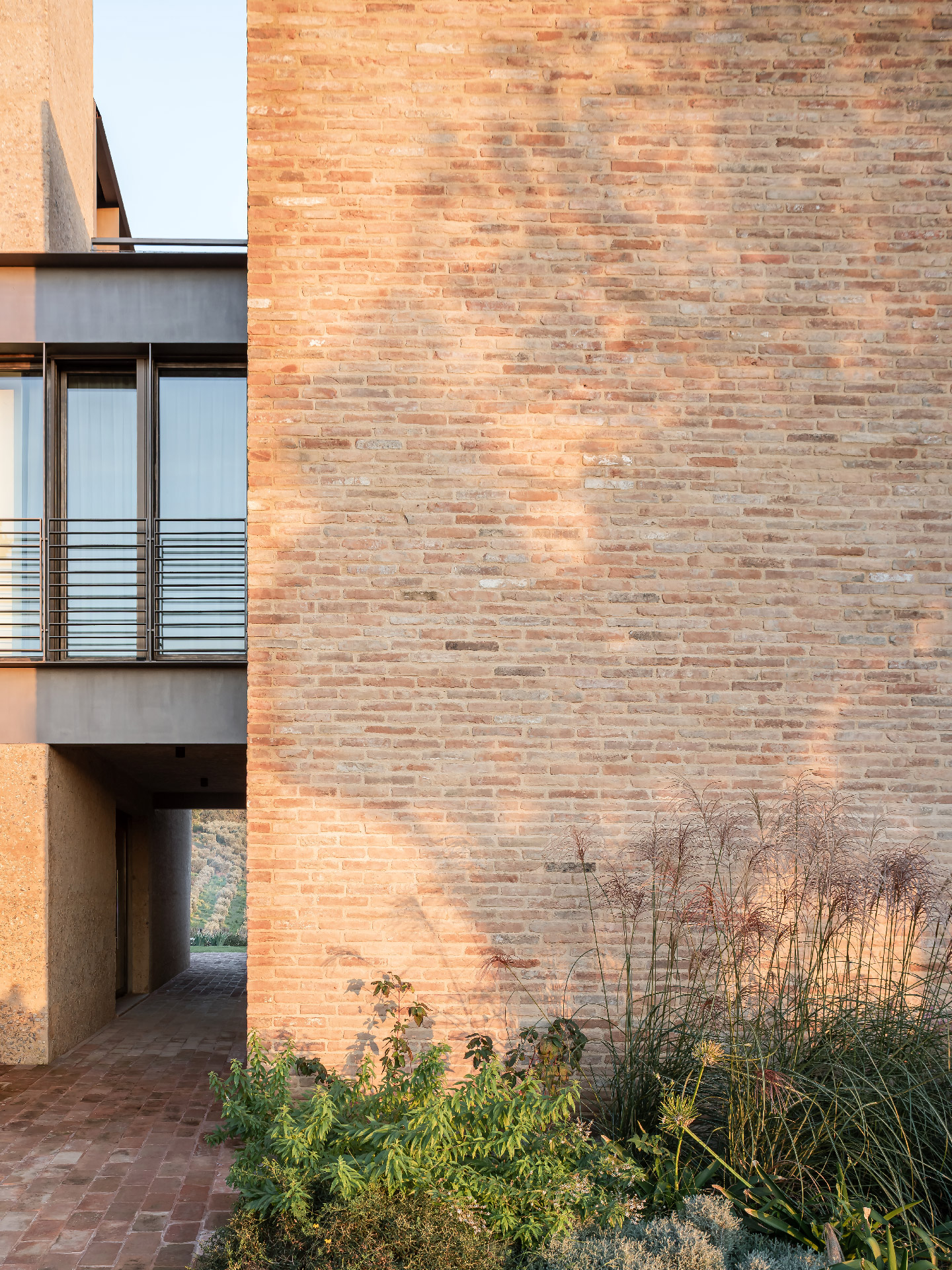
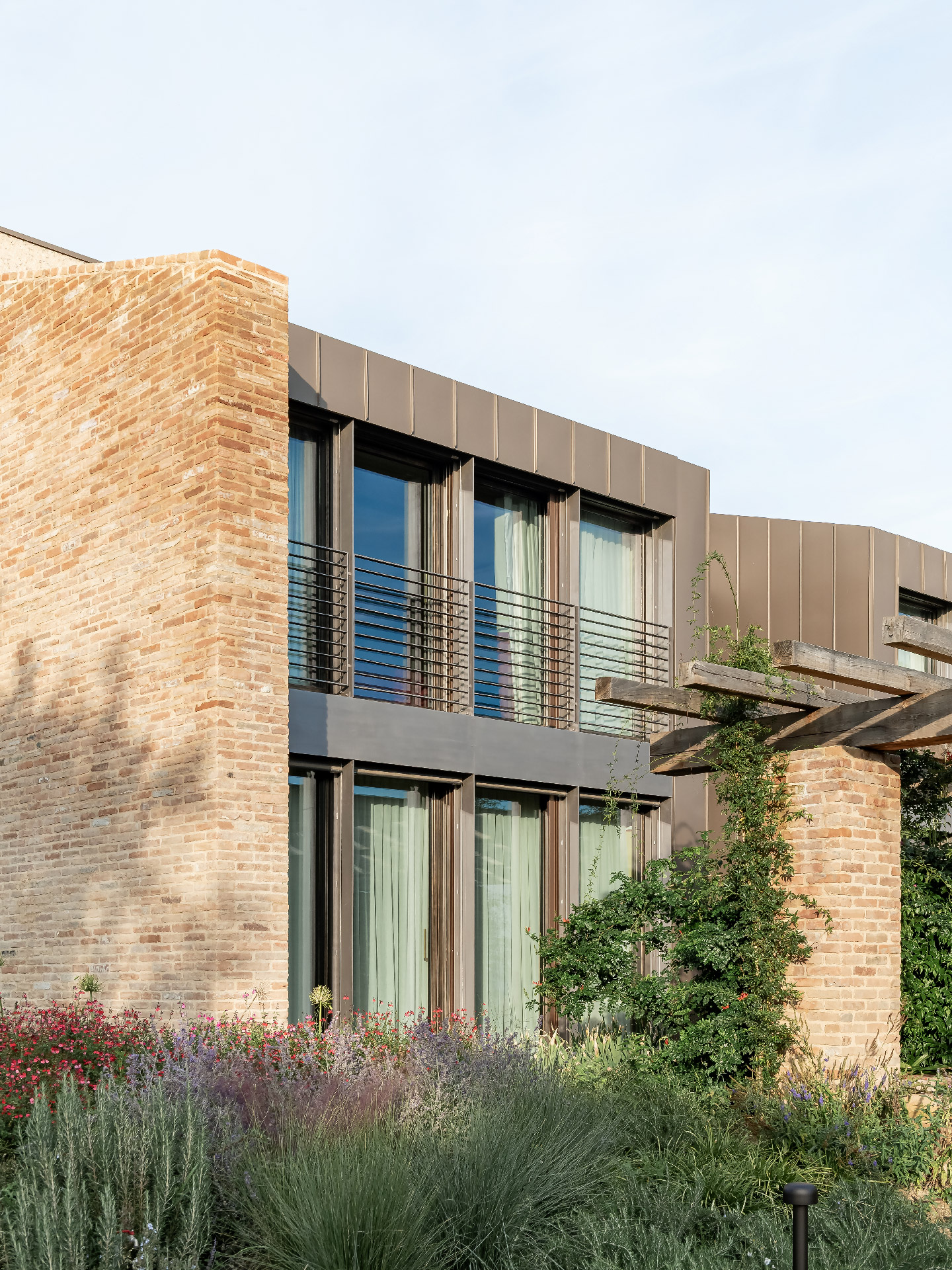
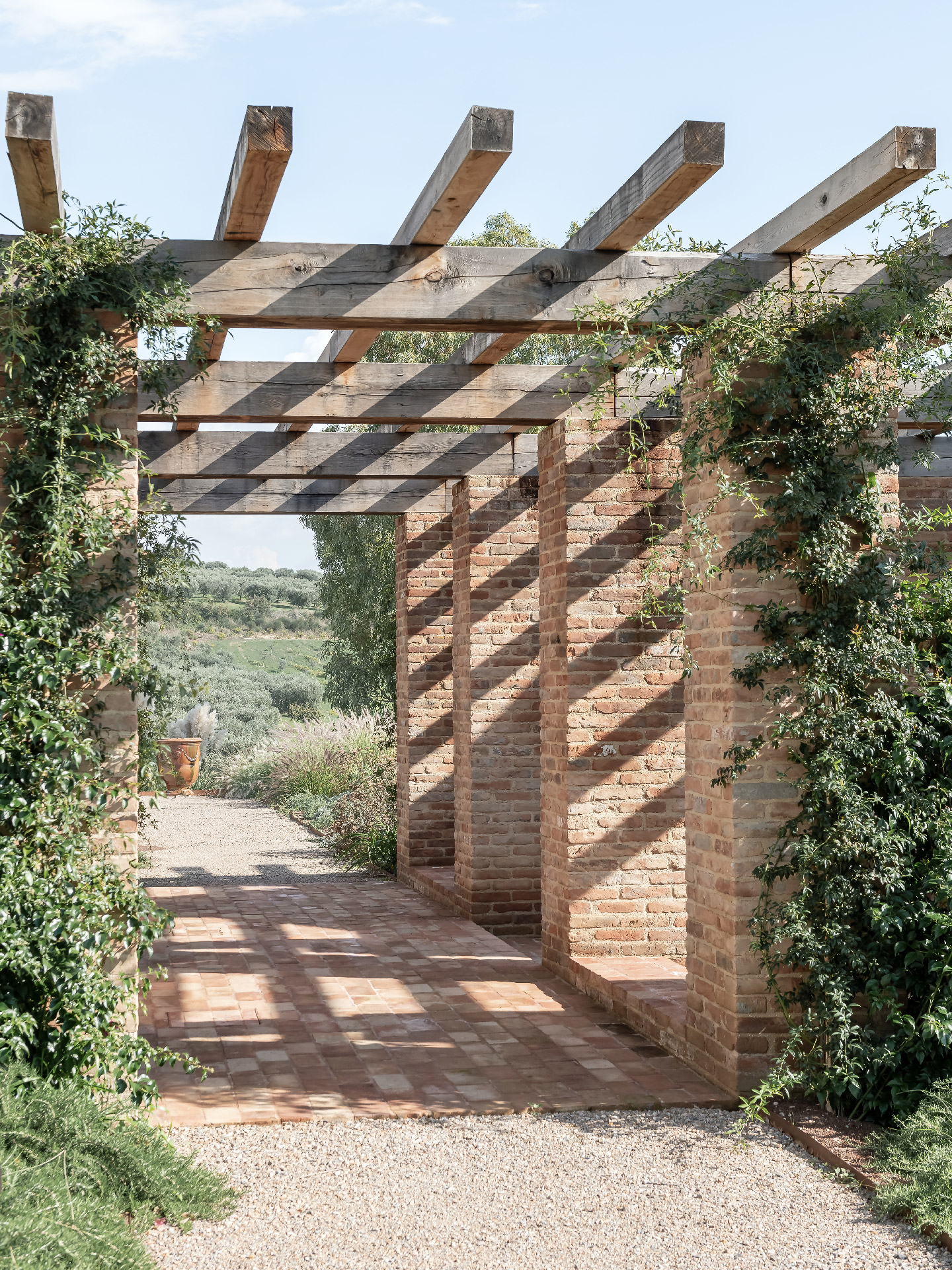
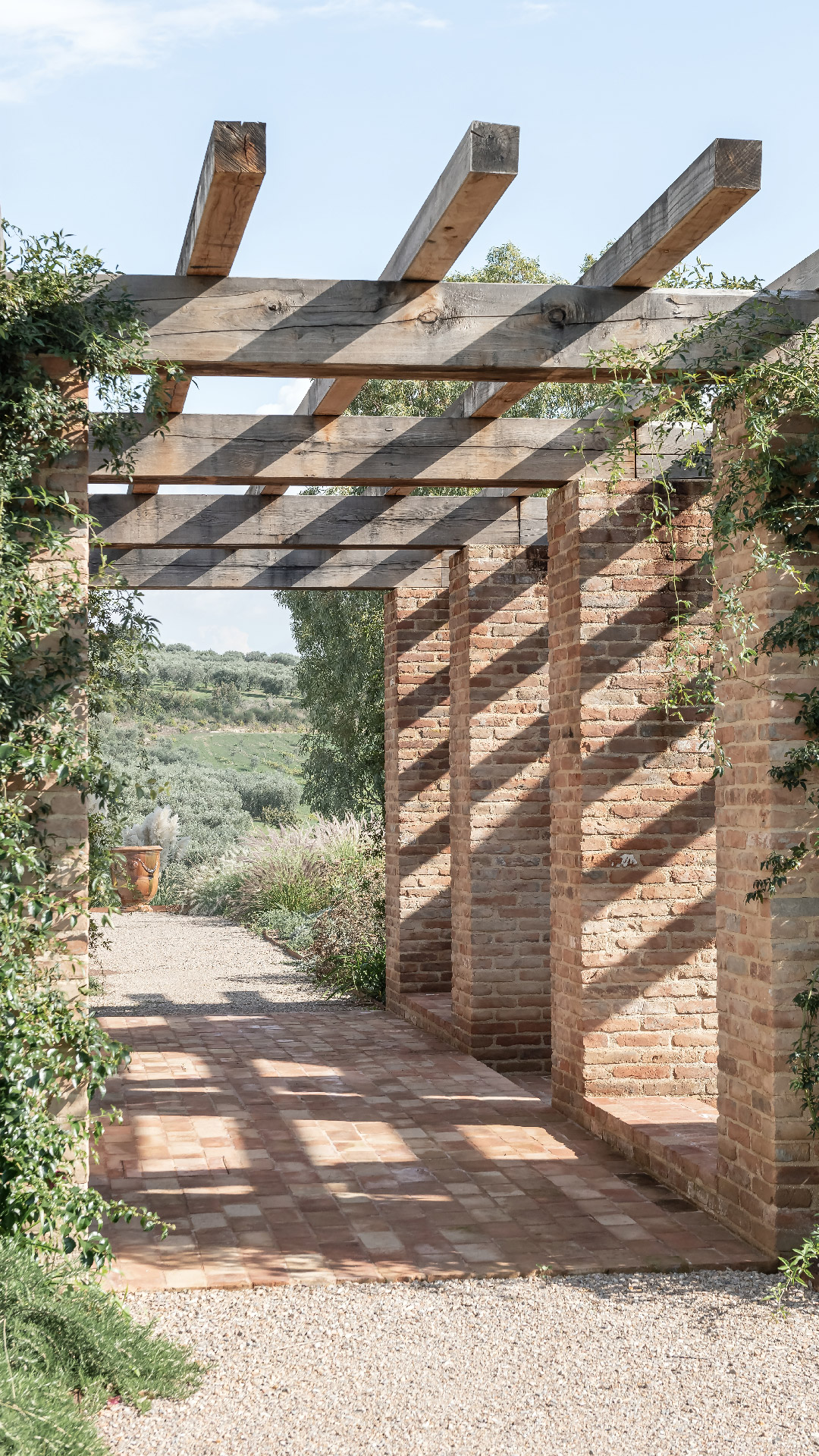
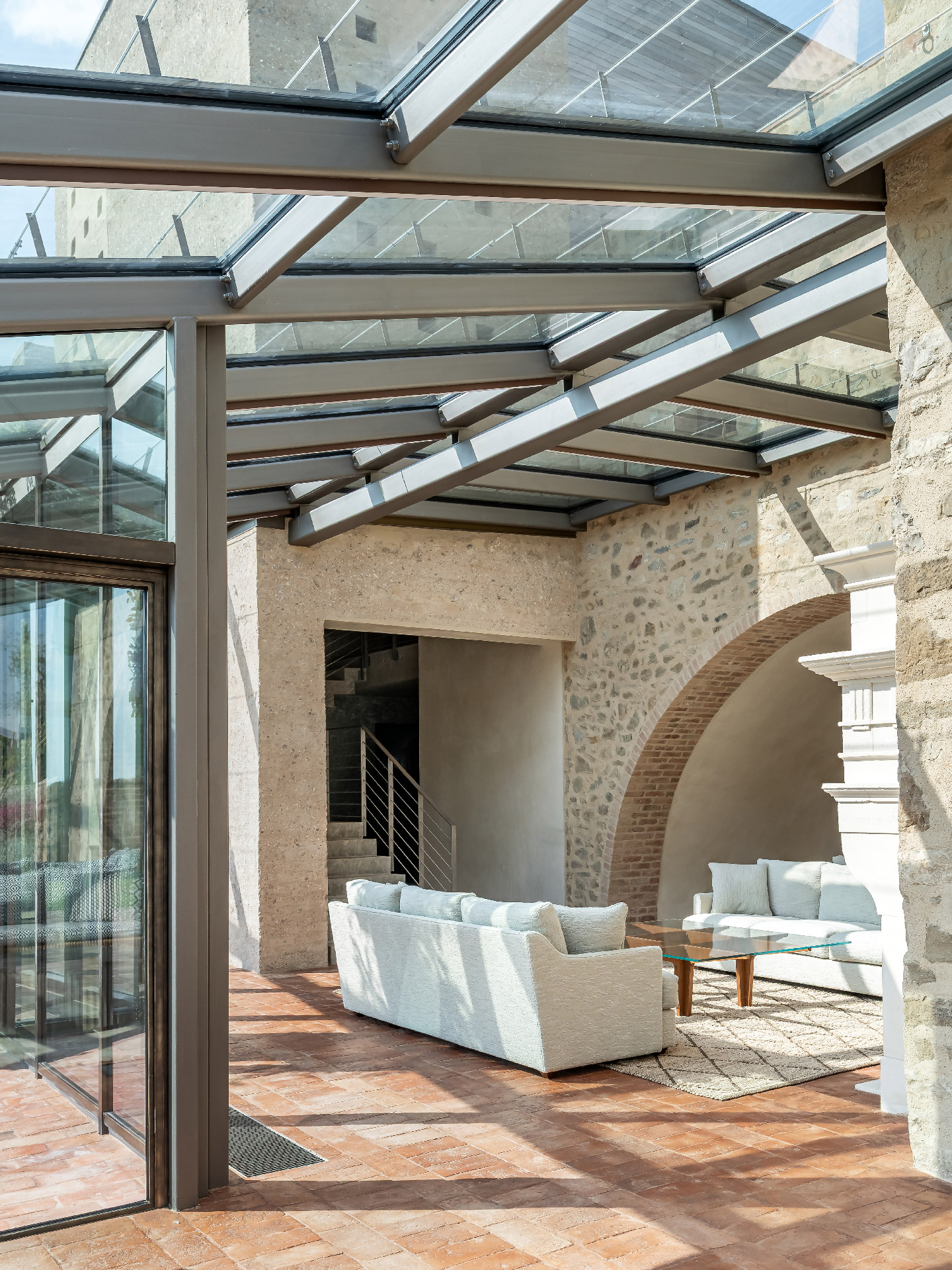
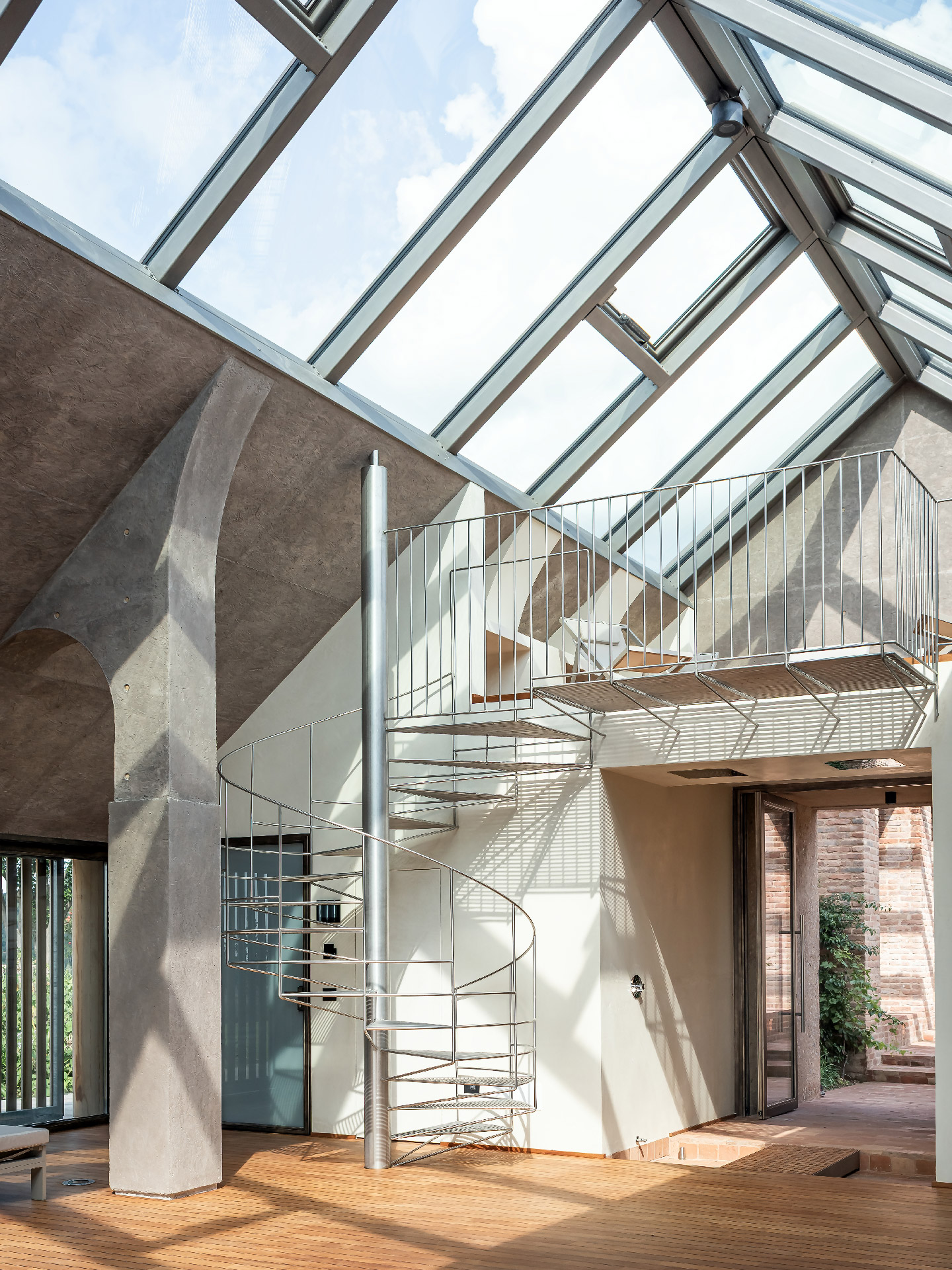
The design’s identity is rooted in a precise selection of materials, comprising three main elements: local stone, reclaimed bricks, and exposed coloured concrete.
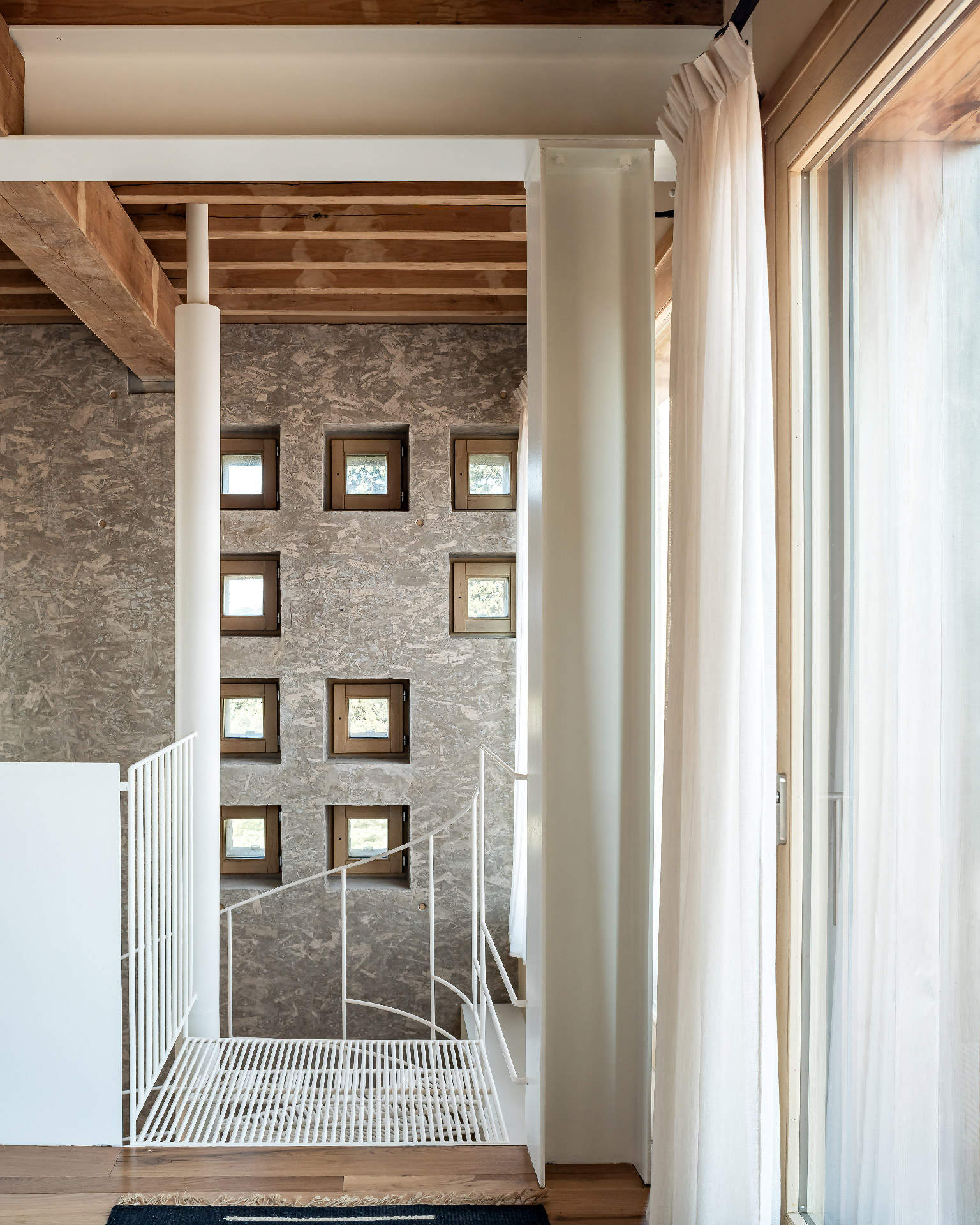
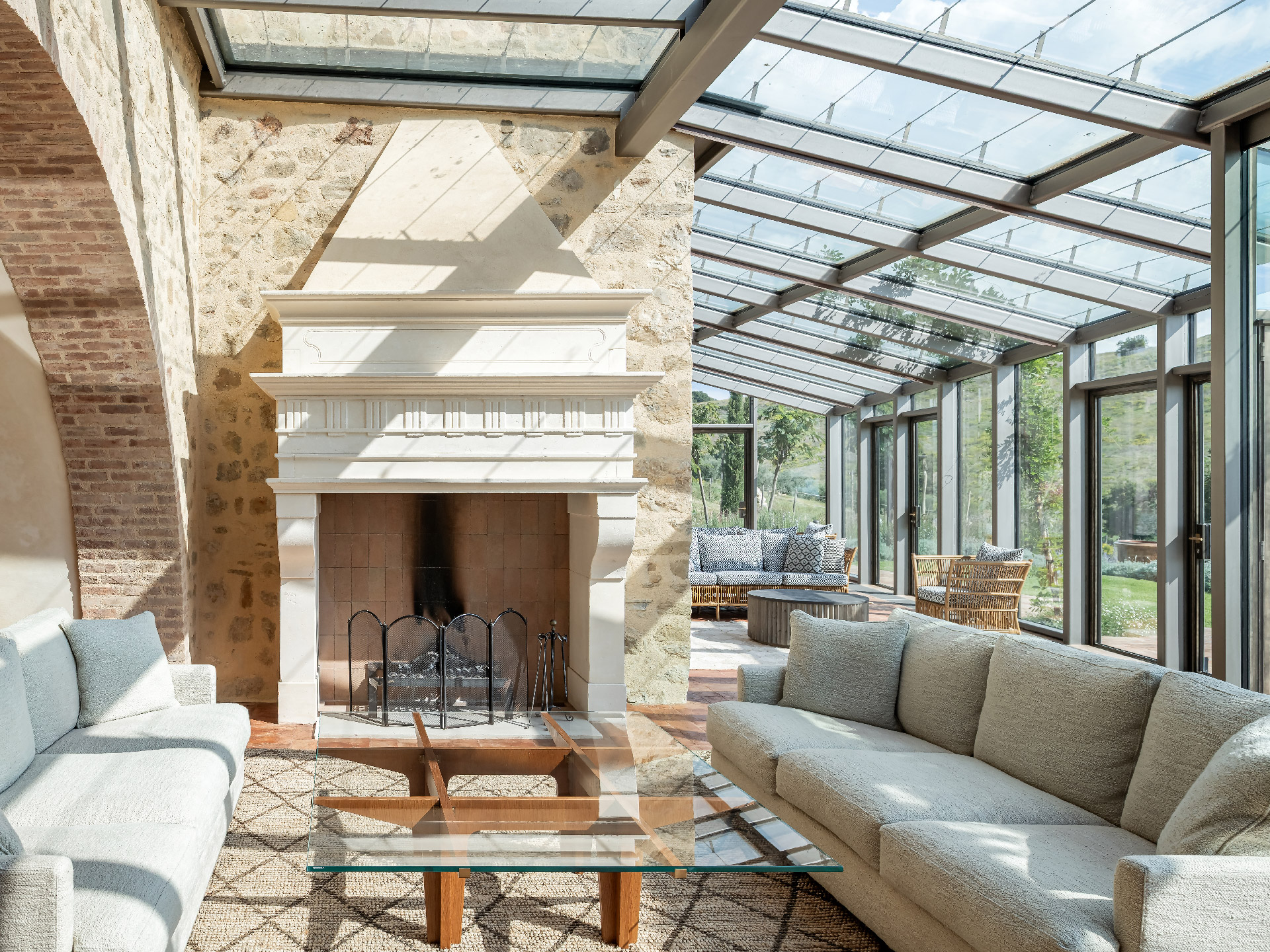
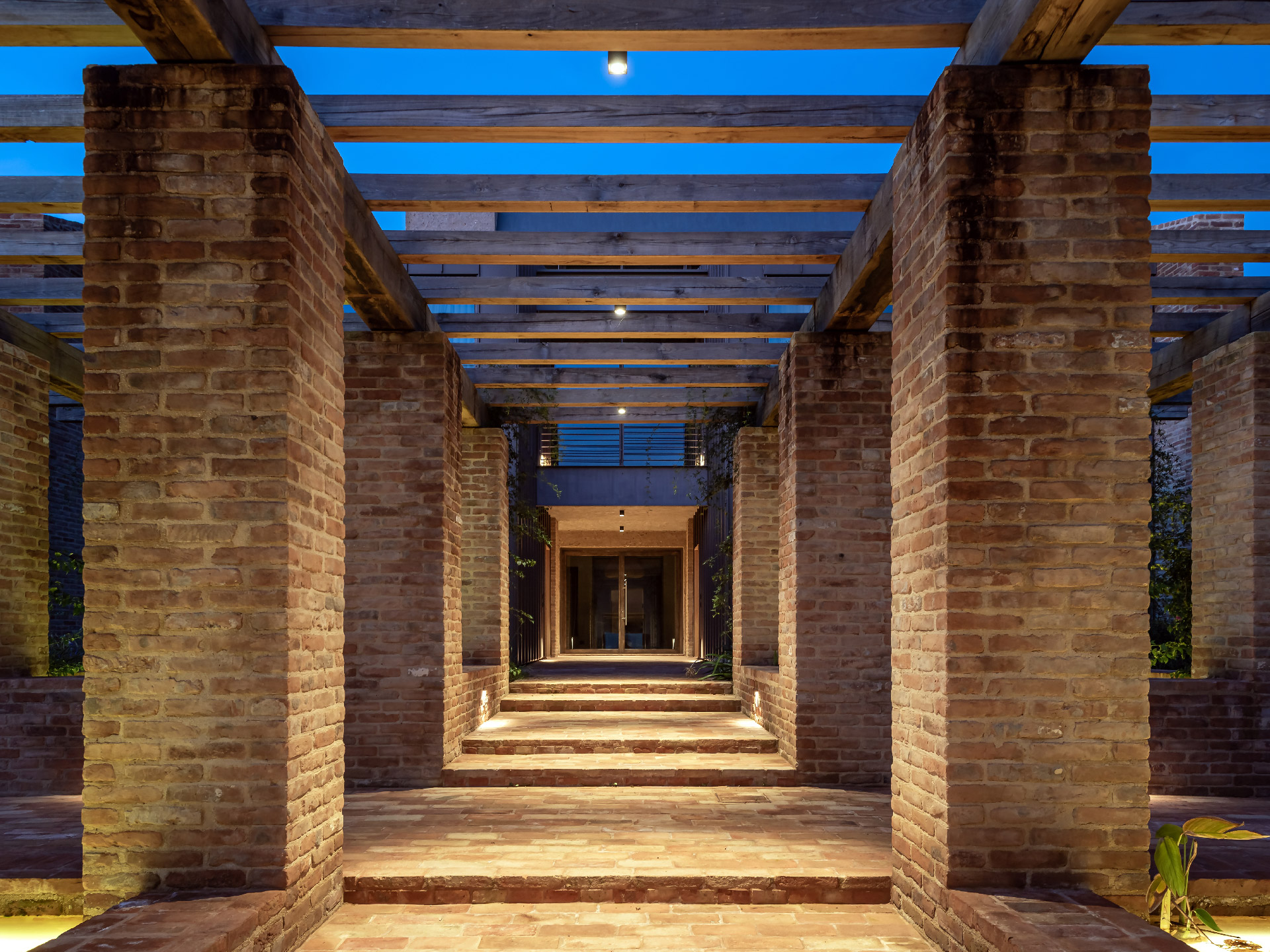
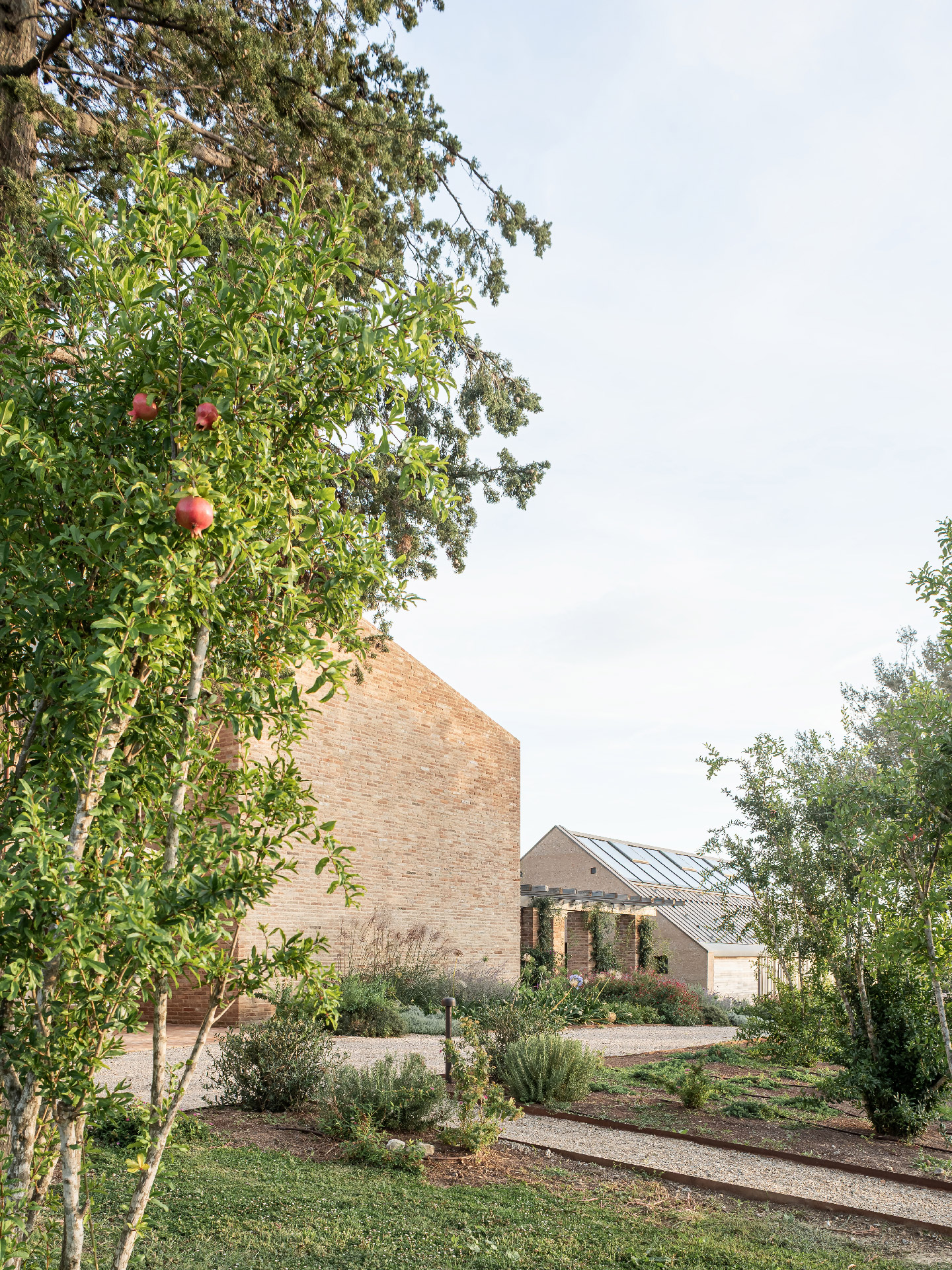
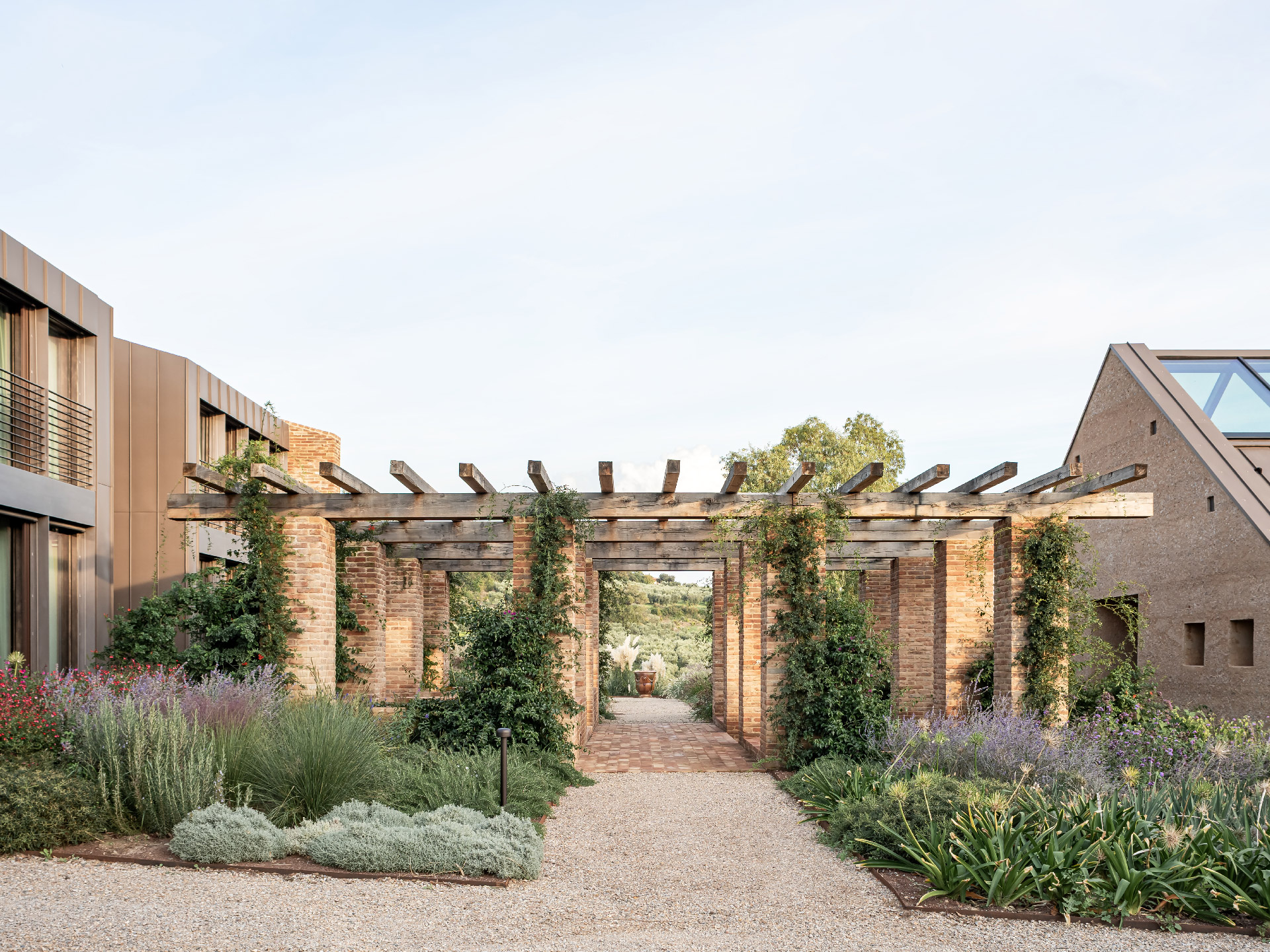
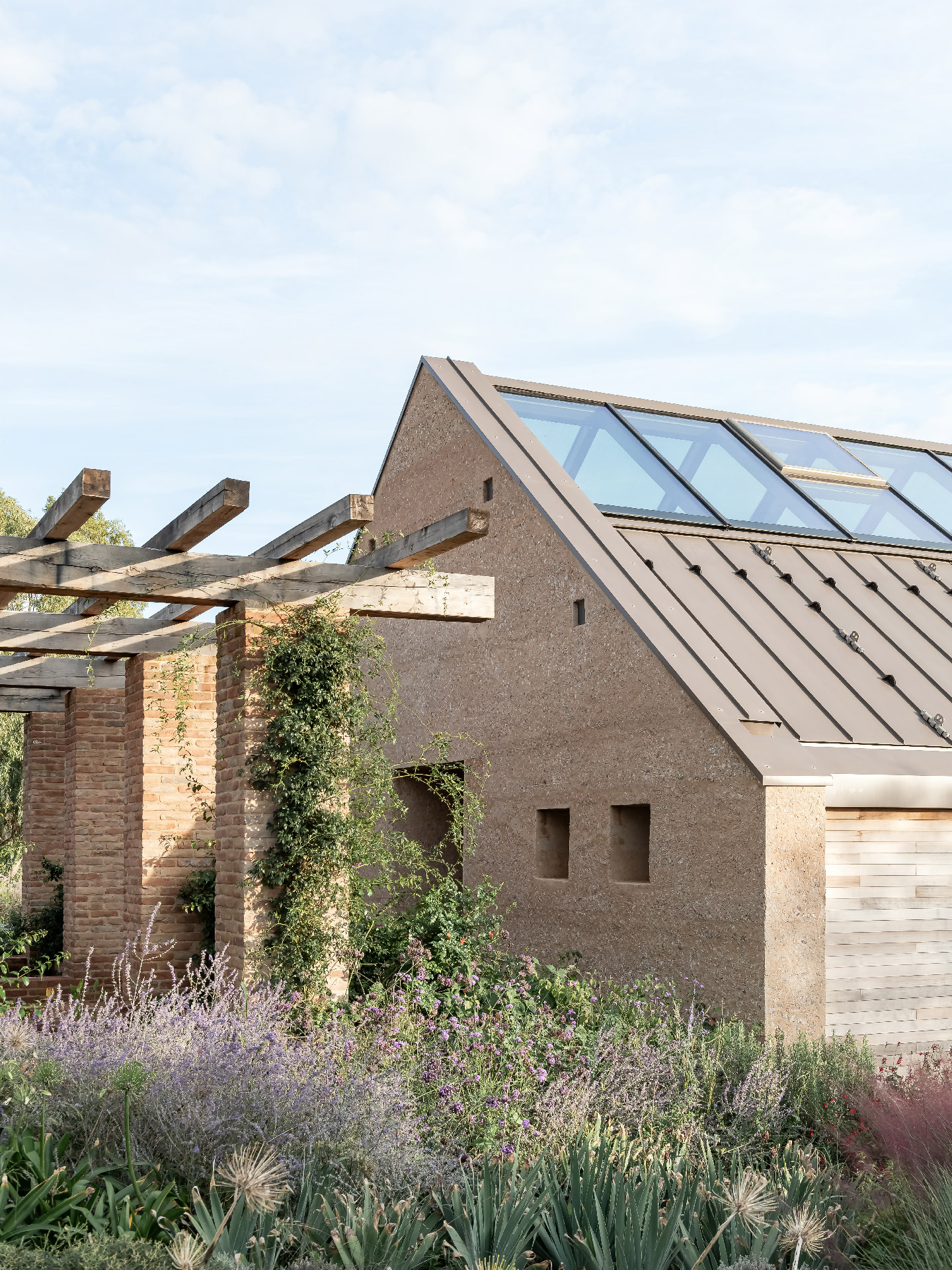
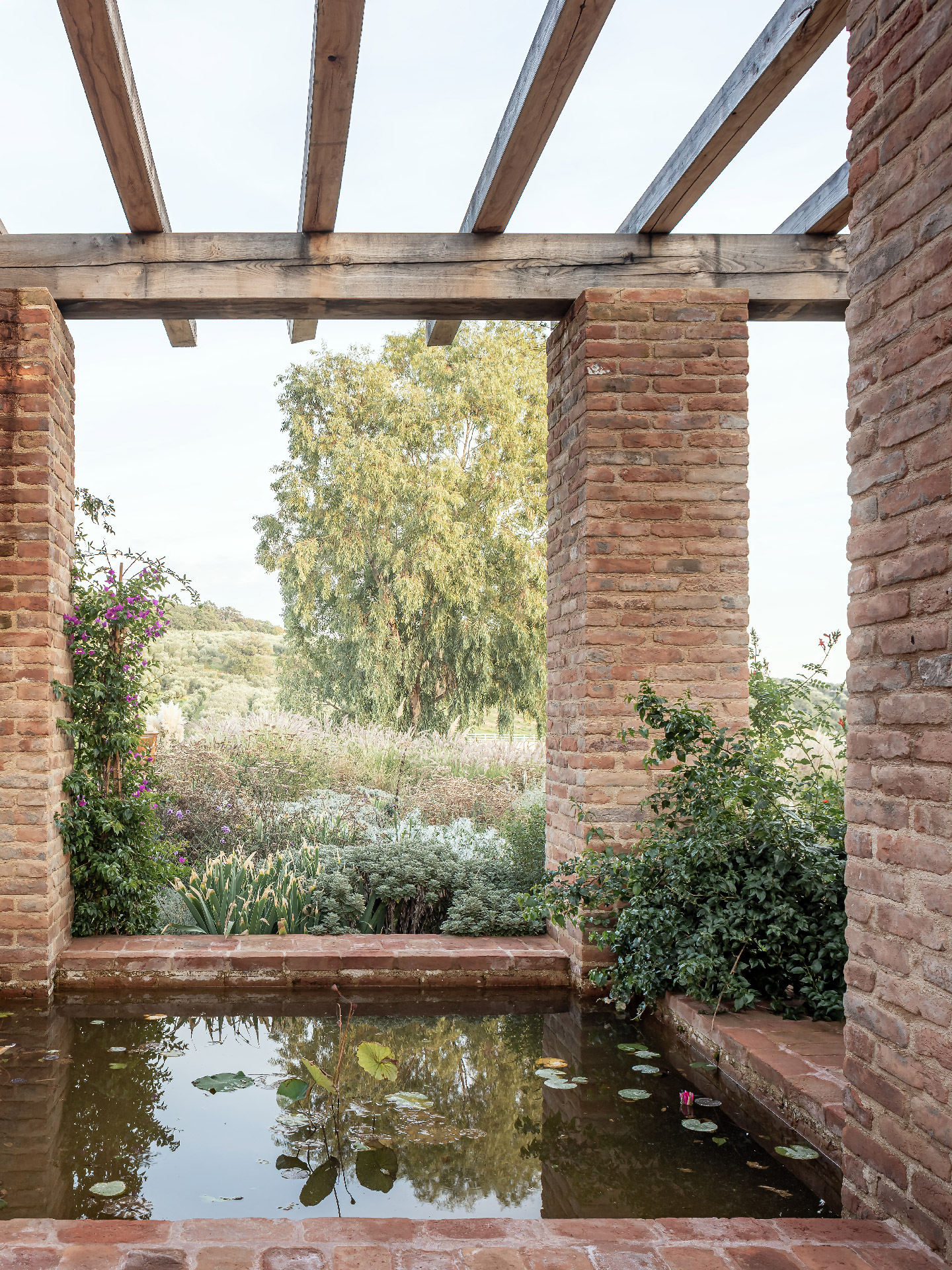
These materials are used as structural elements, giving rise to living, vibrant surfaces. The stone represents a continuation of the location’s architectural tradition; the reclaimed brick preserves the memory of the farm work conducted here; and the exposed aggregate concrete provides a contemporary interpretation of the historic whitewashed masonry.
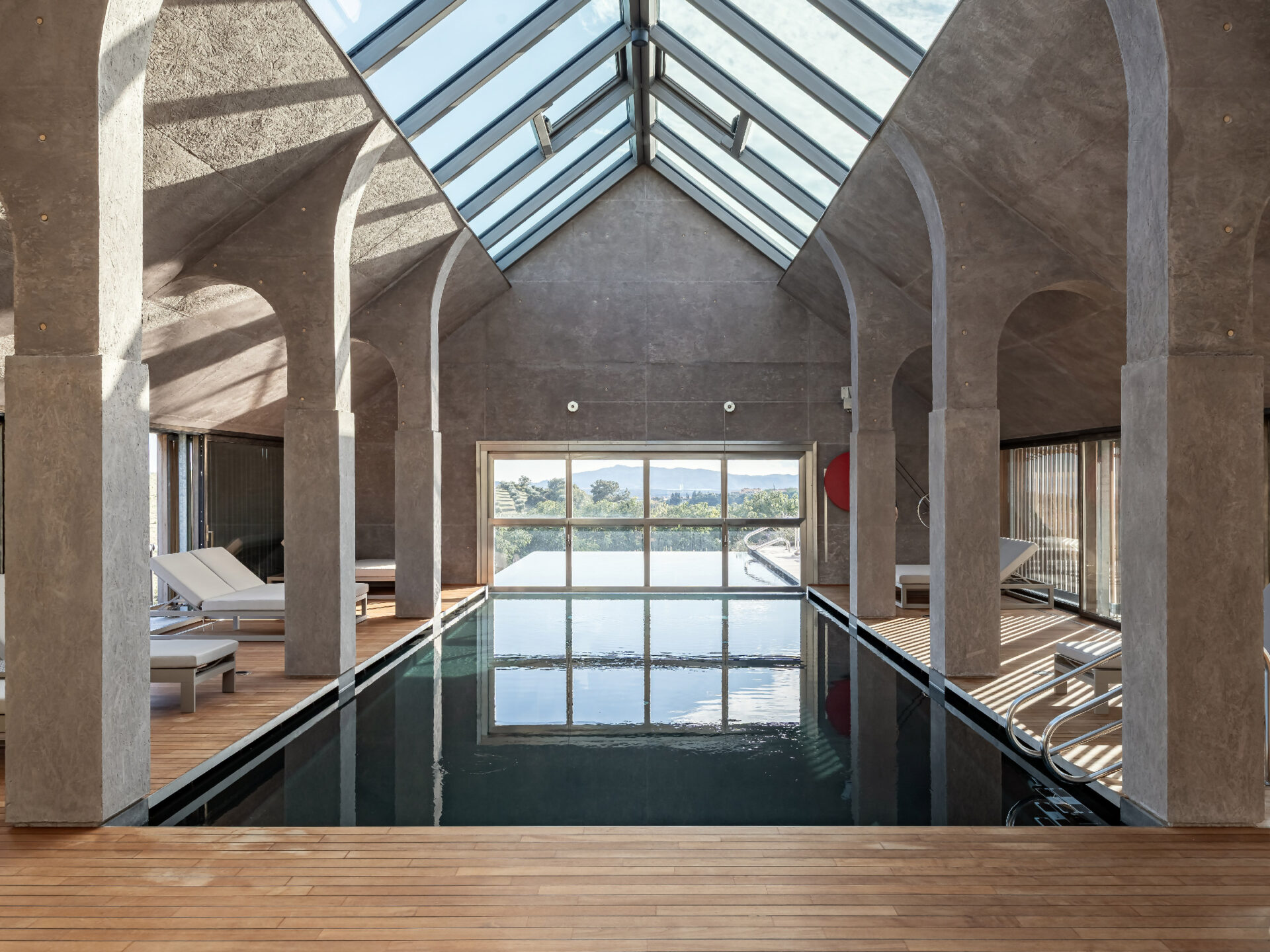
The buildings’ surfaces are therefore sensitive to light and the seasons, changing as the day progresses and creating alternating interplay of solids and voids, deep shadows and unexpected openings.
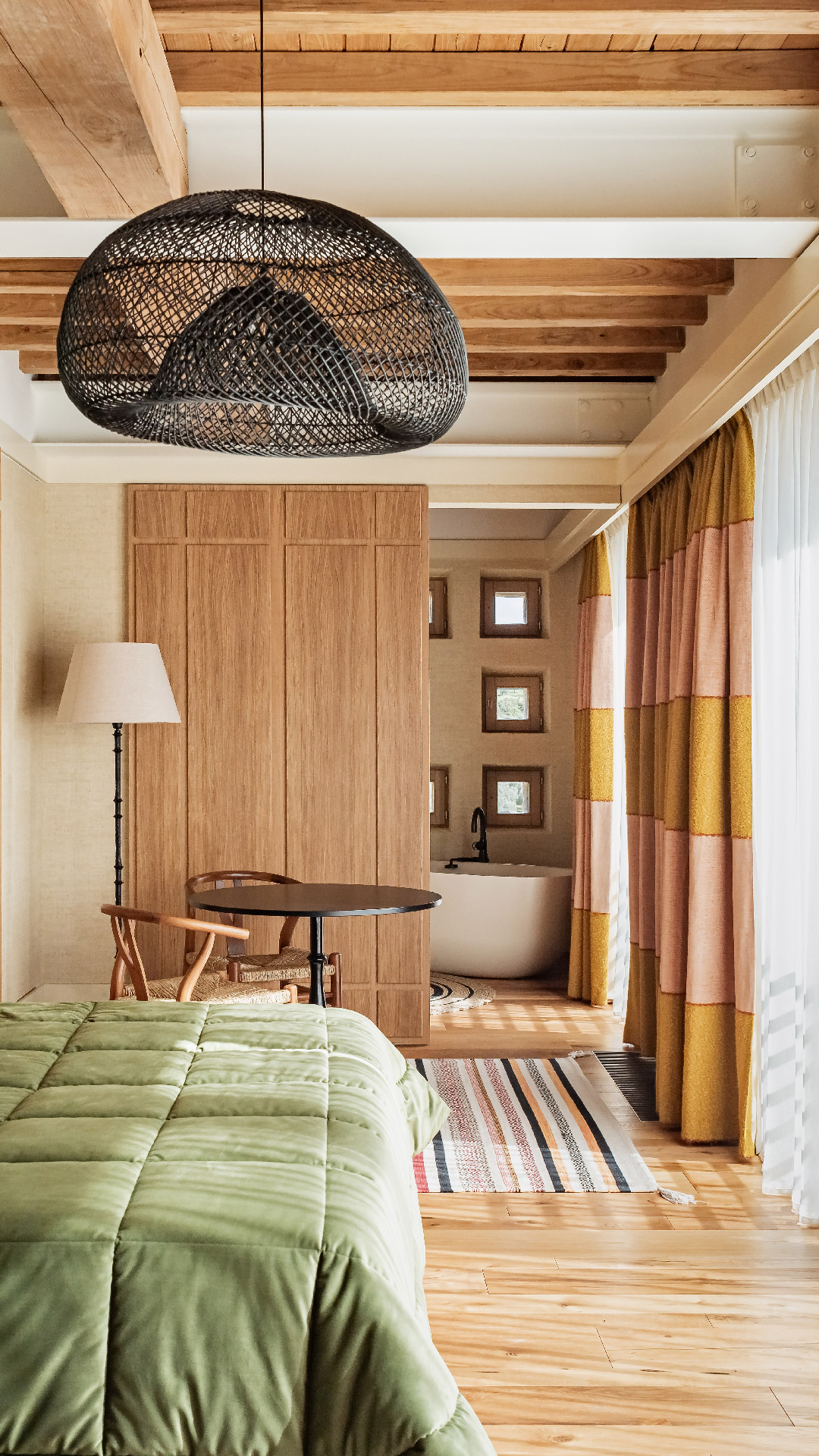
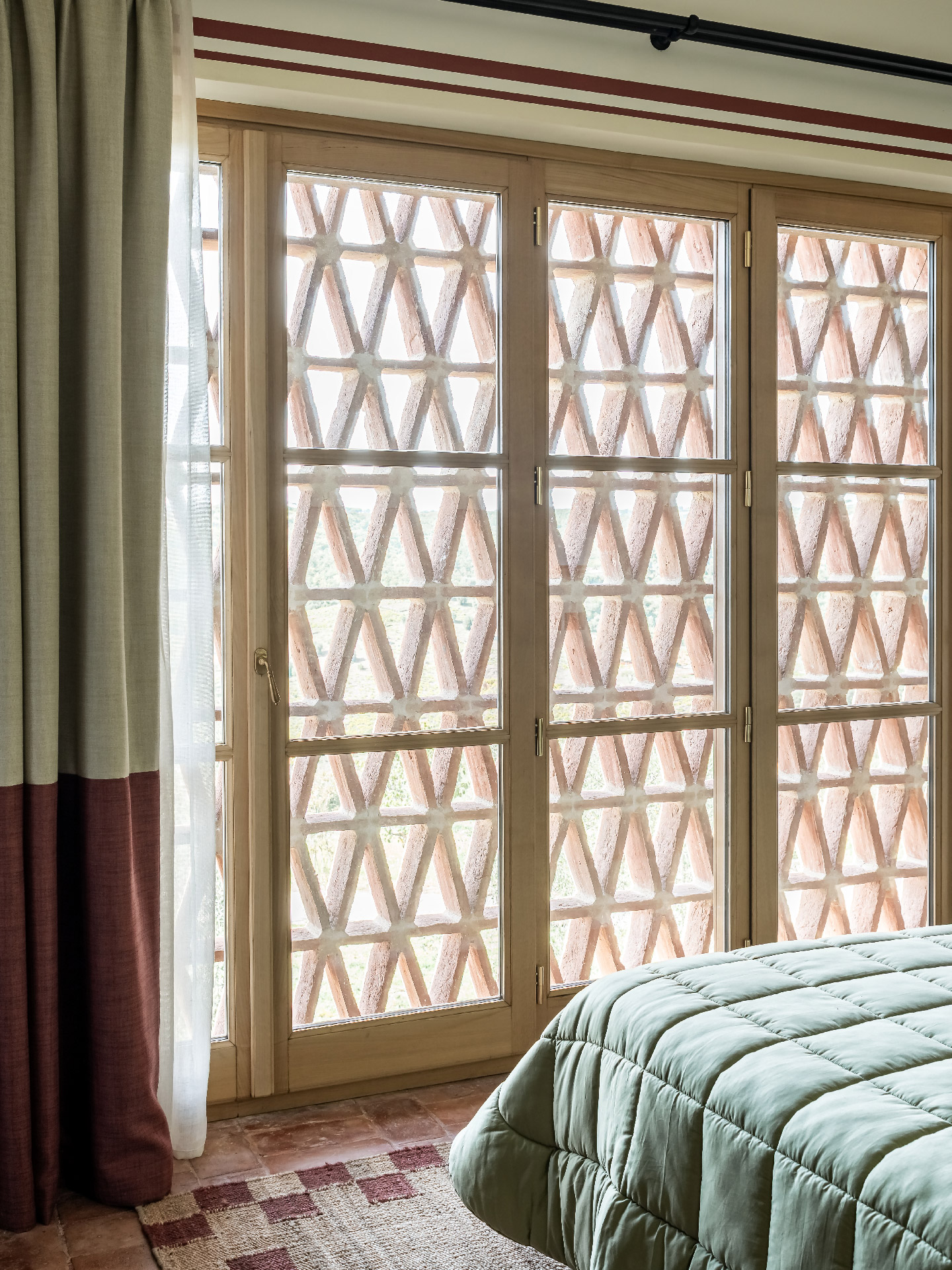
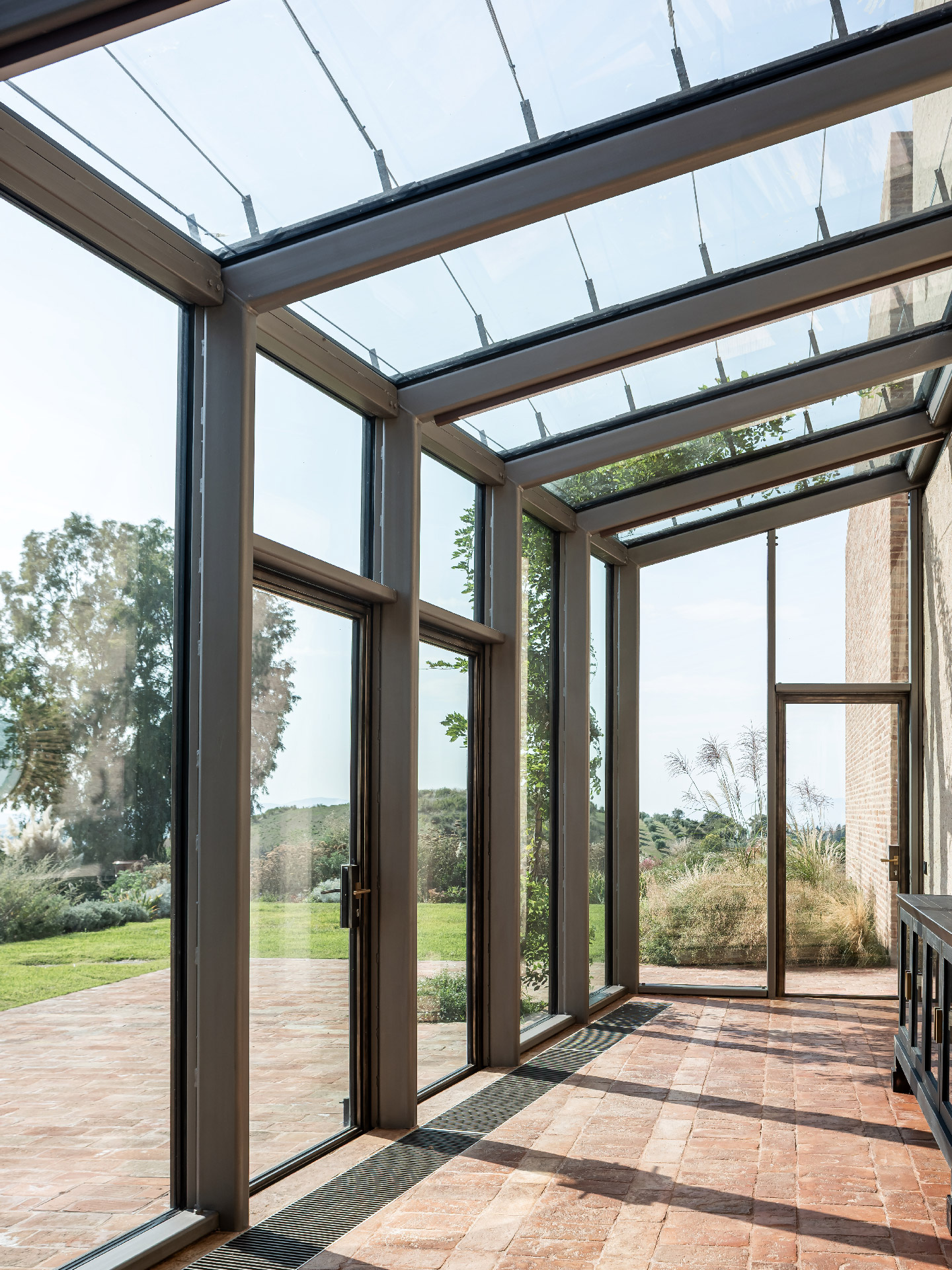
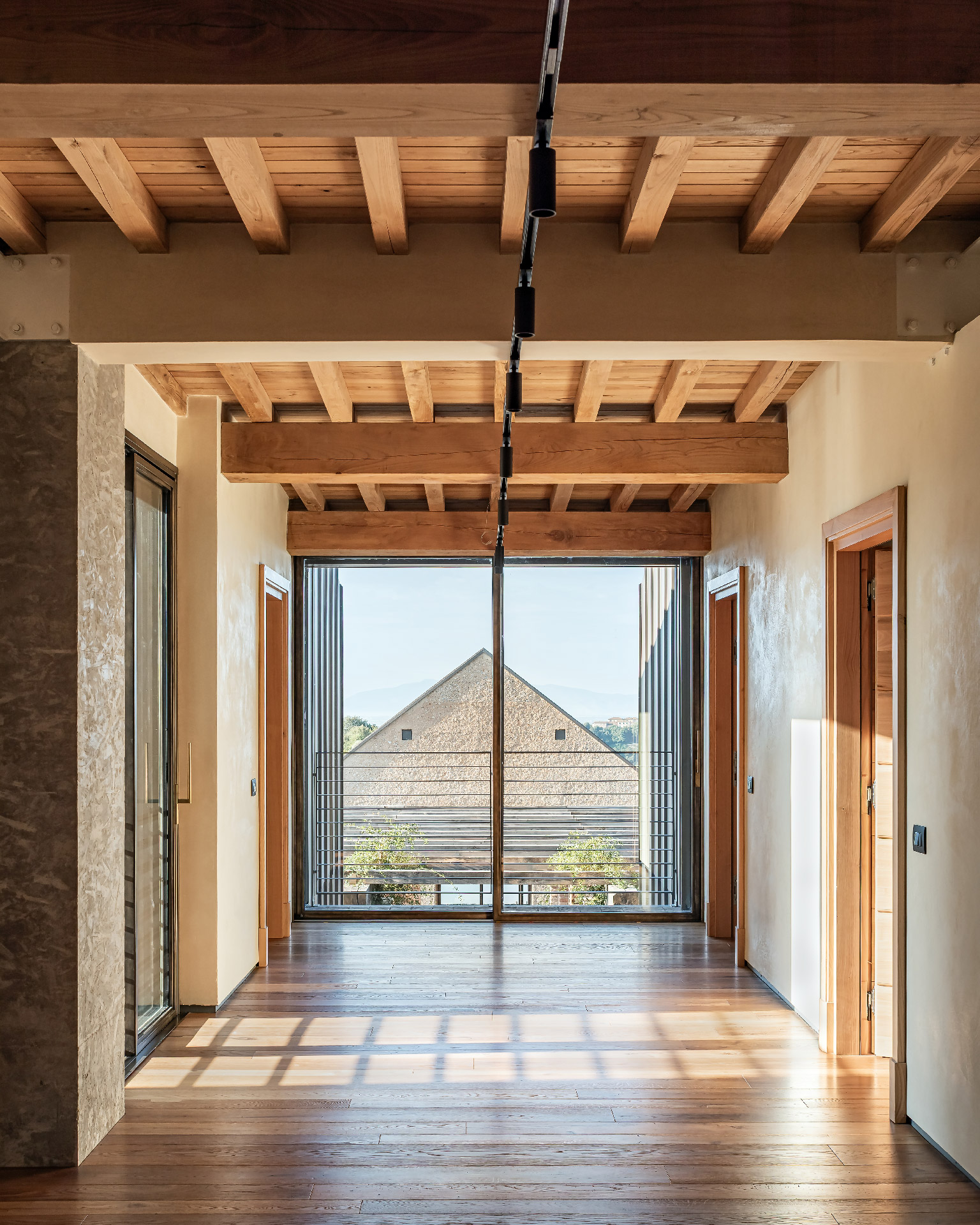
The windows are also designed to control the relationship between indoors and outdoors: small slits, large glass surfaces, and recessed fixtures within the walls shape guests’ view of the landscape and protect the intimacy of the living spaces.
Roofs and architectural profile
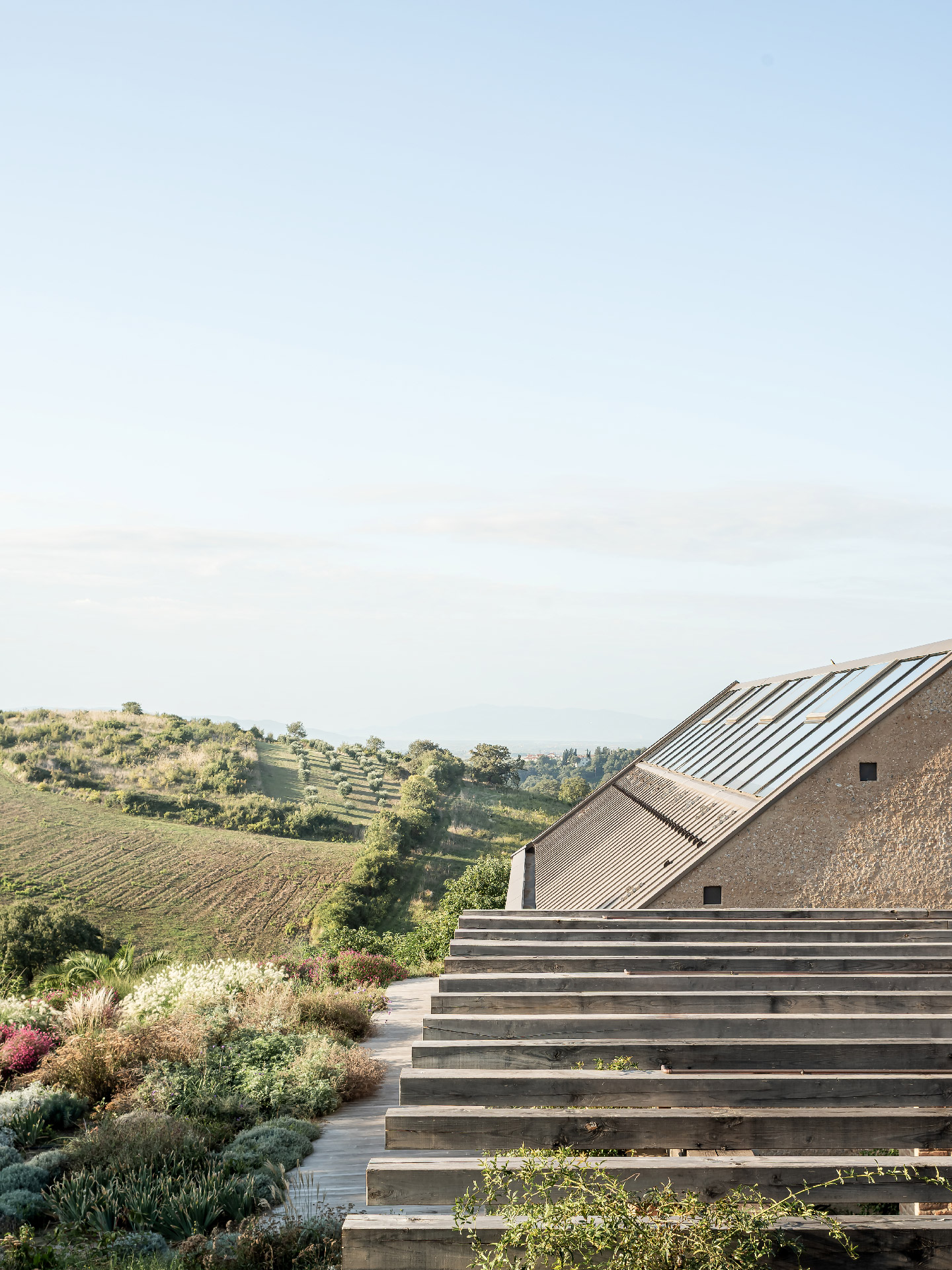
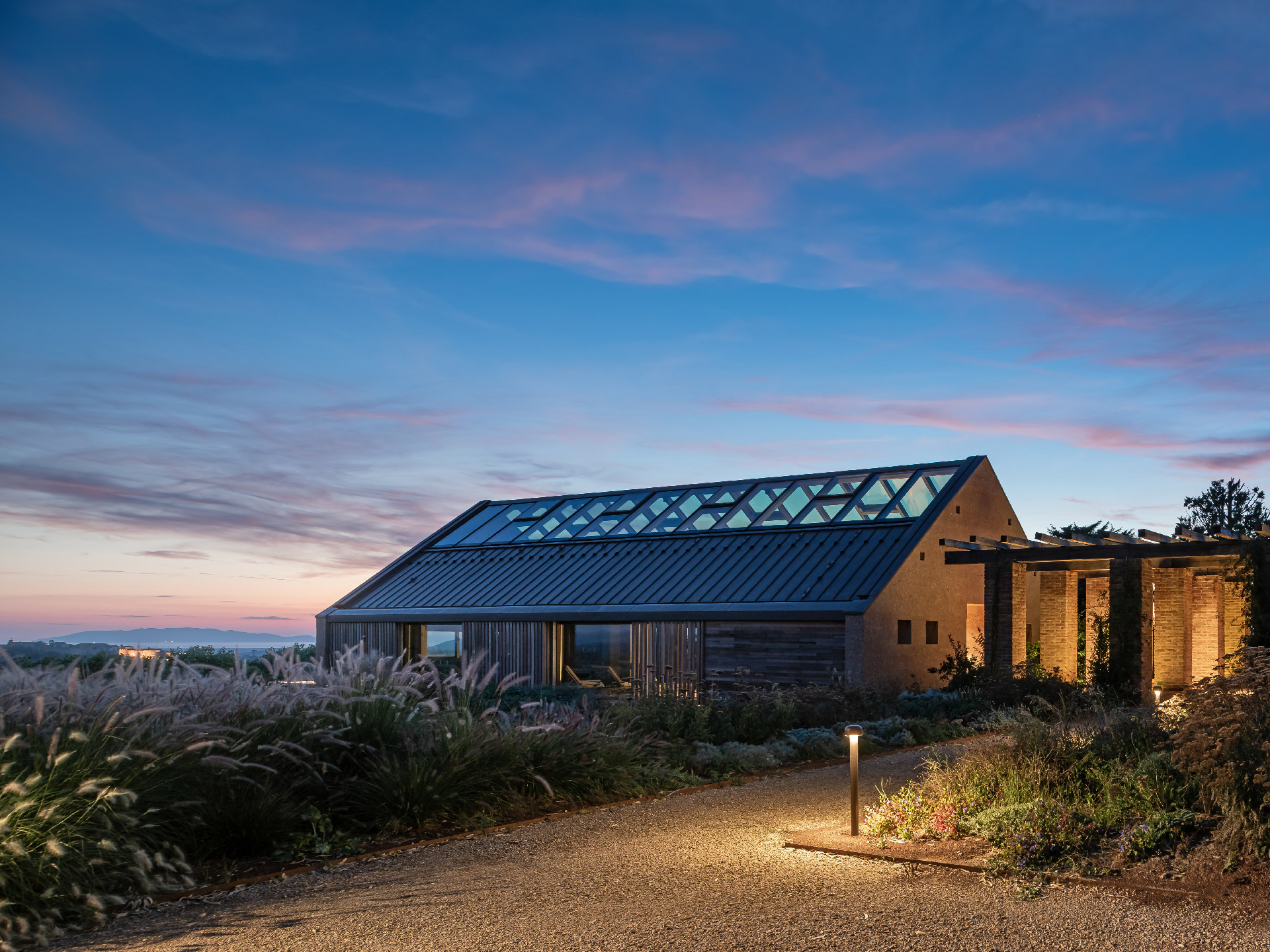
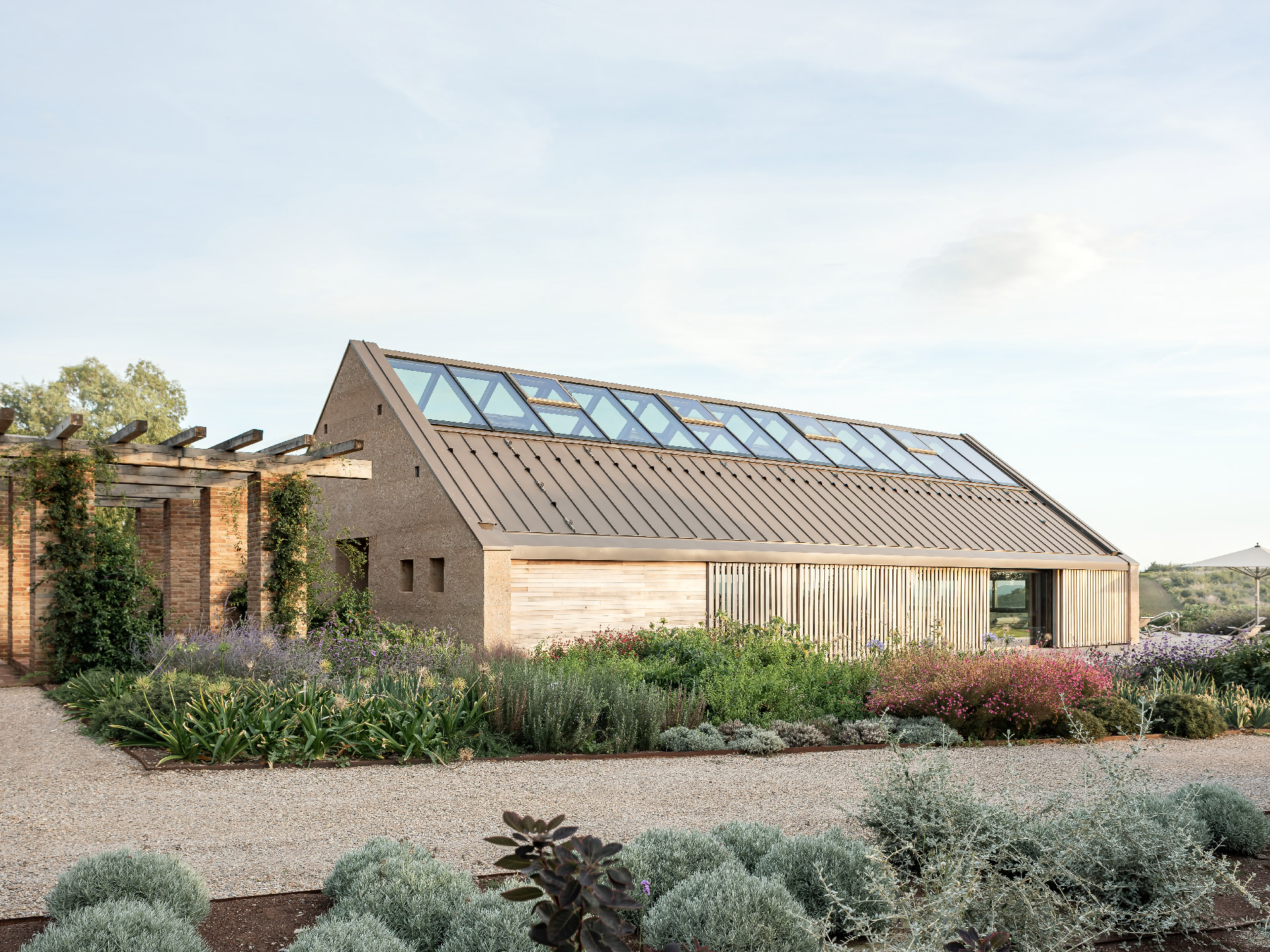
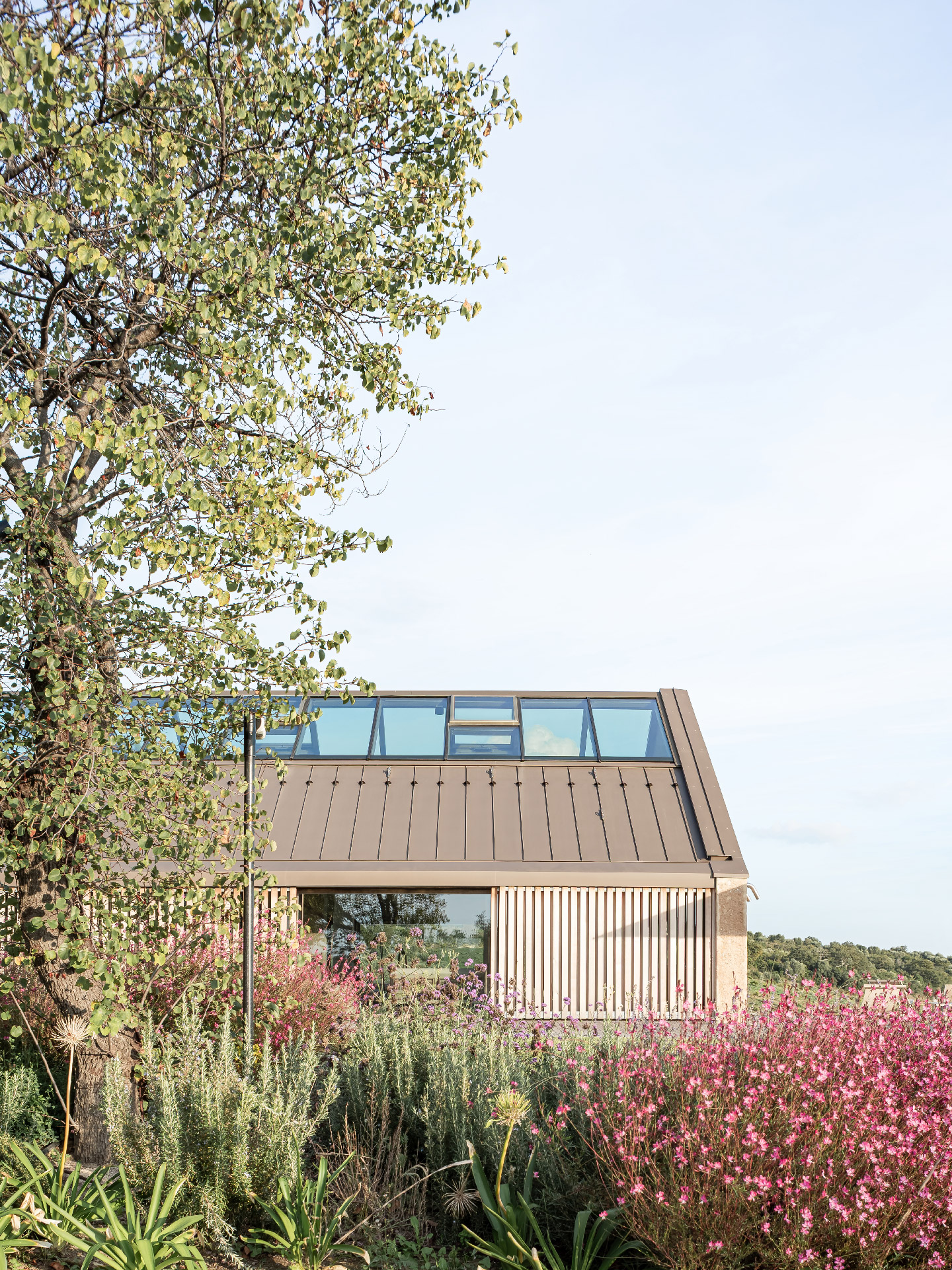
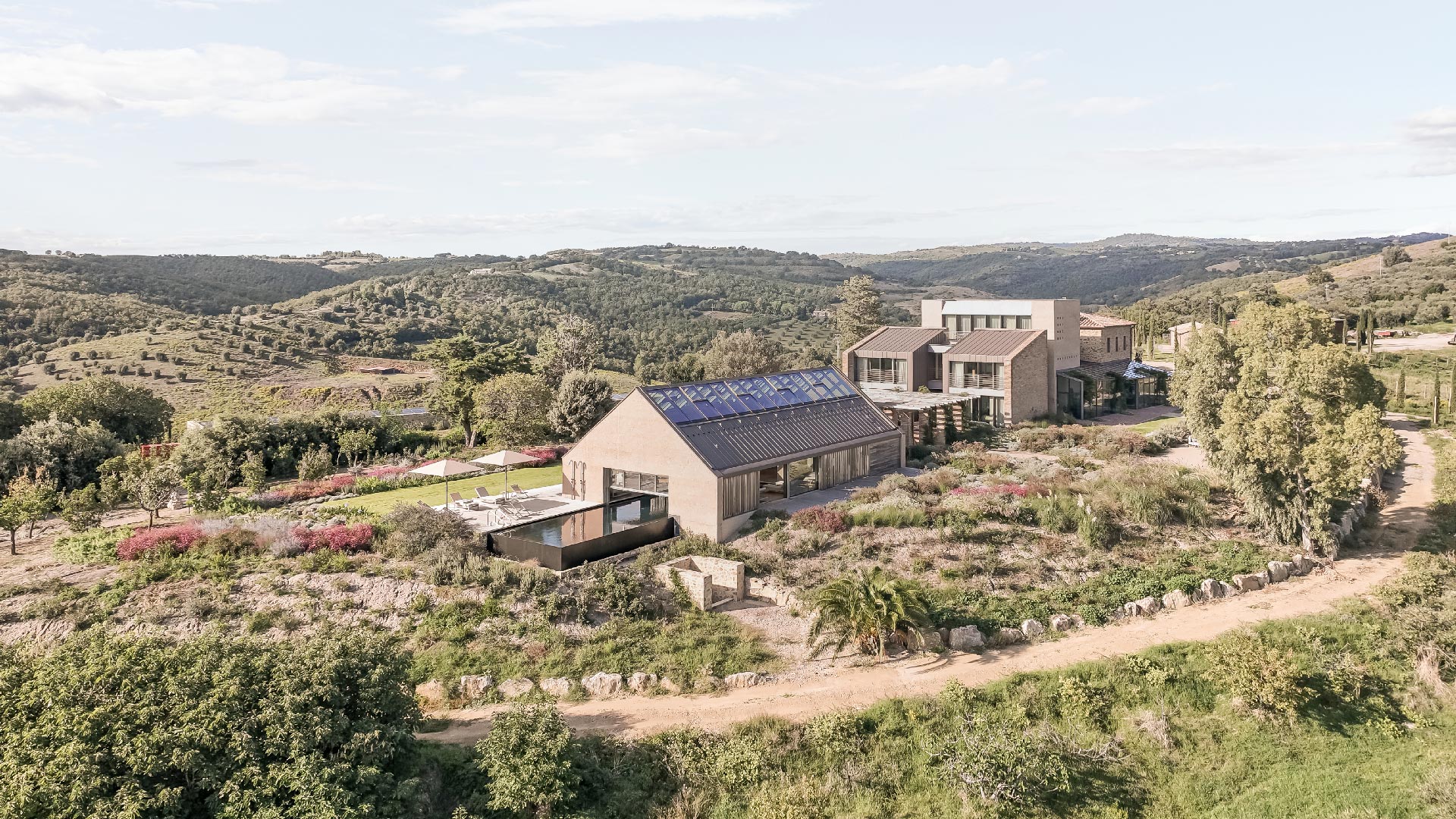
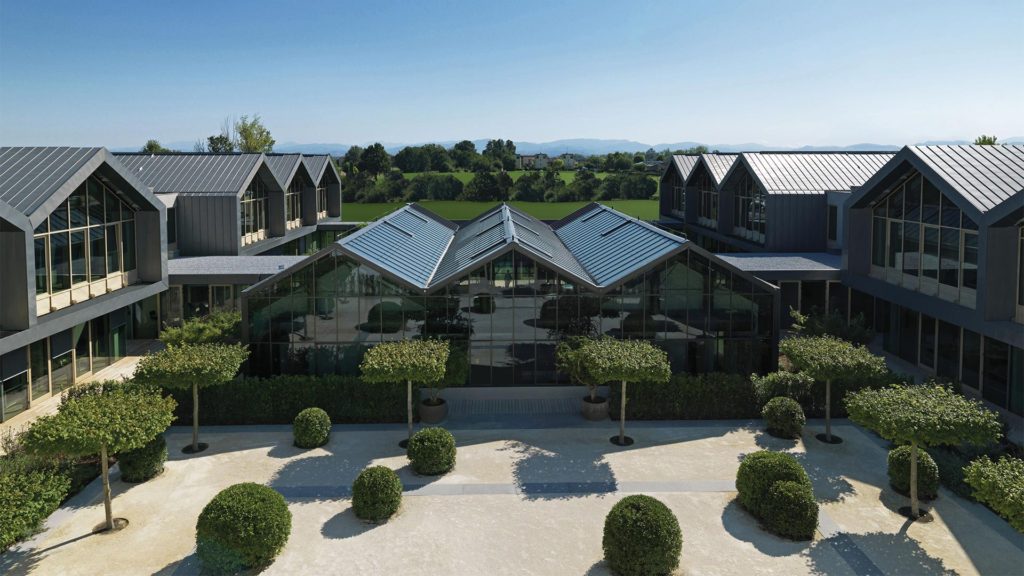
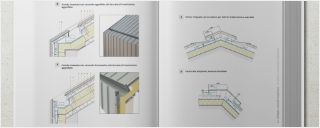
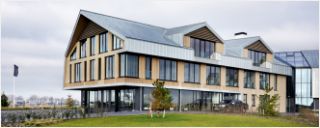
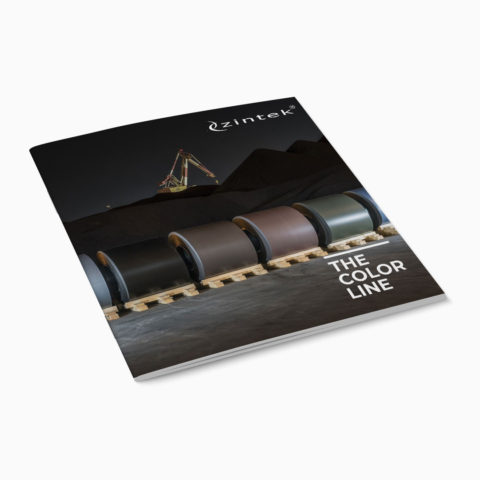
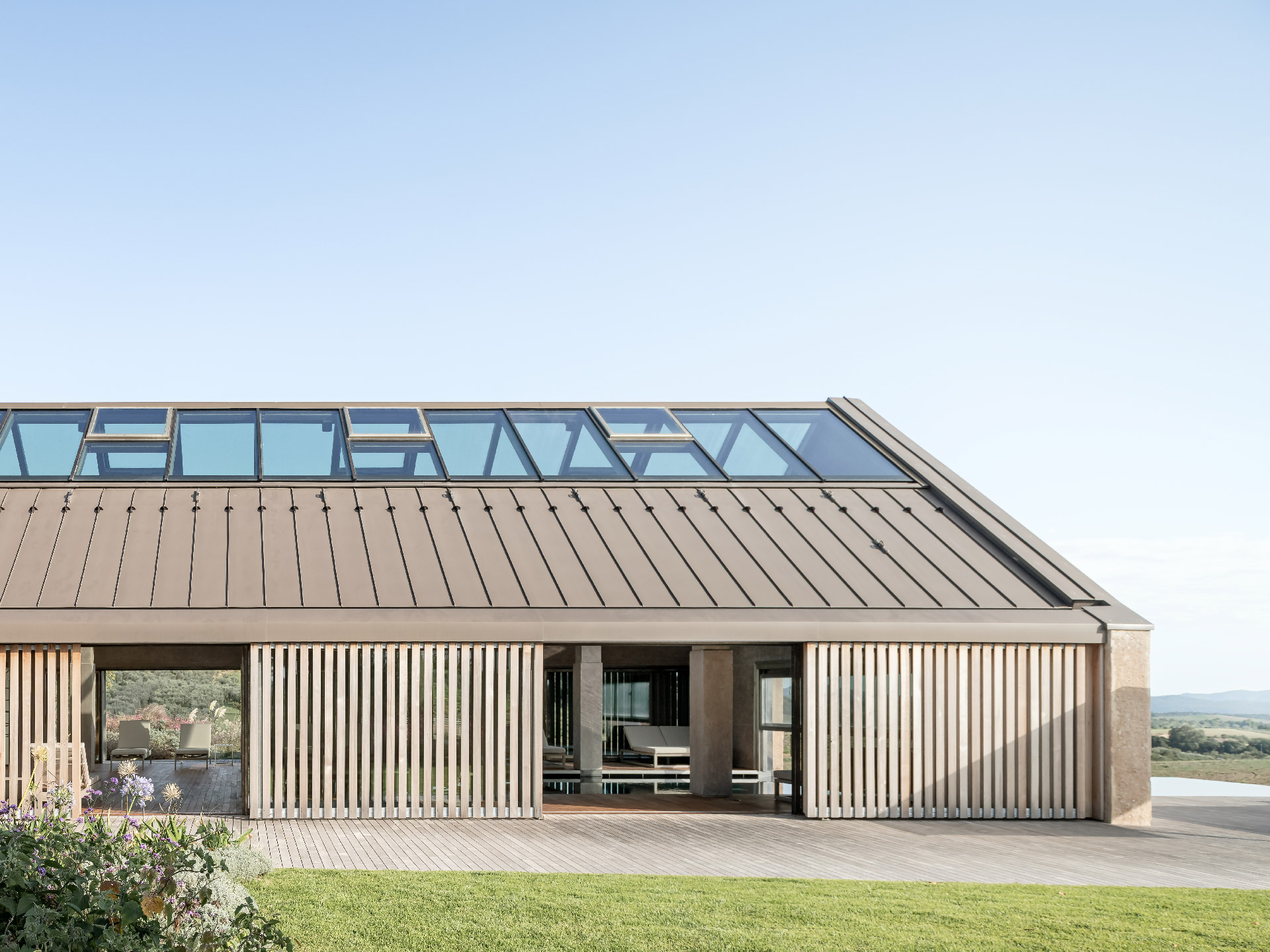
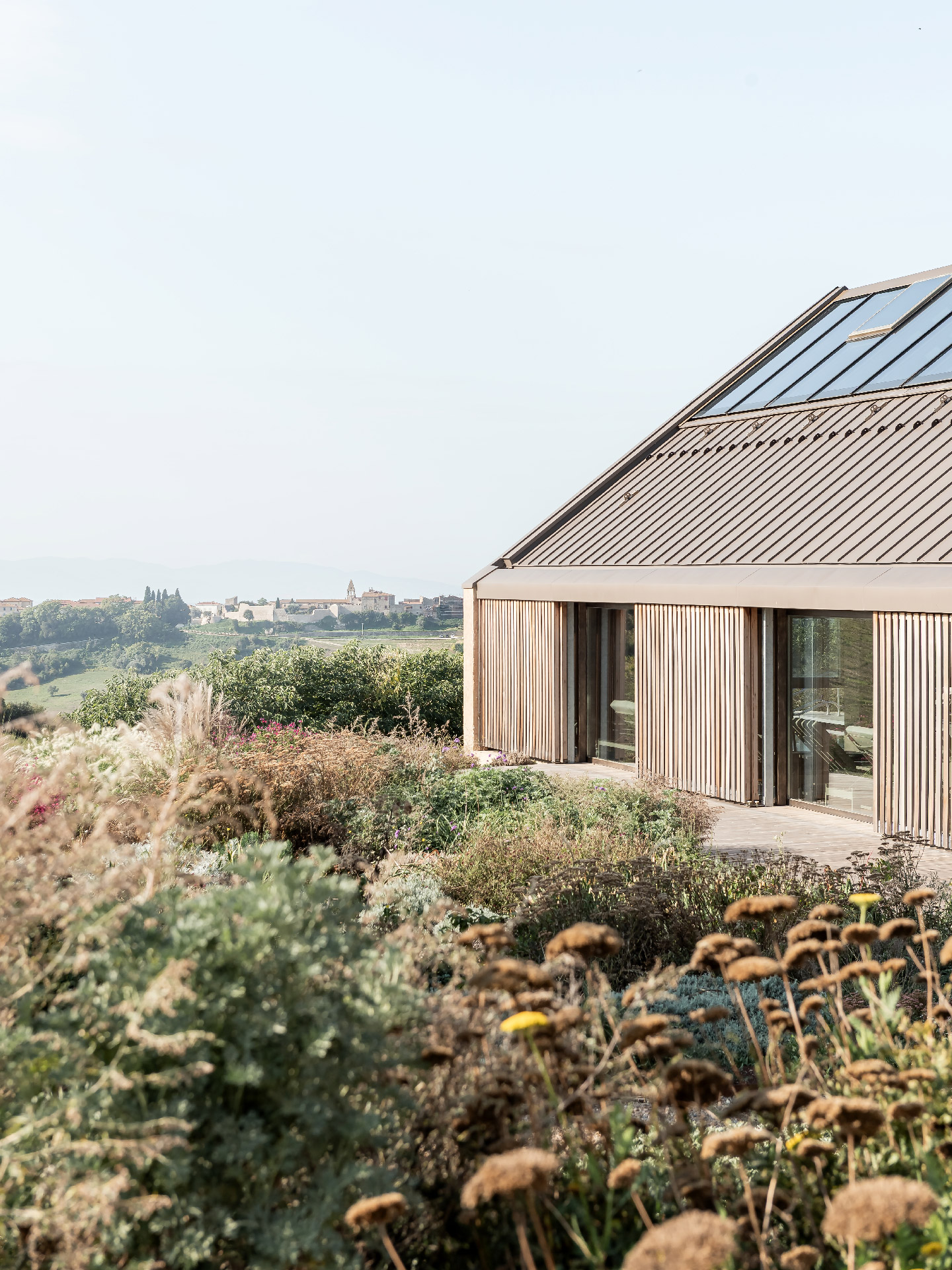
The envelope made of Natural Earth Brown zintek® from the «The Color Line» series, laid with double seaming, includes 250 sqm of roofs, 90 sqm of cladding, and 120 sqm of sheet metal work. Its structure helps to define the architectural language, and is integrated with the buildings’ materials and the design of the pitch.
The use of metal keeps the profile streamlined and precise, complementing the architecture’s geometry without interfering with the landscape. The roof thus becomes an integral part of the composition, helping to establish visual continuity between the buildings and the horizon.
A small and modern settlement
Borgo Banditaccia now offers tourist accommodation spread across a farmhouse, six mini-apartments, and a series of communal spaces designed to foster a relationship between the guests and their natural surroundings. Together it has the feel of a small Mediterranean village, comprising closely spaced volumes and shady paths that open up suddenly to provide views of the landscape. Meeting and relaxation spaces between the buildings, including a pergola draped in wisteria and Virginia creeper, blend architecture and nature.
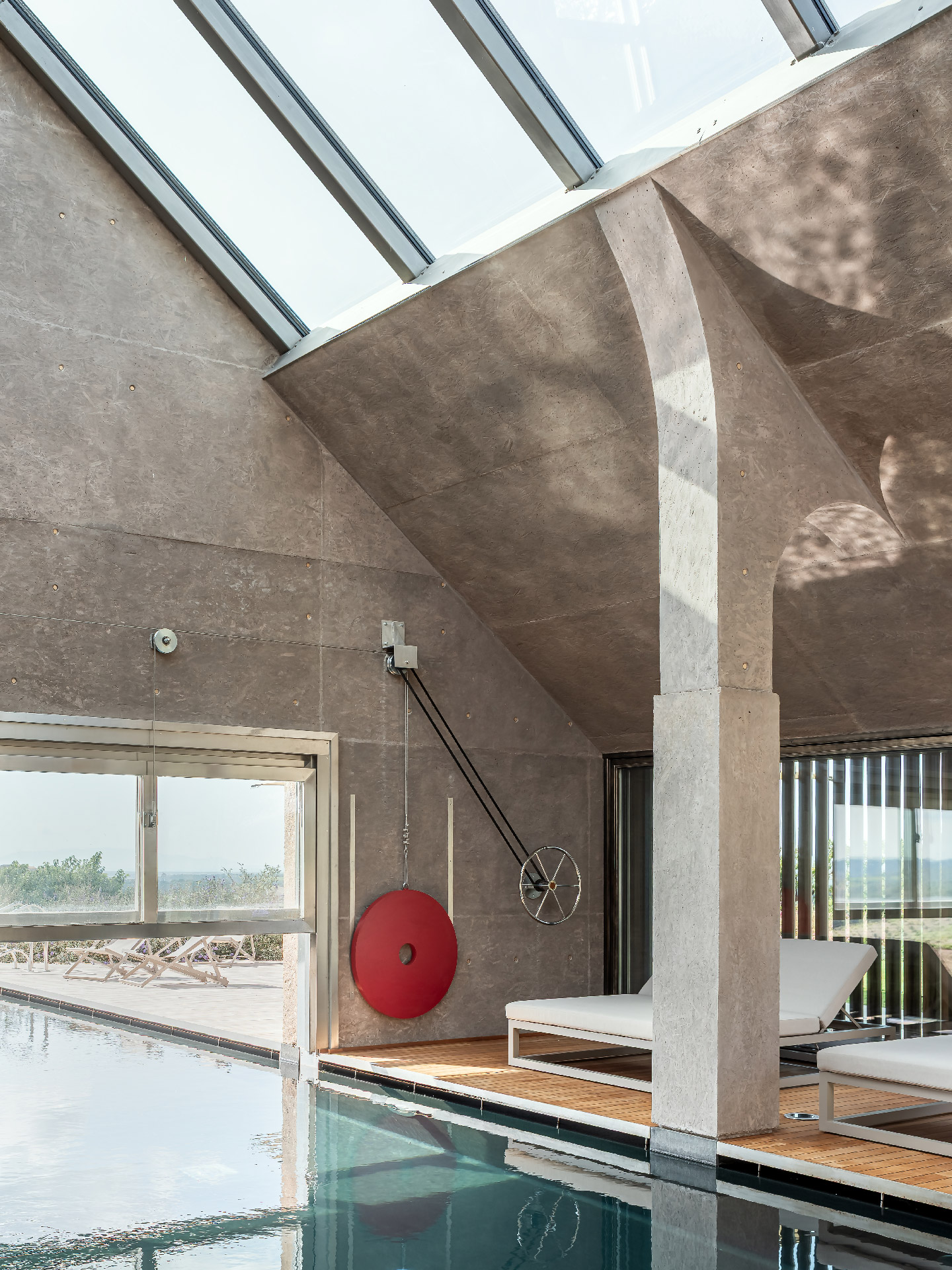
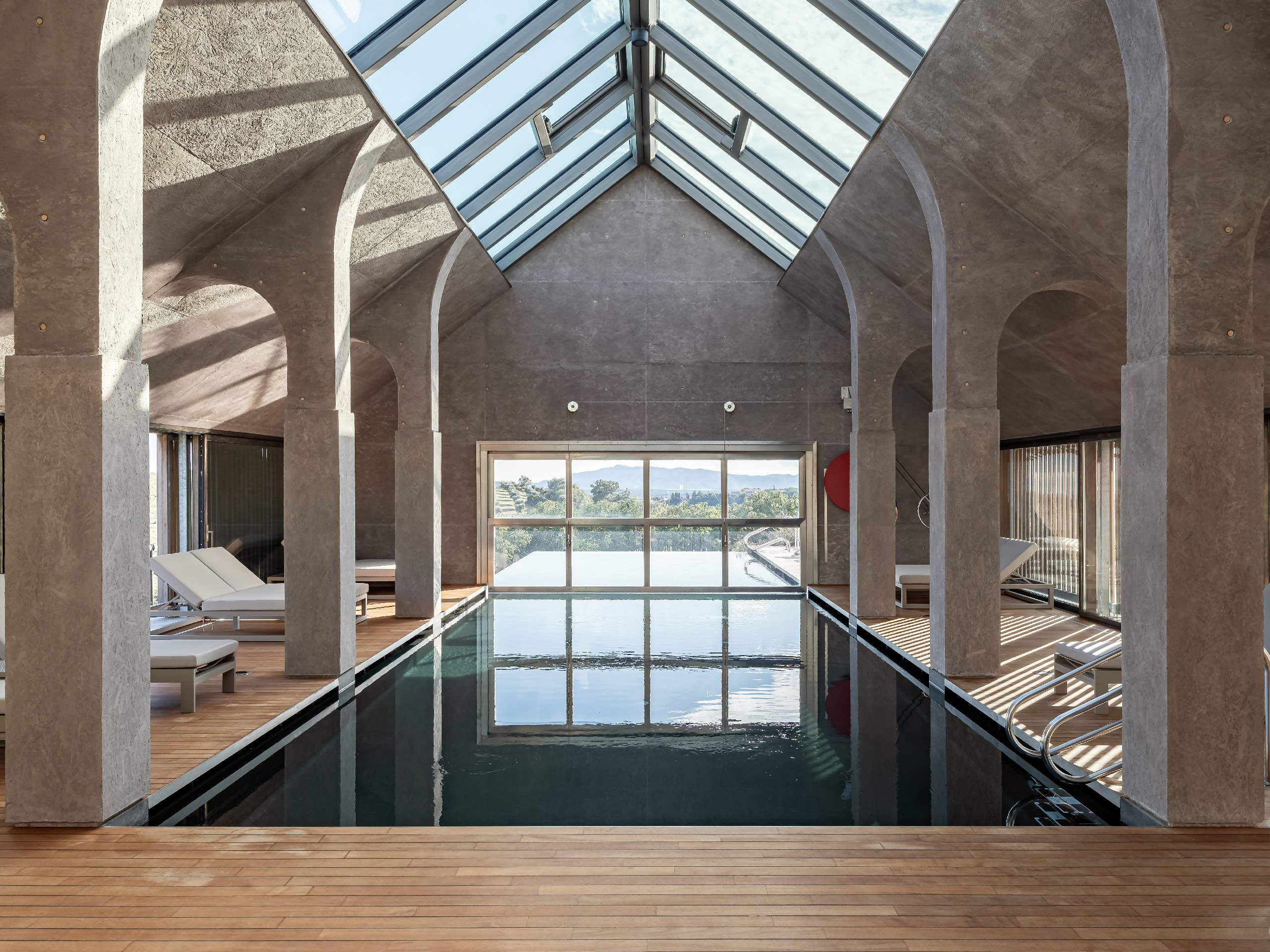
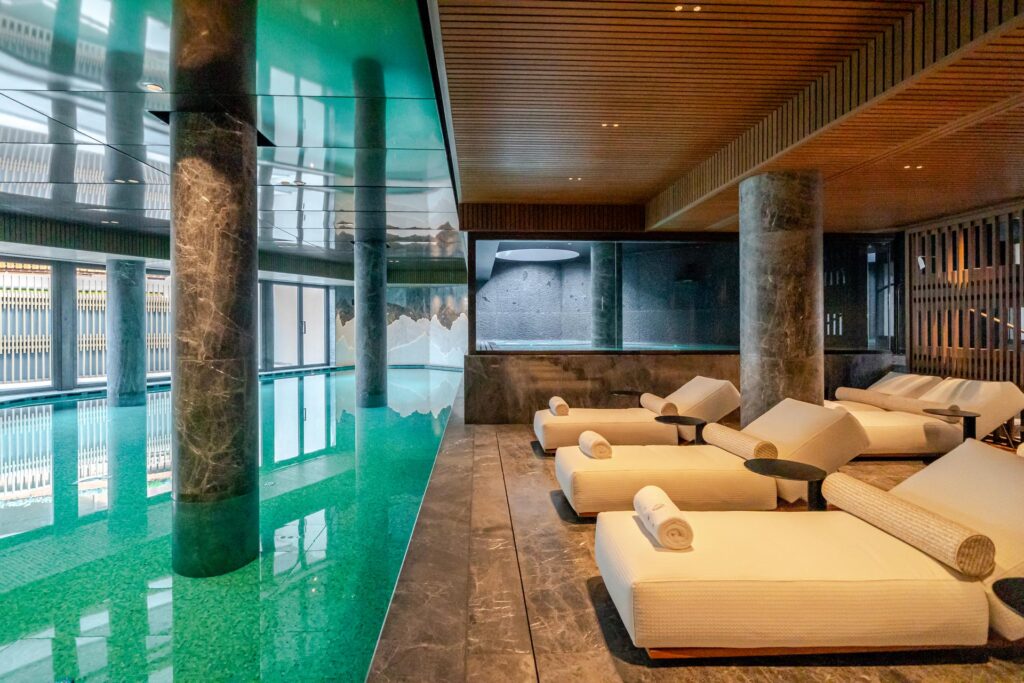
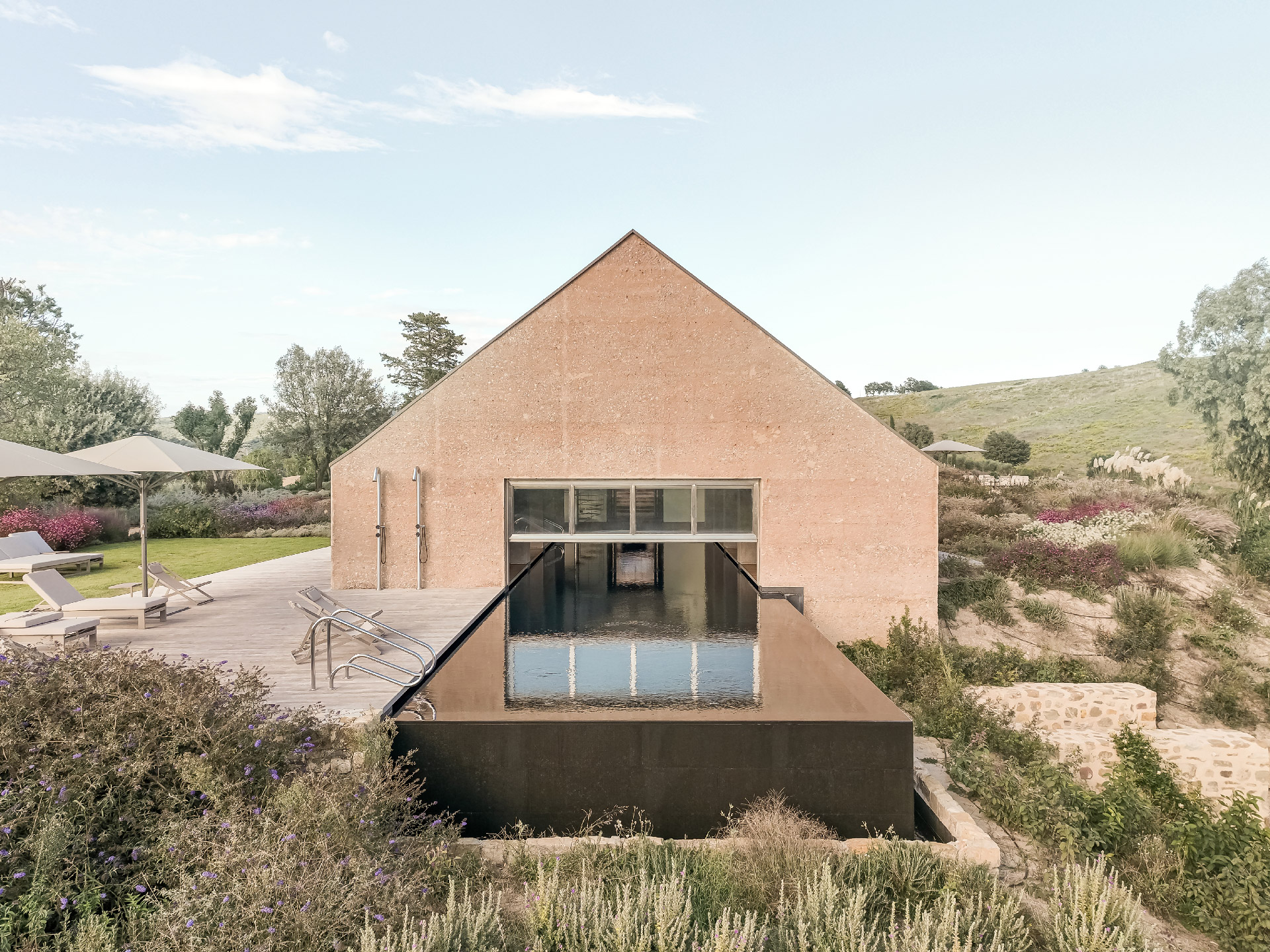
The service buildings also offer a fresh interpretation of traditional rural structures: the indoor pool in the former stable block features a double-curved concrete shell and uses overhead light and natural ventilation to create a passively designed, energy-efficient environment that can self-regulate without requiring intrusive heating or cooling systems.
Sustainability and local connections
Sustainability was an integral part of the design process and one of the project’s key features.
The work prioritized local materials, dry construction techniques, prefabricated wood structures, and rainwater recovery systems. Rather than introducing new features, the architects removed and reworked elements to make the structure once again coherent with the landscape and to highlight the land’s natural curves.
This approach helped Borgo Banditaccia to win the 2025 Premio RĒGULA, awarded for its ability to pair memory and modernity, architectural quality, and sensitivity to the landscape.
Architecture designed for living
Borgo Banditaccia is not an iconic object made to be observed from a distance. It is a spatial experience that weaves together architecture, light, and landscape to create a slower and more conscious form of living.
In this project, the redevelopment of rural heritage was used as an opportunity to reflect on the relationship between architecture and the local area, showing that the two can be stitched back together, not simply juxtaposed. Every design and material choice helps to create a balance between form and landscape, while breathing life back into the settlement.