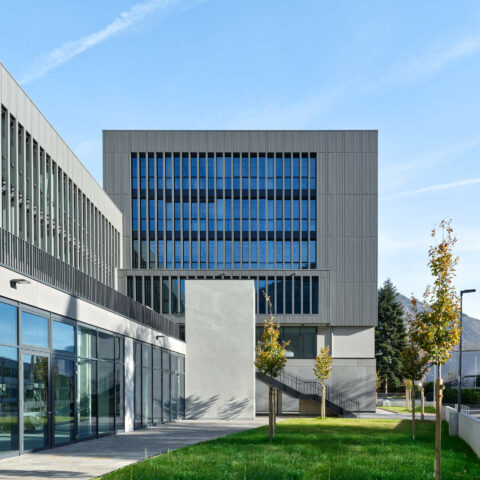
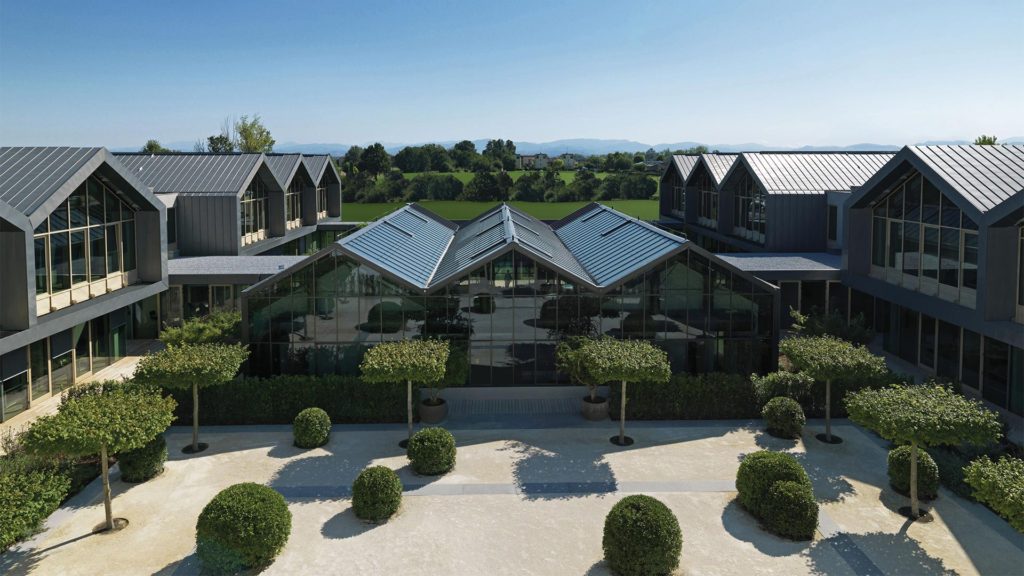
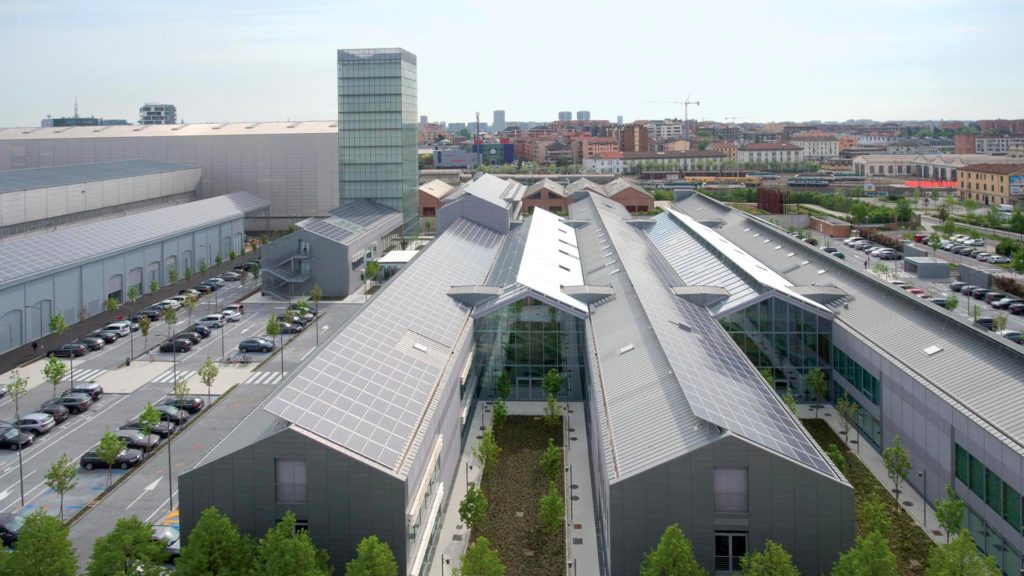









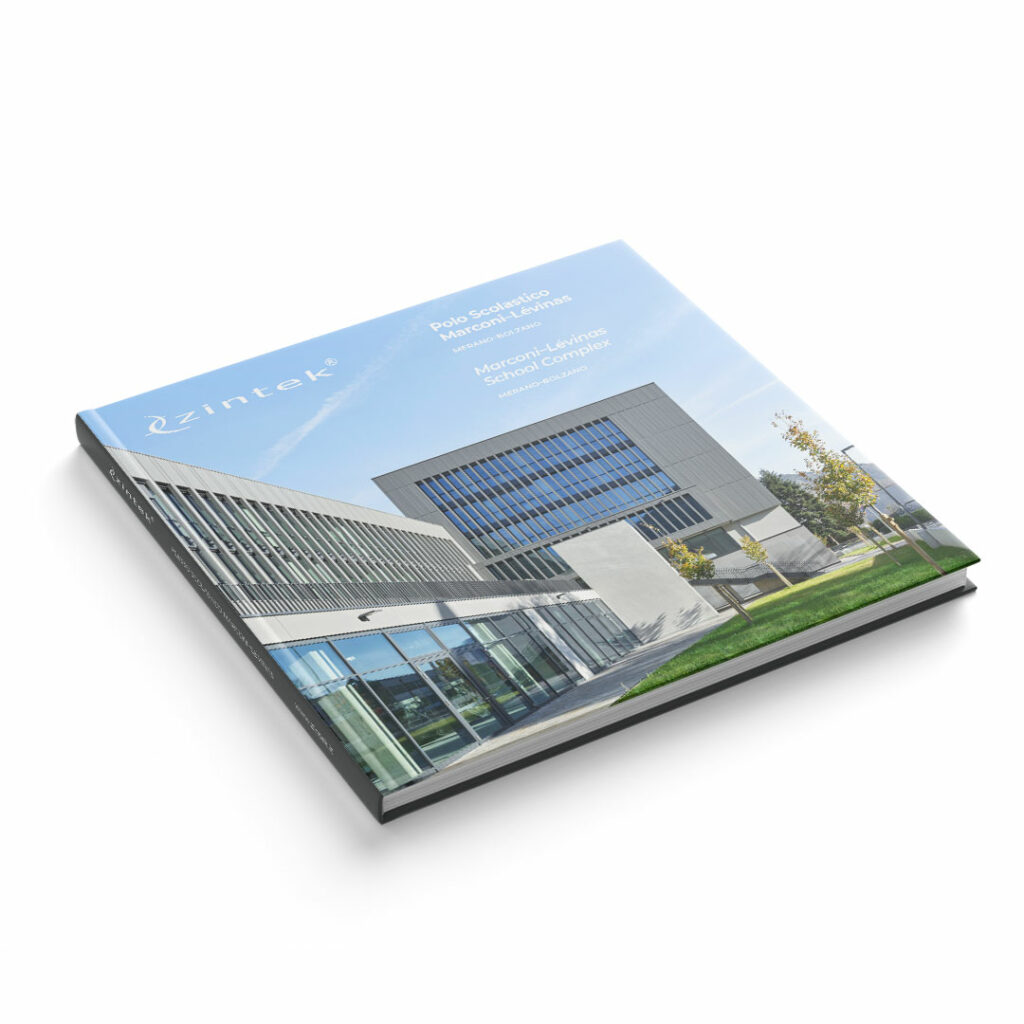
In the Maia Bassa district of Merano, between the Adige and Passirio rivers, the new Marconi–Lévinas school complex redefines the relationship between educational architecture and its urban surroundings. The project — which began life as an architectural competition launched by the Autonomous Province of Bolzano — sits harmoniously in an area on the border between city and countryside.
The complex was designed by the architects Giovanni Maggioni, Mirko Noris, Valerio Tolve, and Sandro Pacella, led by Marco Robecchi, and comprises three distinct volumes: a tower block, a linear building, and a raised square that connects the two. The buildings’ pure and legible forms are inextricably tied to their function.
Sustainability is tackled pragmatically, with passive choices — orientation, mass, shading, and natural ventilation — prioritized over technological solutions. Green surfaces, although small, help to cool the space and mitigate the sun’s heat.
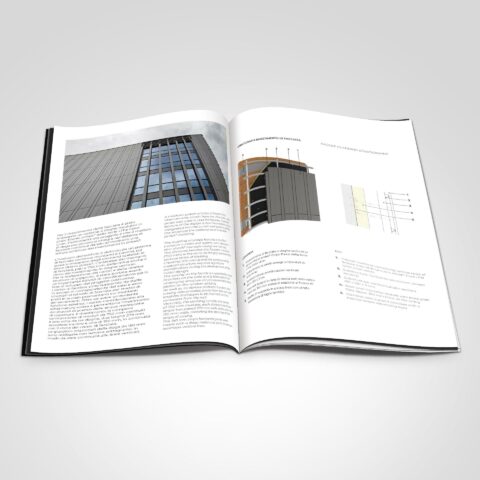
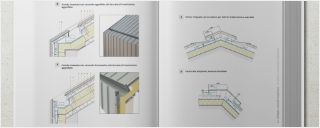
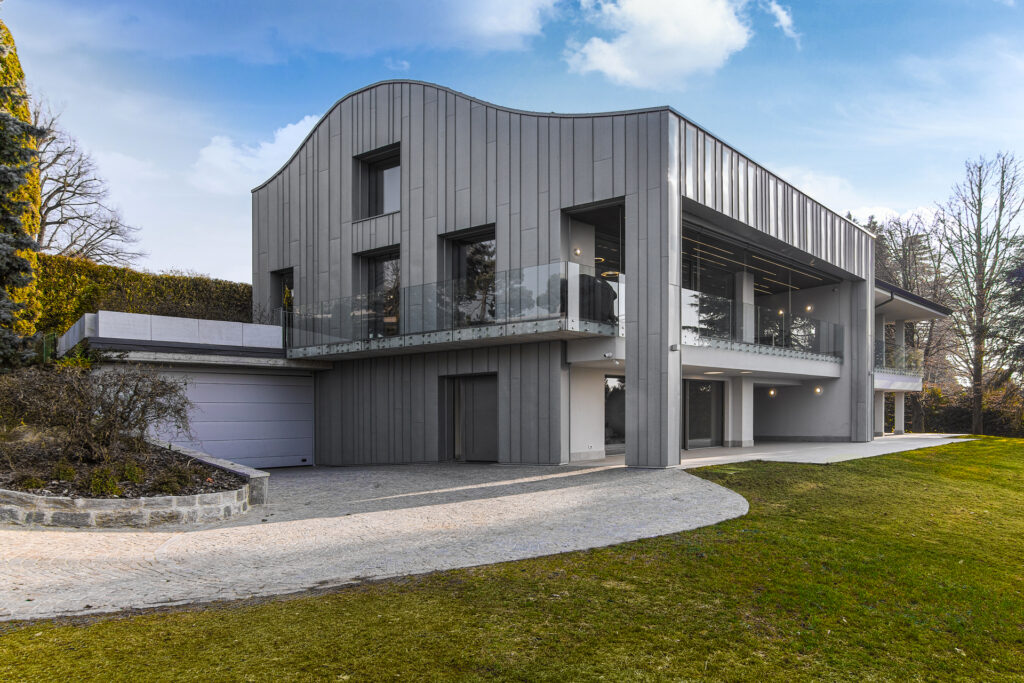
The zintek®-clad ventilated curtain wall, combined with insulation and low-emissivity glass, ensures excellent energy performance.
The Marconi–Lévinas complex — a new focal point in the industrial landscape on the outskirts of Merano — evokes a concept of education based on transparency and inclusivity. The architecture does more than simply house students. It plays an active role in their training and in the life of the community.