







Contemporary architecture and titanium-zinc zintek® roofing
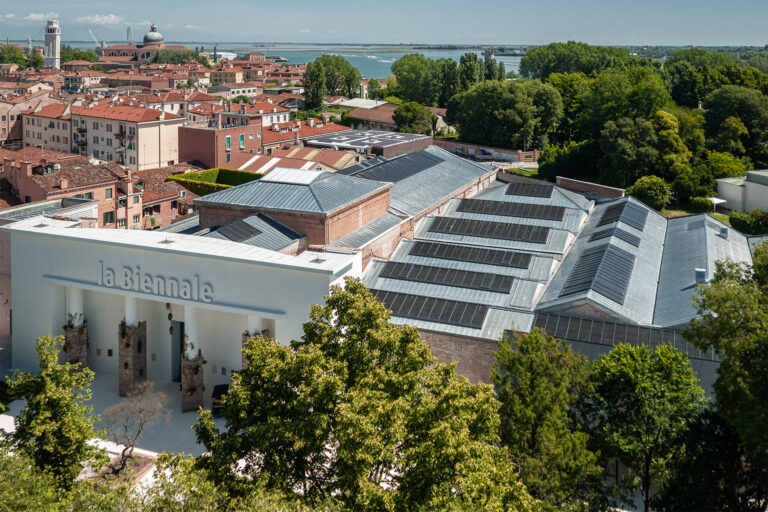
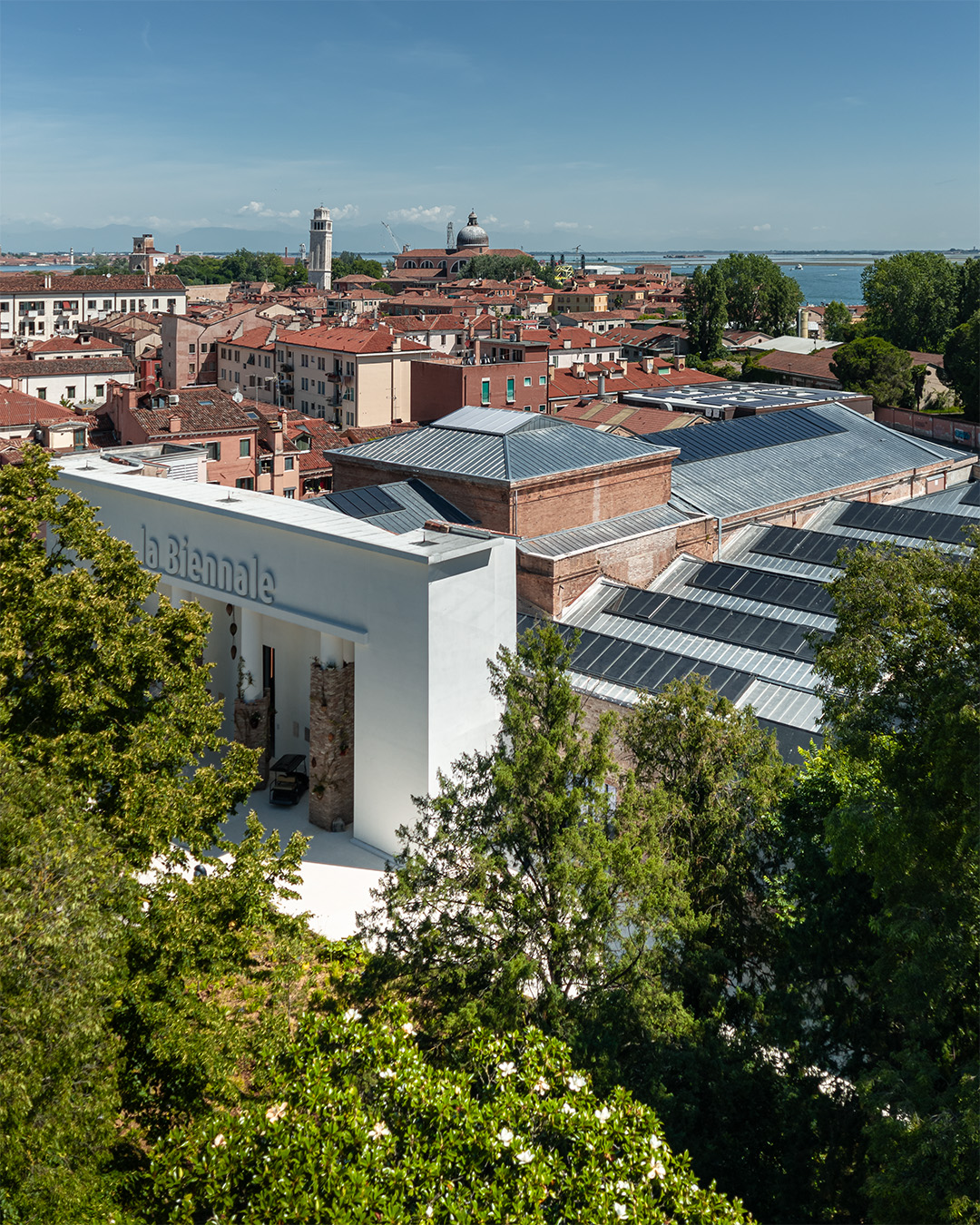
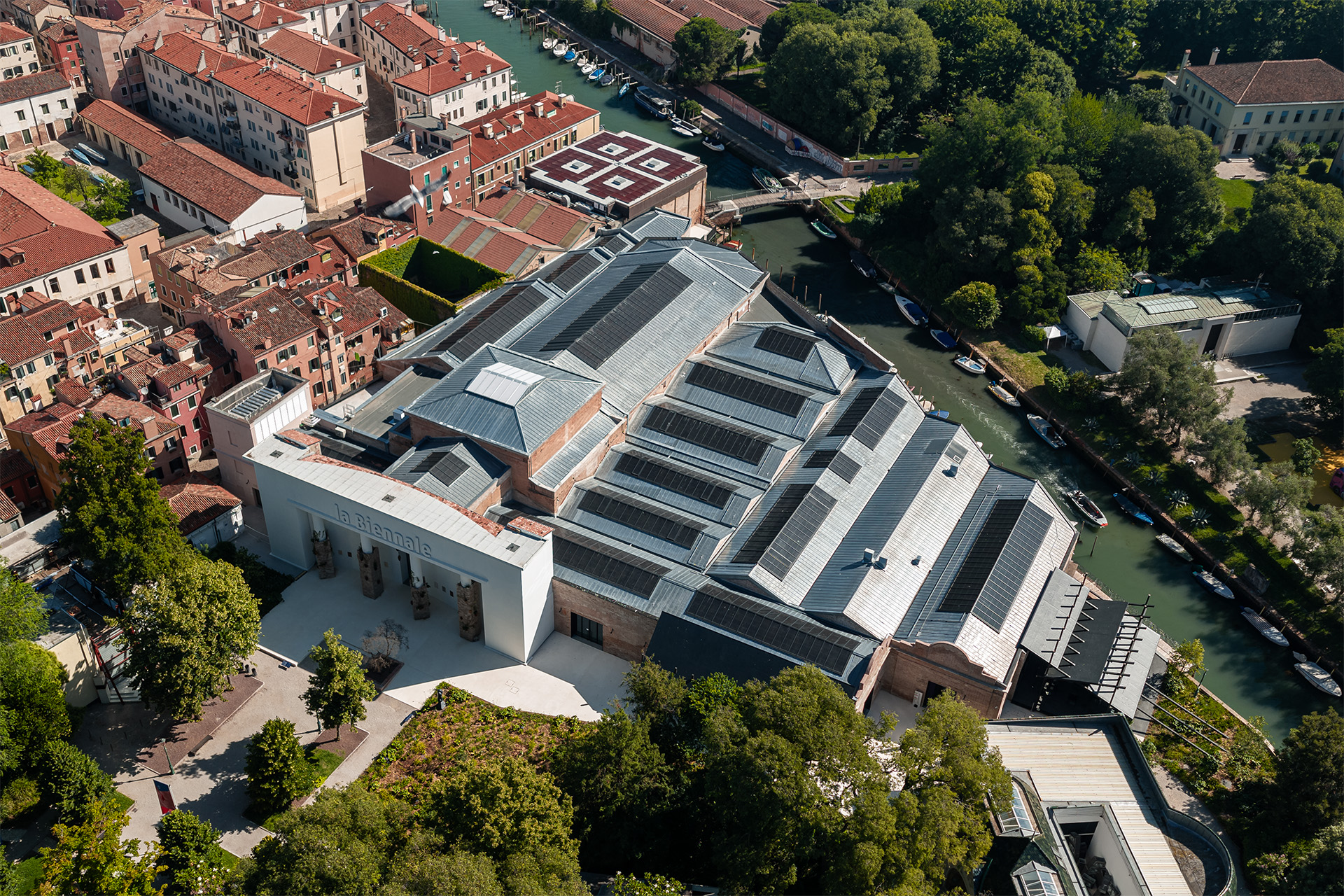
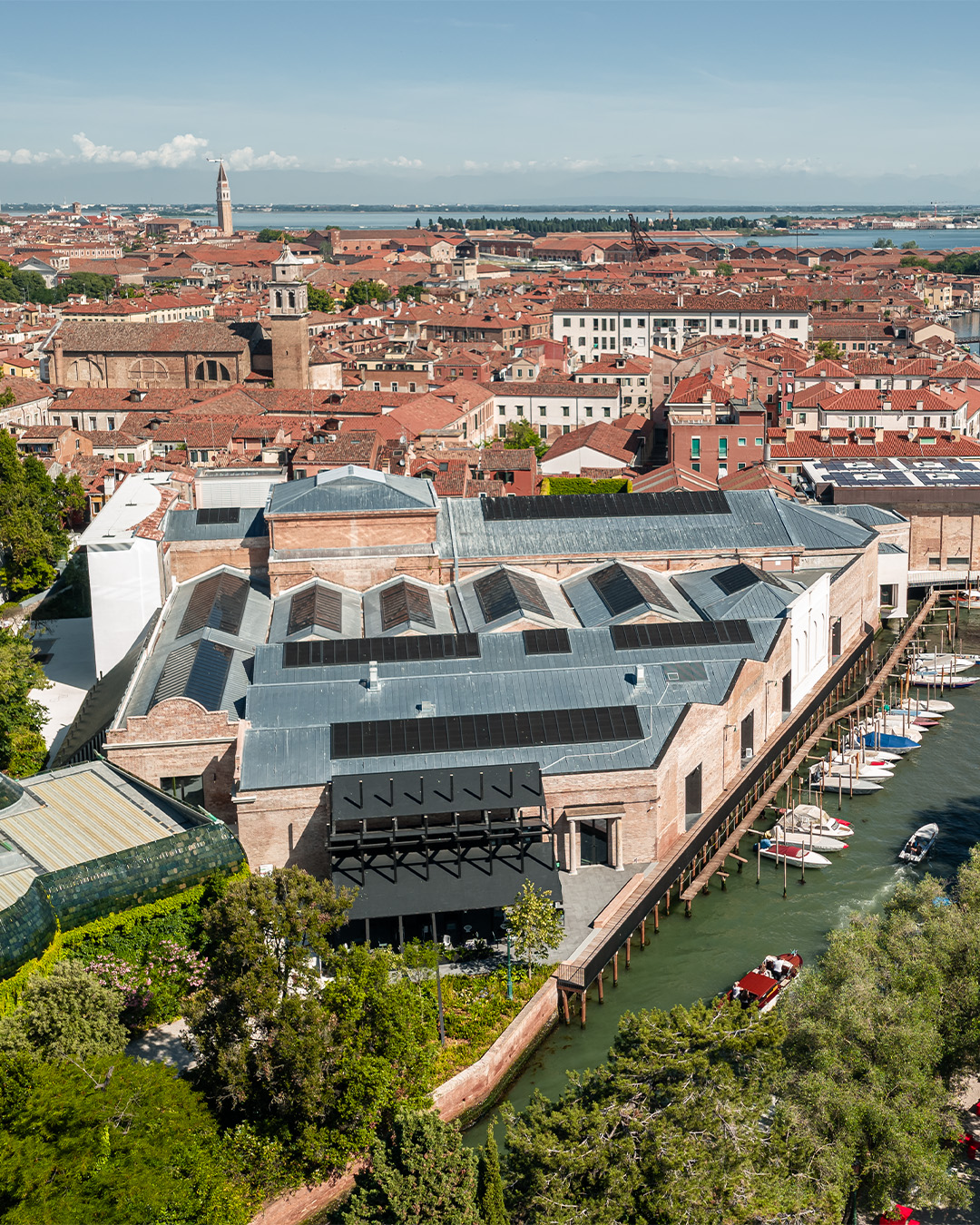
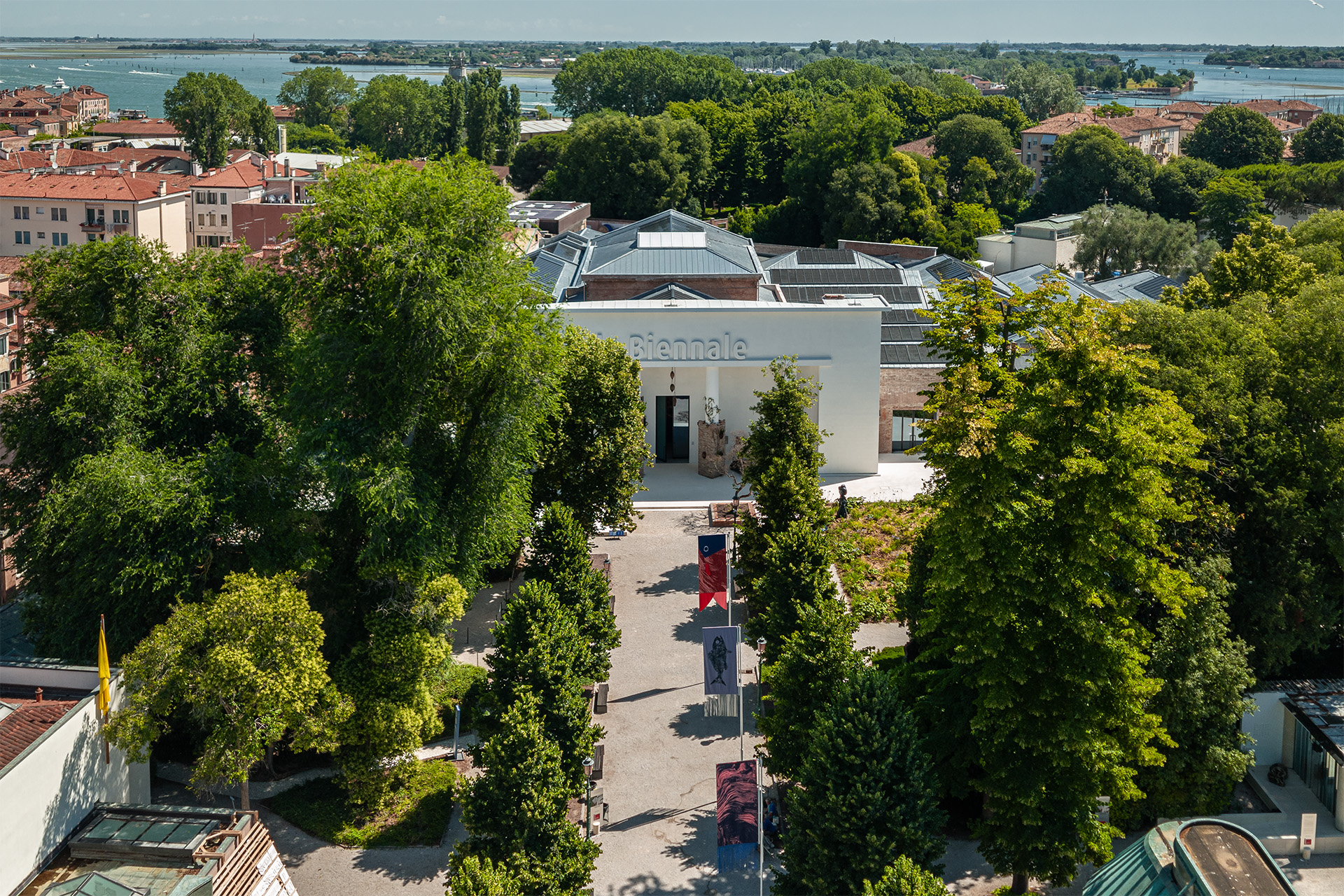
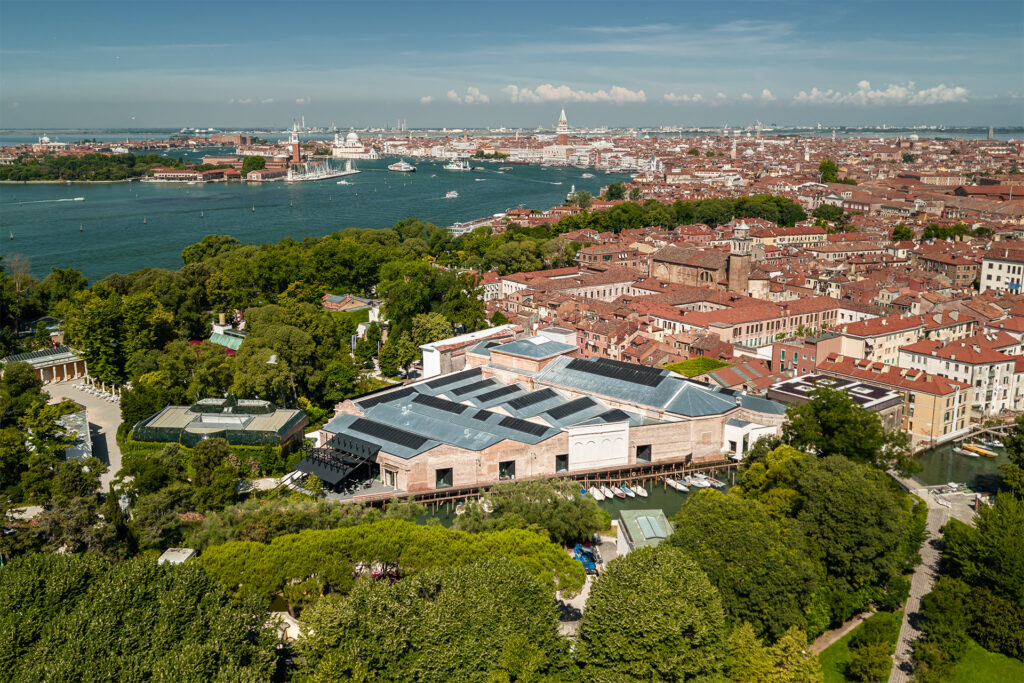
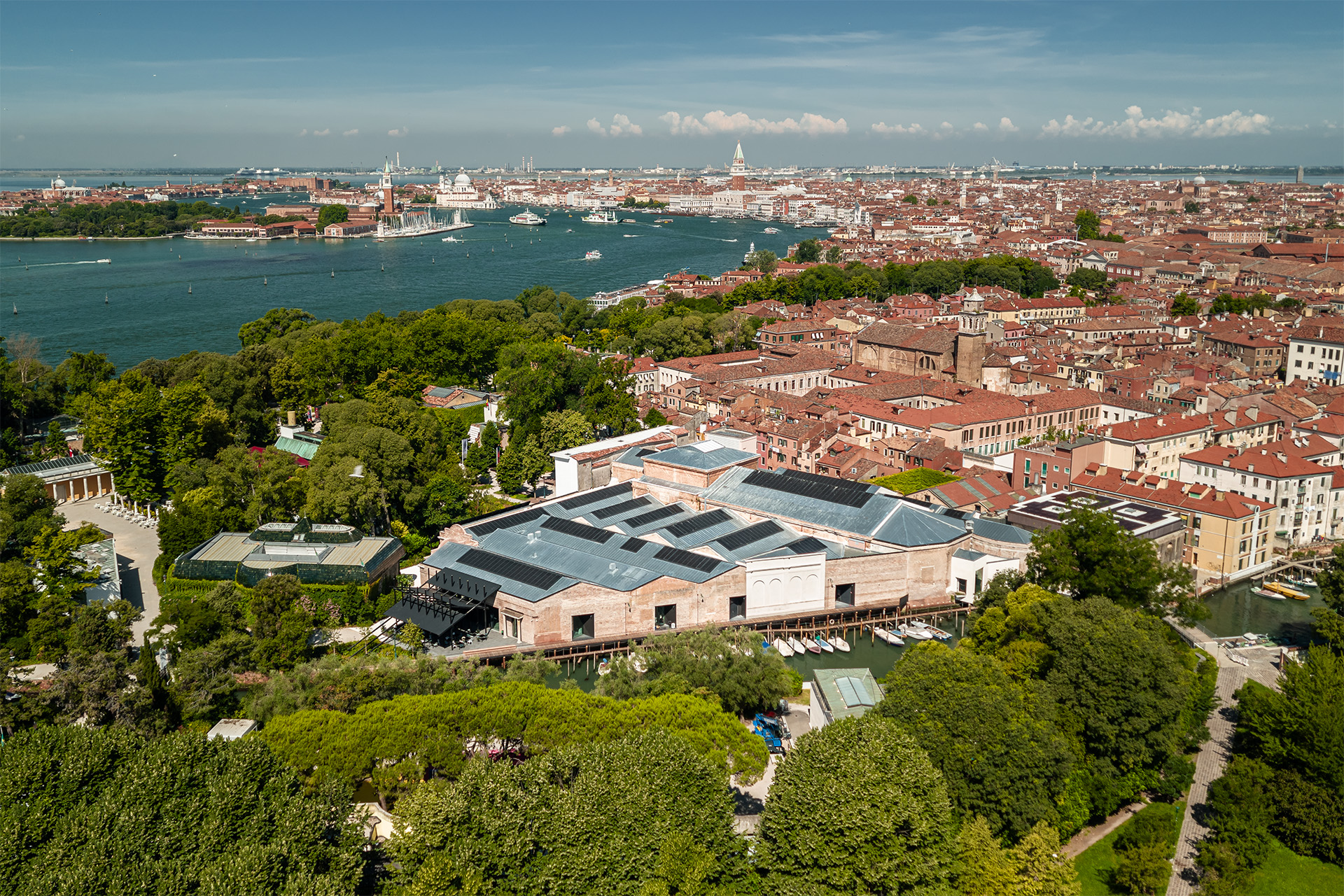
The heart of the world’s most important contemporary art event has come back to life with a new roof: Zintek supplied the titanium-zinc cladding for the renovation of the Central Pavilion in the Biennale Gardens, inaugurated in March 2026.
The Venice Biennale and the Central Pavilion
The Venice Biennale is one of the oldest and most prestigious cultural institutions in the world. Its history began in 1895 with the first International Art Exhibition of the city of Venice; since then, the event has attracted hundreds of thousands of visitors every year and has shaped over a century of art and architectural history.
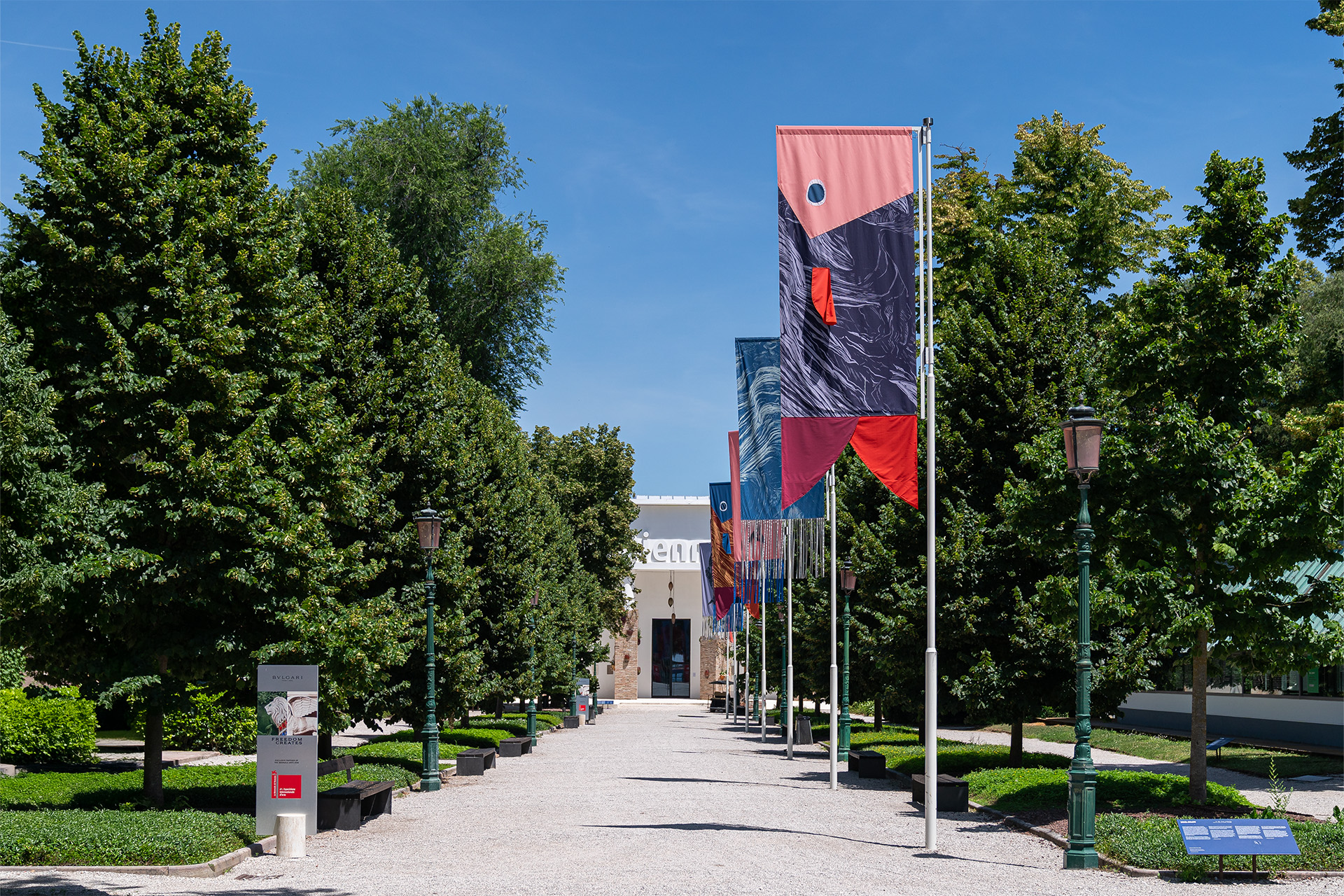
The Biennale Gardens, located in the eastern part of the city, are its historic home. The area, covering approximately 51,000 sqm, today houses twenty-nine national pavilions set among greenery, built in different eras: an extraordinary anthology of twentieth-century architecture. Among the architects who left their mark are Alvar Aalto, Josef Hoffmann, Gerrit Thomas Rietveld, Sverre Fehn and Carlo Scarpa.
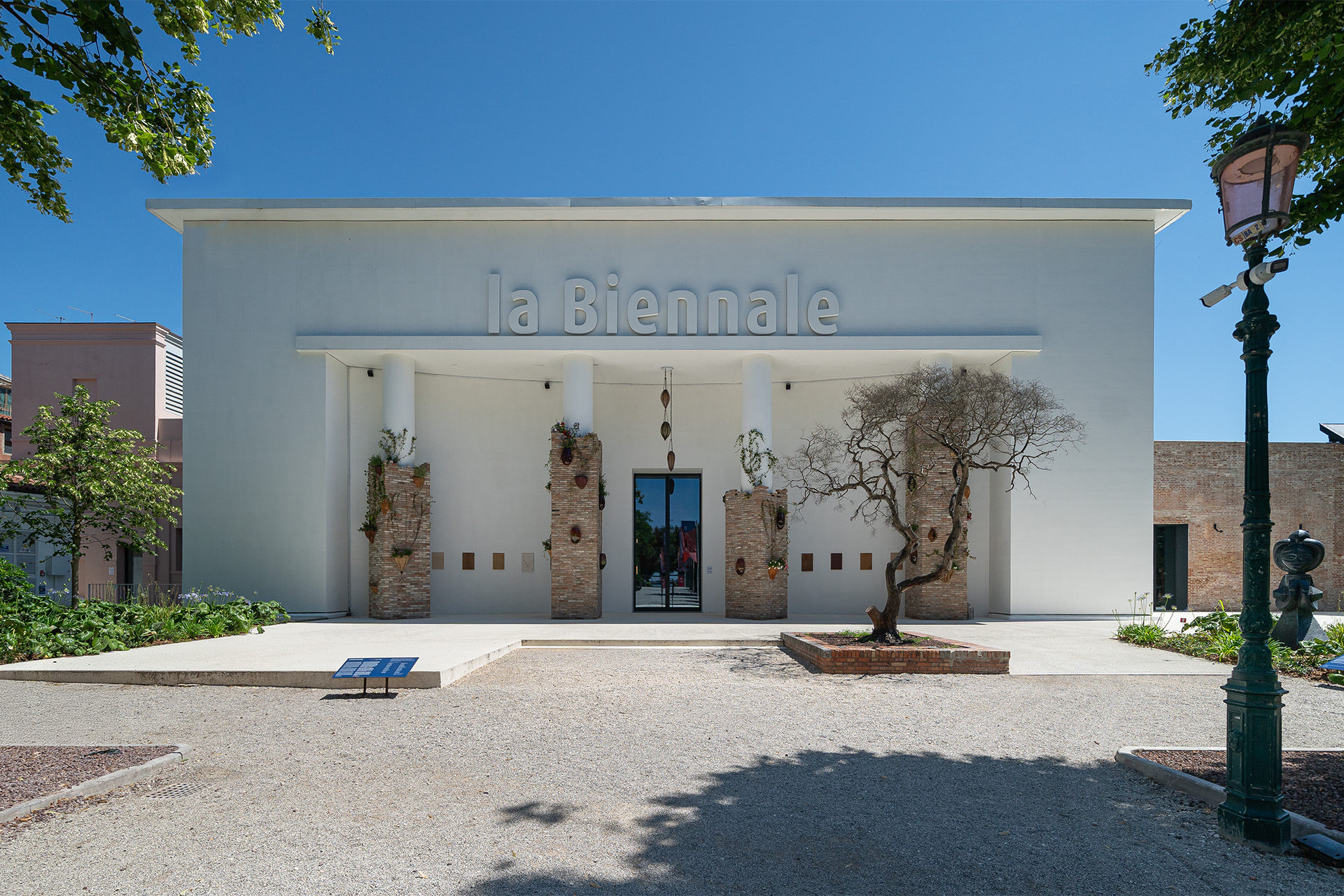
At the centre of this ensemble stands the Central Pavilion, originally known as the Palazzo Pro Arte: built between 1894 and 1895 to host the International Art Exhibition, the building arose from the transformation of pre-existing structures, designed by municipal engineer Enrico Trevisanato, with a façade by painter Marius De Maria. Over the course of the twentieth century, the building underwent numerous layered interventions — from the dome fresco by Galileo Chini in 1909 to the façade modifications by Guido Cirilli in 1914, from its transformation into the Italian Pavilion in 1932 to the (often unrealised) projects by Ernesto Basile, Daniele Donghi, Carlo Scarpa, Giò Ponti, Louis Kahn and Francesco Cellini.
In 1999, with Harald Szeemann and the introduction of the International Exhibition model as a unified project entrusted to a curator, the building definitively took on its role as the heart of the Biennale. The change of name to Central Pavilion, which took place between 2009 and 2011, marked this transformation.
The design and construction team
The renovation project was completed in March 2026 after sixteen months of work and a total investment of 31 million euros, as part of the “Project for the Development and Enhancement of the Venice Biennale’s Activities towards the Construction of a Permanent Centre of National and International Excellence in Venice”, one of 14 strategic projects funded by the Ministry of Culture under the National Complementary Plan (PNC) to the National Recovery and Resilience Plan (PNRR), programme “Major Cultural Heritage Attractors”, measure 1 (digitalisation, innovation, competitiveness and culture), component 3 (tourism and culture 4.0). The project was overseen by the Special Projects Division of the Venice Biennale, directed by architect Arianna Laurenzi, with Eng. Cristiano Frizzele, Director of Technical and Logistics Services, as Single Procedure Manager.
The architectural design and artistic direction were carried out by the studio Labics — Maria Claudia Clemente and Francesco Isidori — together with architect Fabio Fumagalli. The lead firm of the team was BUROMILAN — Milan Ingegneria S.p.A., with Massimiliano and Maurizio Milan also responsible for the structural design, safety coordination, sustainability and general construction management.
Building services and fire prevention were handled by ia2 Studio, with Aniello Camarca and Antonella De Martino, while the landscape design was developed by Stefano Olivari.
The roofing is made of zintek® zinc-titanium, produced by Zintek in Porto Marghera, Venice.
The main contractor responsible for the pavilion’s renovation was Setten Genesio S.p.A.
An intervention that rewrites the building
More than a straightforward restoration, the project takes the form of a genuine critical reinterpretation of the building, aiming to select and transform the many layers accumulated over time into a new architectural unity capable of meeting the Venice Biennale’s contemporary needs.
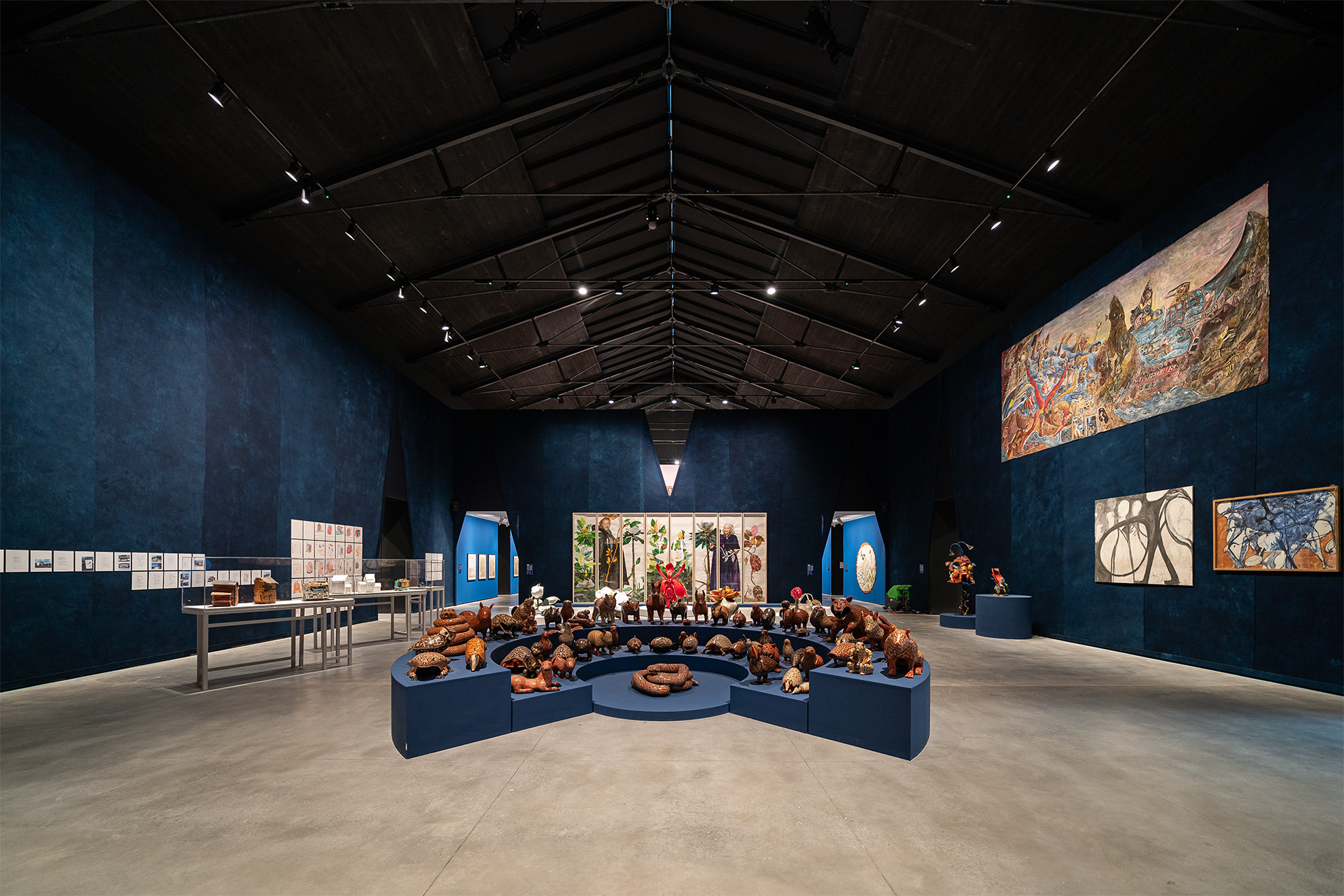
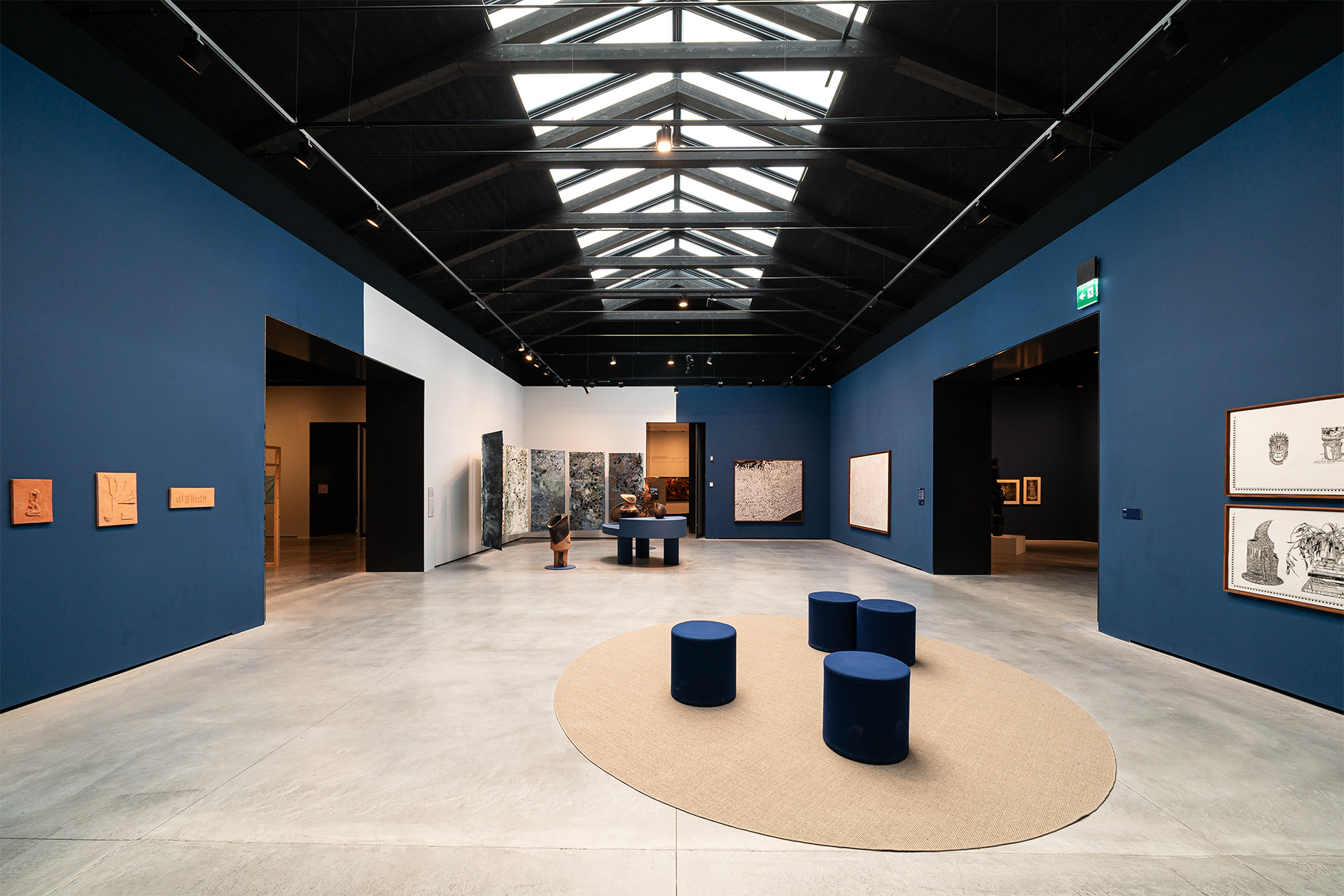
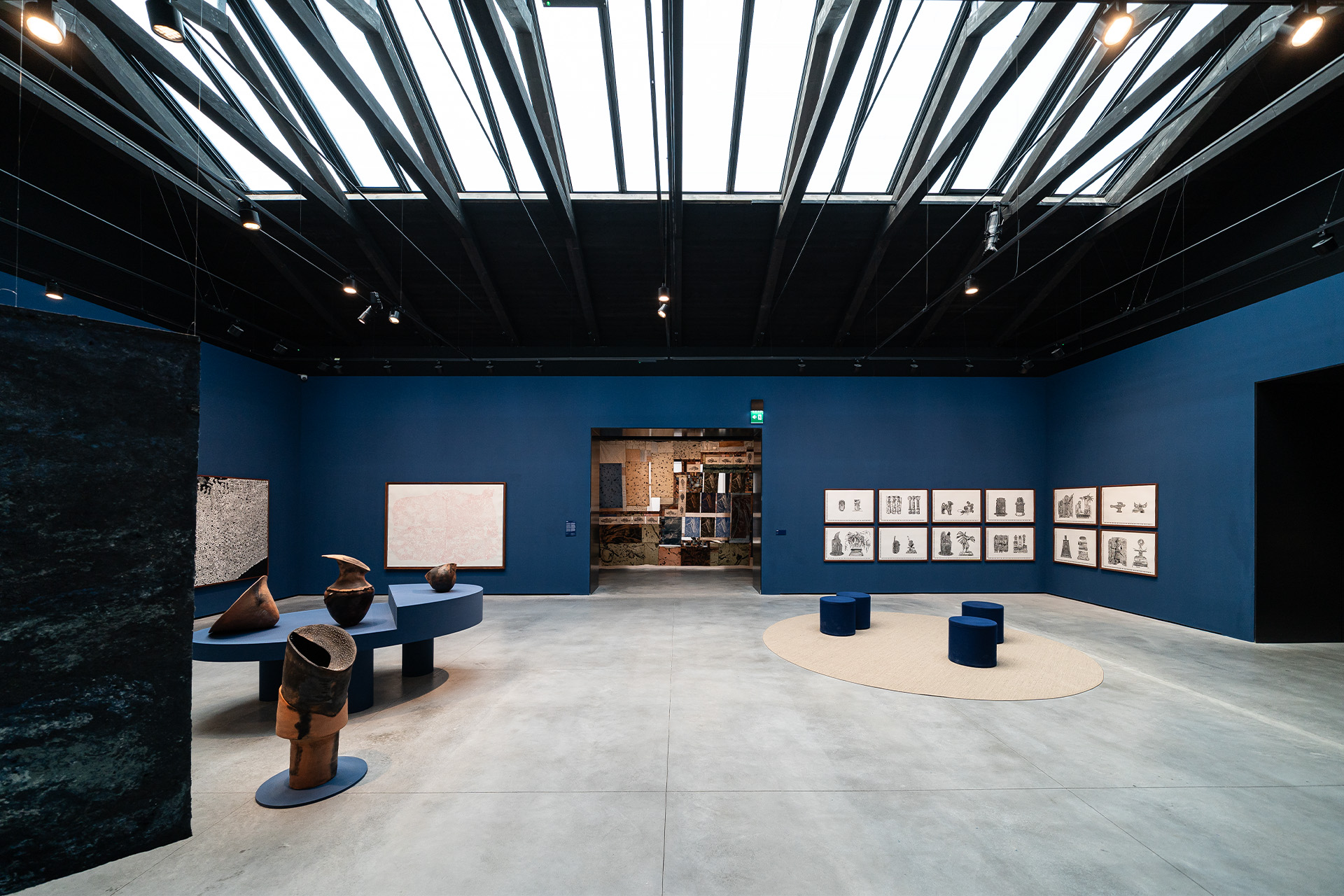
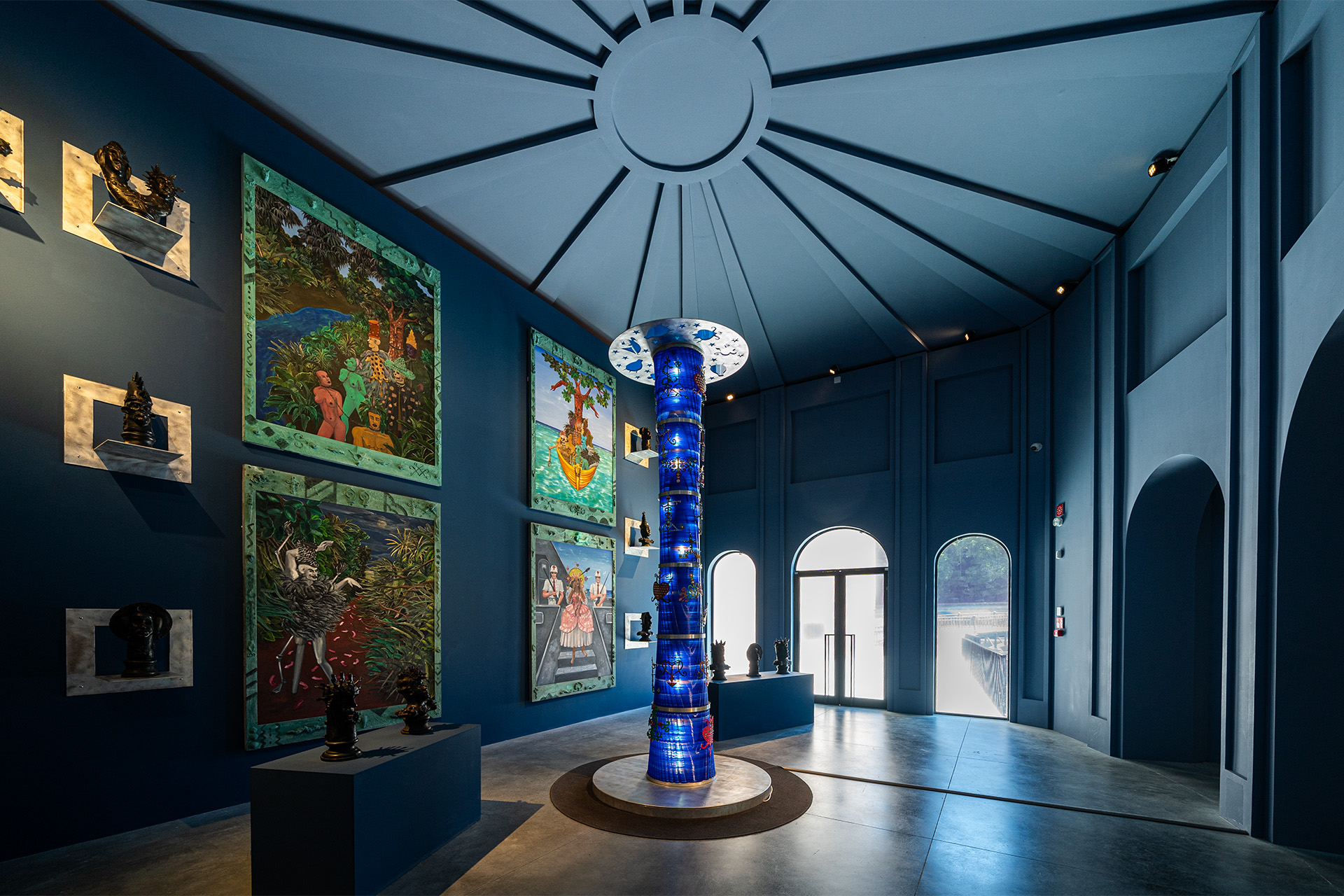
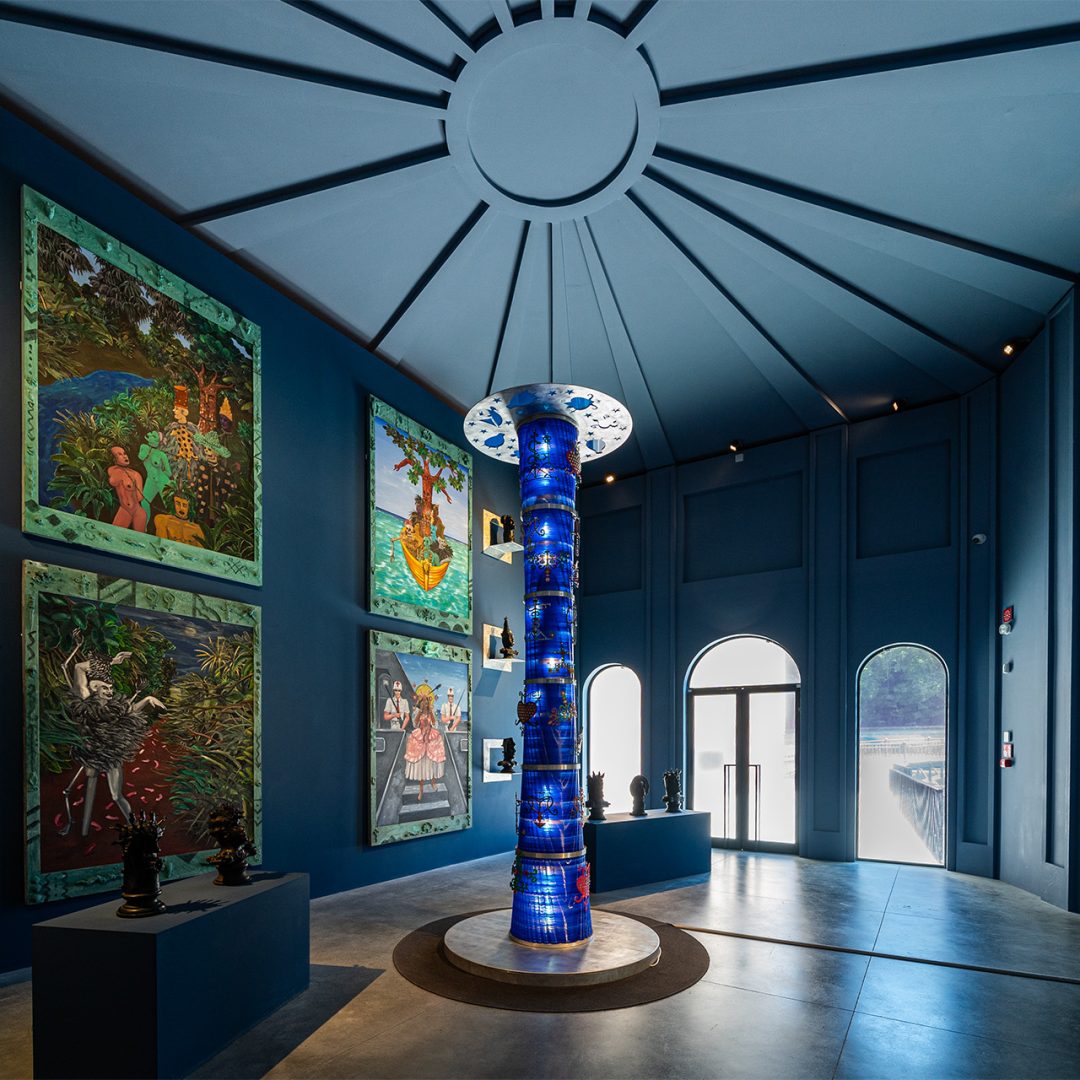
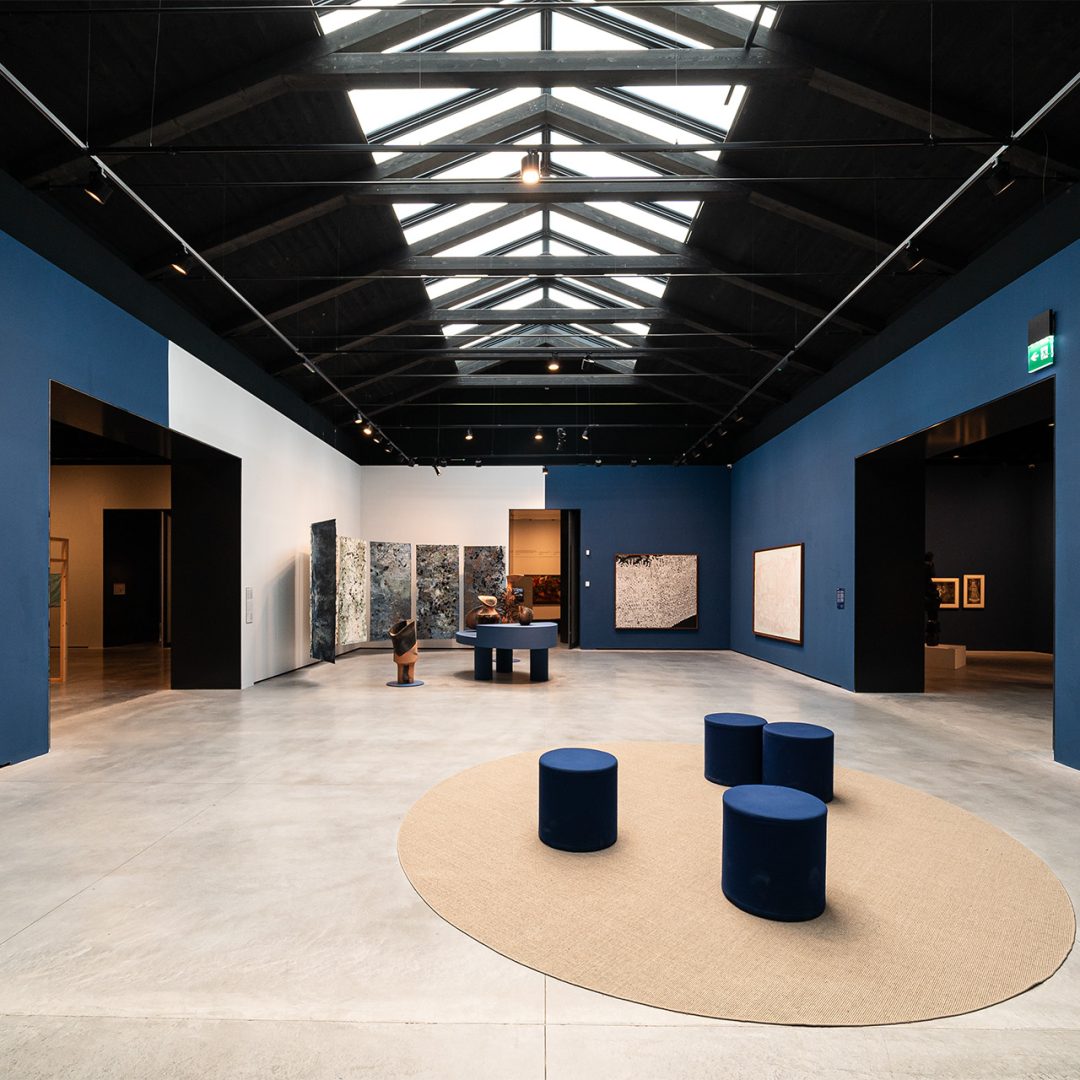
The exhibition spaces have been completely reorganised around the historic Sala Chini, the main circulation hub, around which the bookshop, café, educational areas and restrooms are arranged. The exhibition halls are conceived as large, neutral, flexible white boxes, capable of hosting temporary installations without interference, with technical systems integrated and concealed behind the walls to give the architecture an essential, rigorous character.
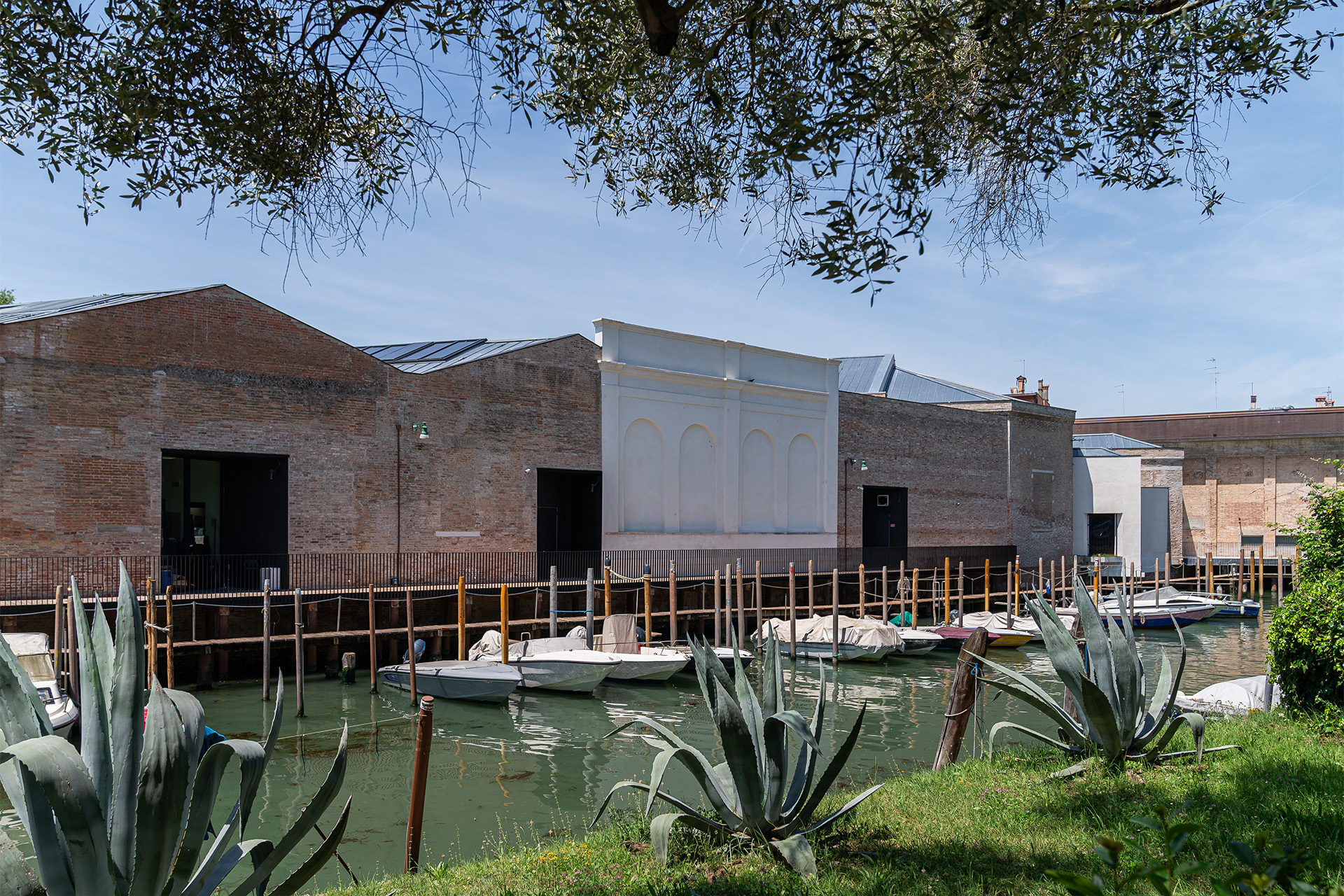
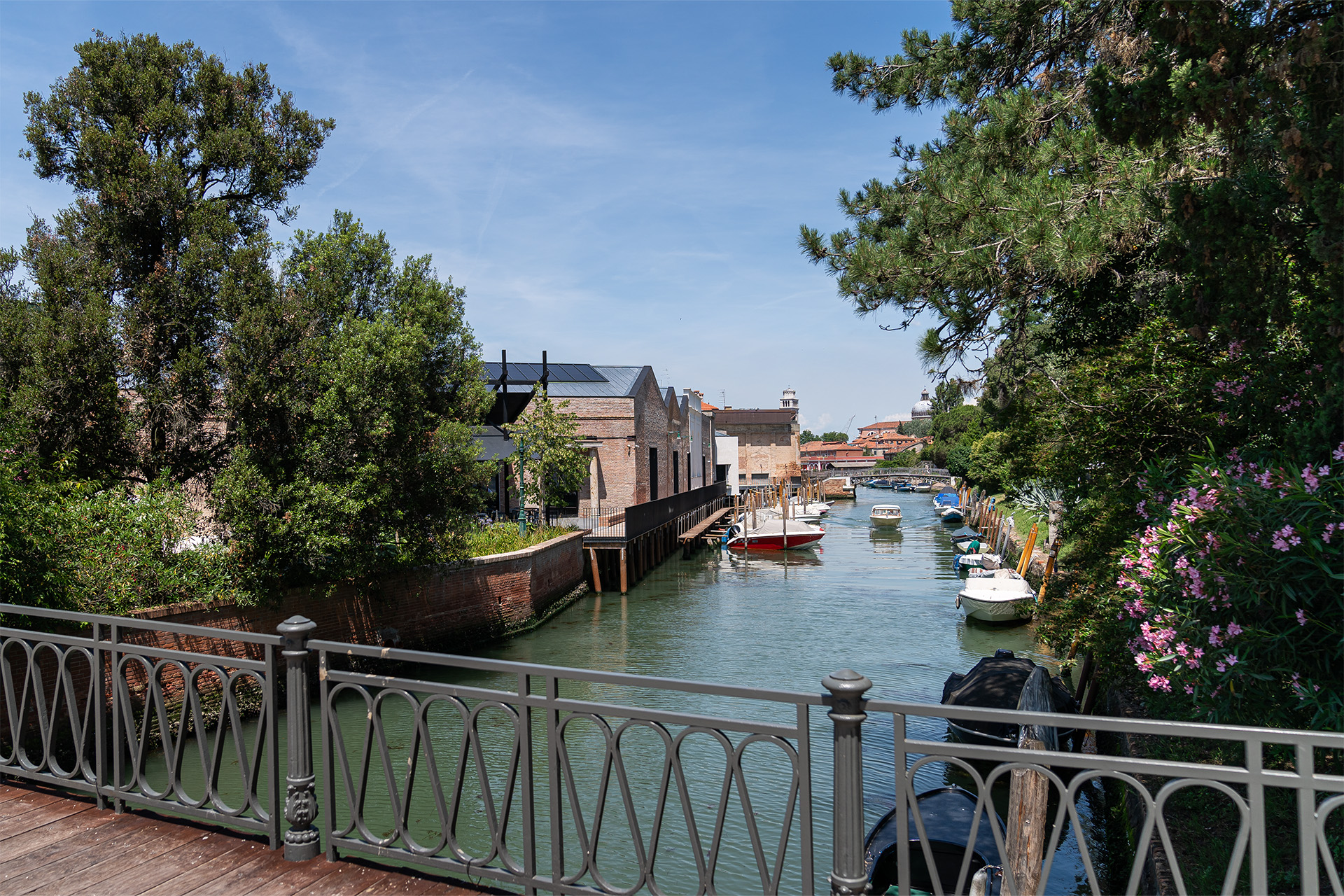
Particular attention was paid to the recovery of historic elements, such as the windows designed by Carlo Scarpa, while the Sala Brenno del Giudice was redesigned according to the spatial forms of the 1928 café project, reinstating the openings overlooking the terrace along the canal.
The altane: a Venetian gesture
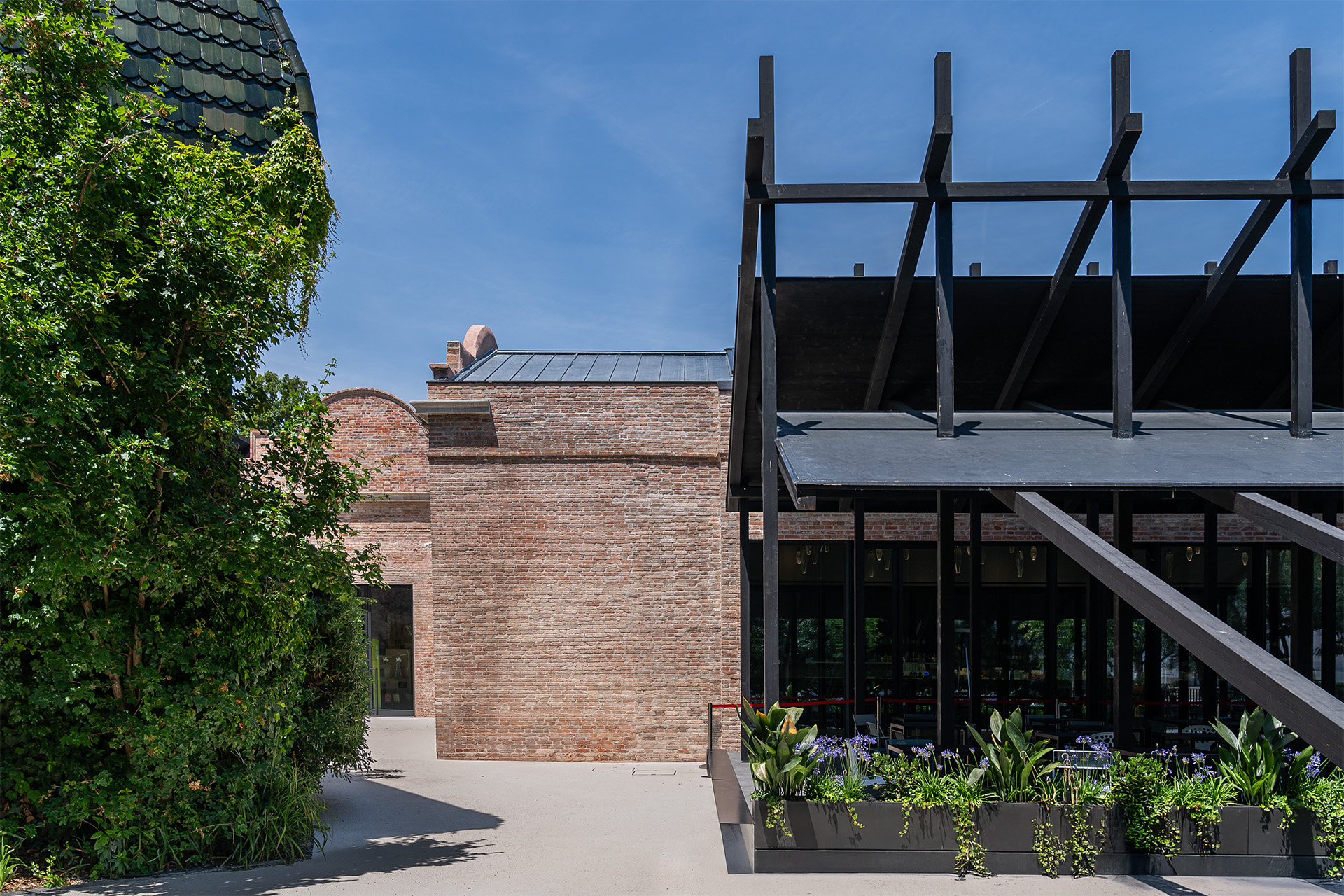
Among the most recognisable interventions is the addition of two new external structures inspired by Venetian altane (rooftop terraces), positioned in correspondence with the café and the multipurpose room. Built in charred laminated timber and X-LAM panels, they introduce an element of openness that connects the Pavilion to the landscape of the Gardens without competing with the existing masonry mass, echoing the design sensibility of Carlo Scarpa.
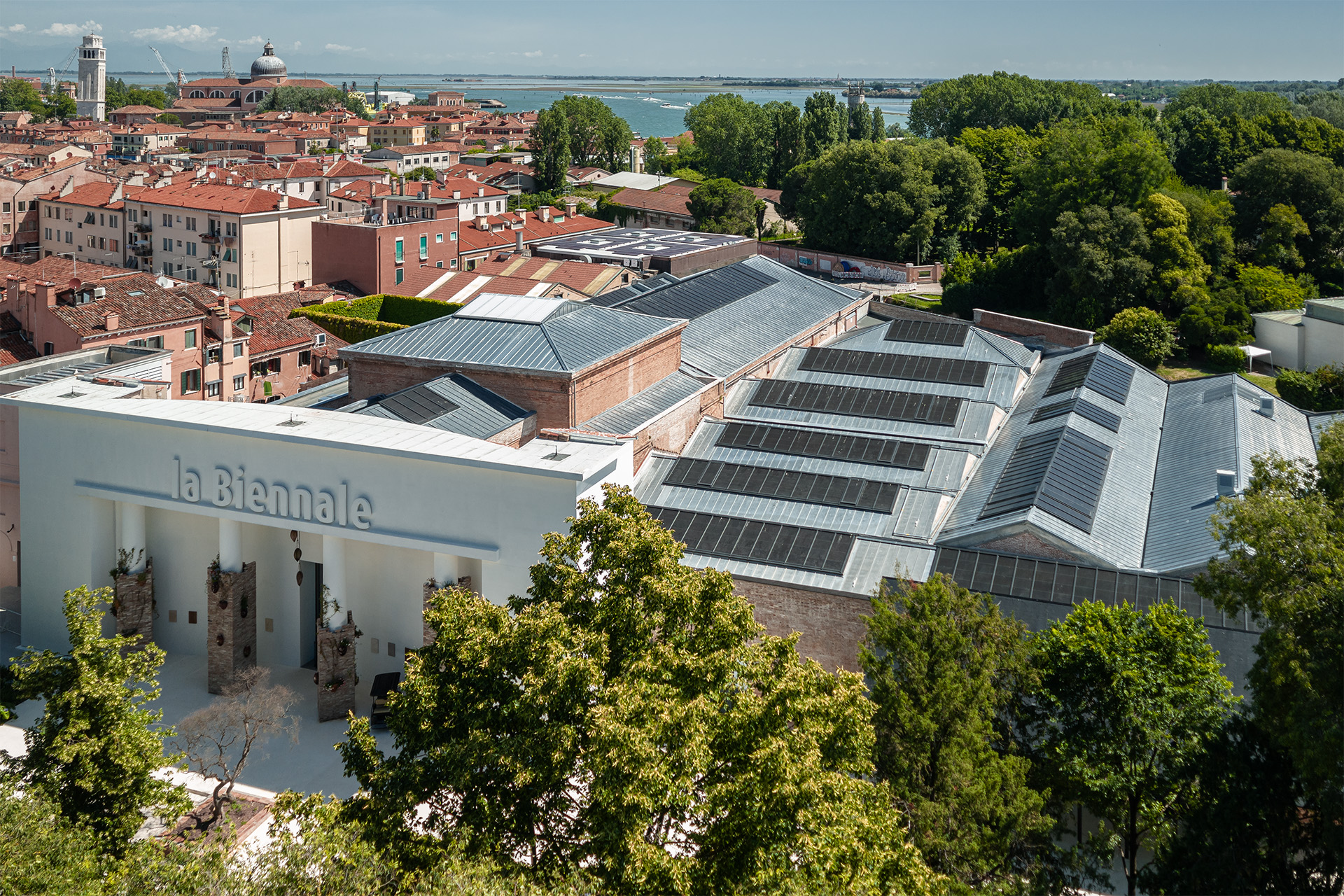
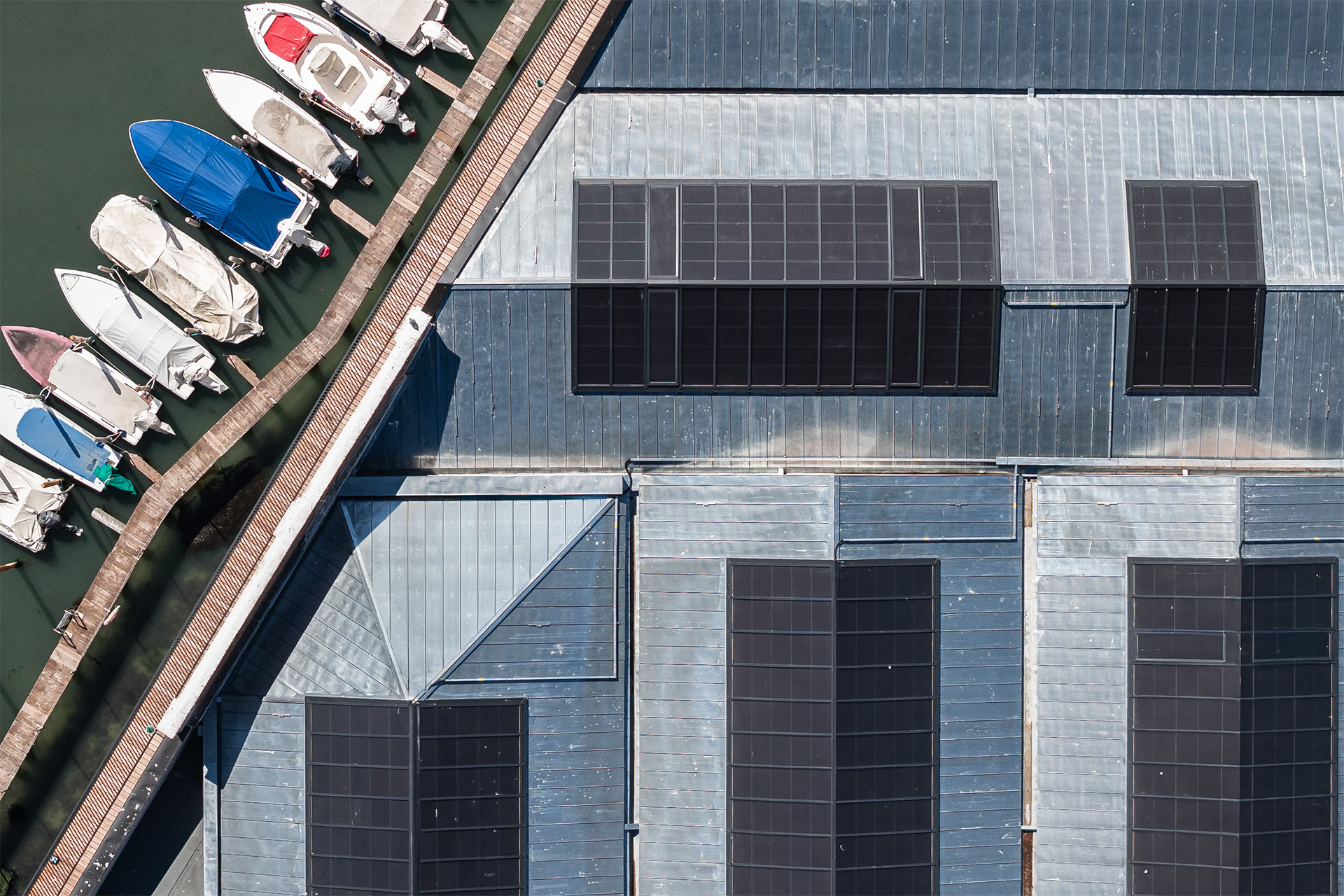
The new architecture is conceived as a unified system in which structure, natural light, photovoltaics, ventilation and blackout systems become a single organism. The skylights, in photovoltaic and diffusing glass, ensure uniform natural lighting and contribute to energy production. The project is targeting LEED® Gold certification.
Titanium-zinc roofing: a technical and architectural choice
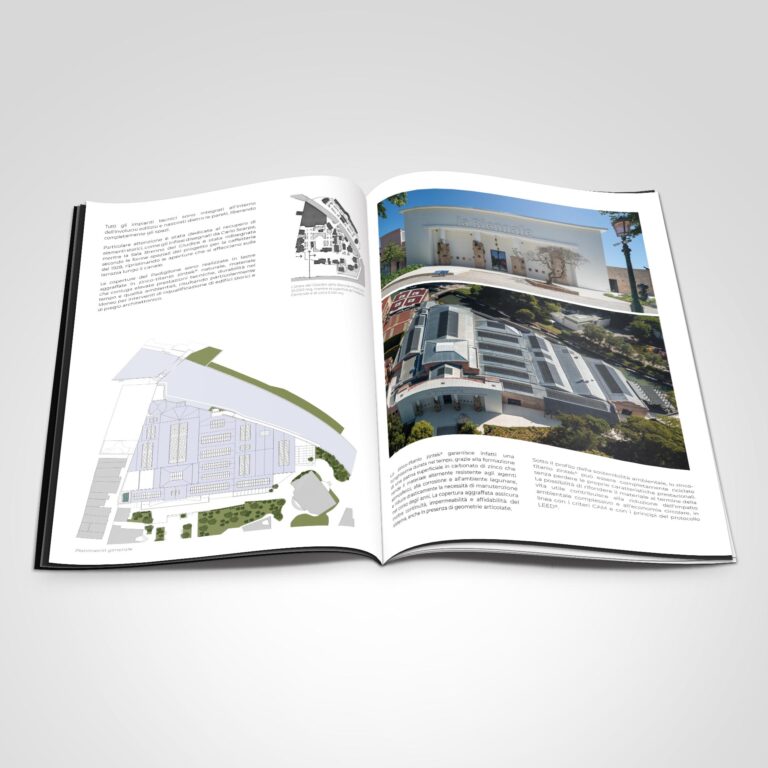
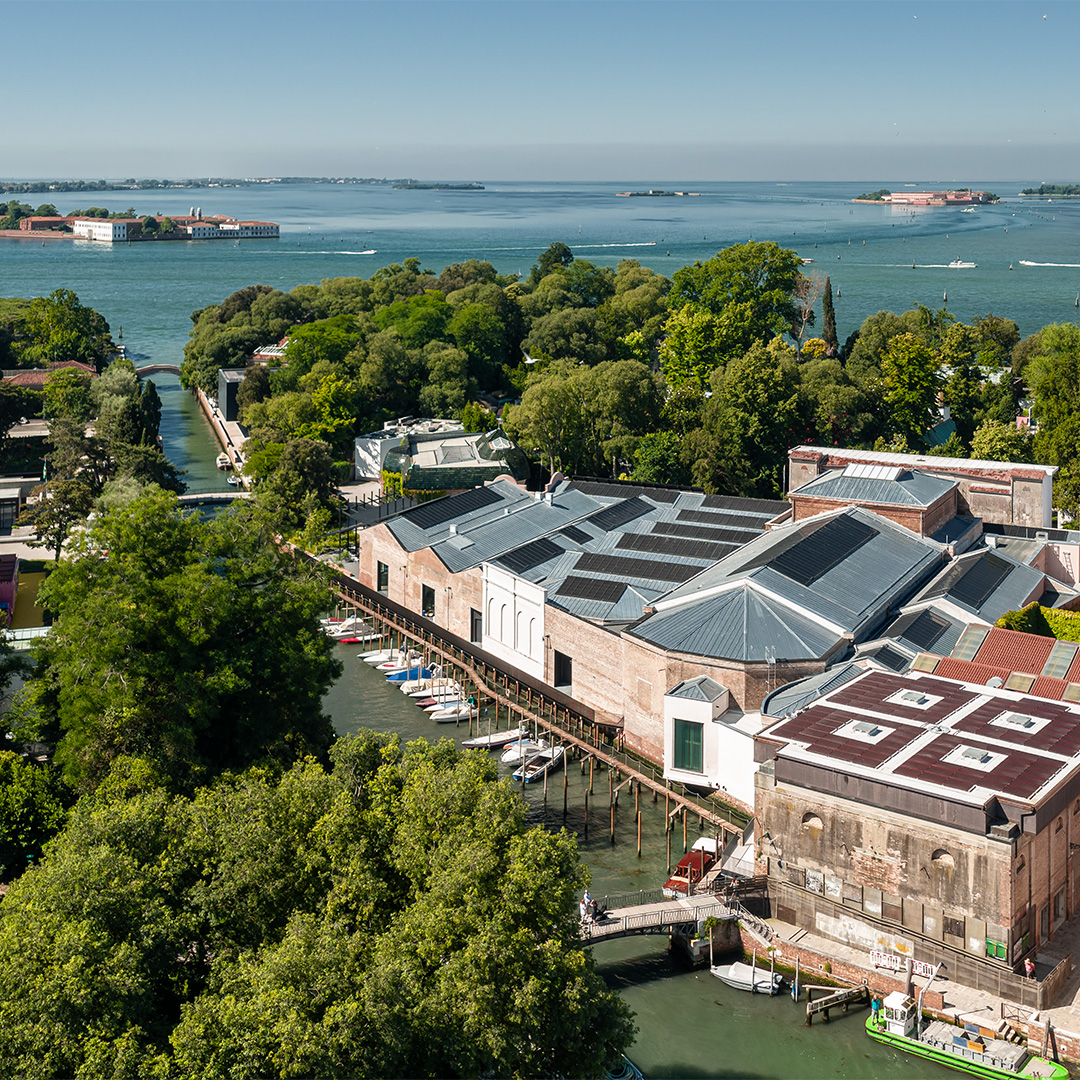
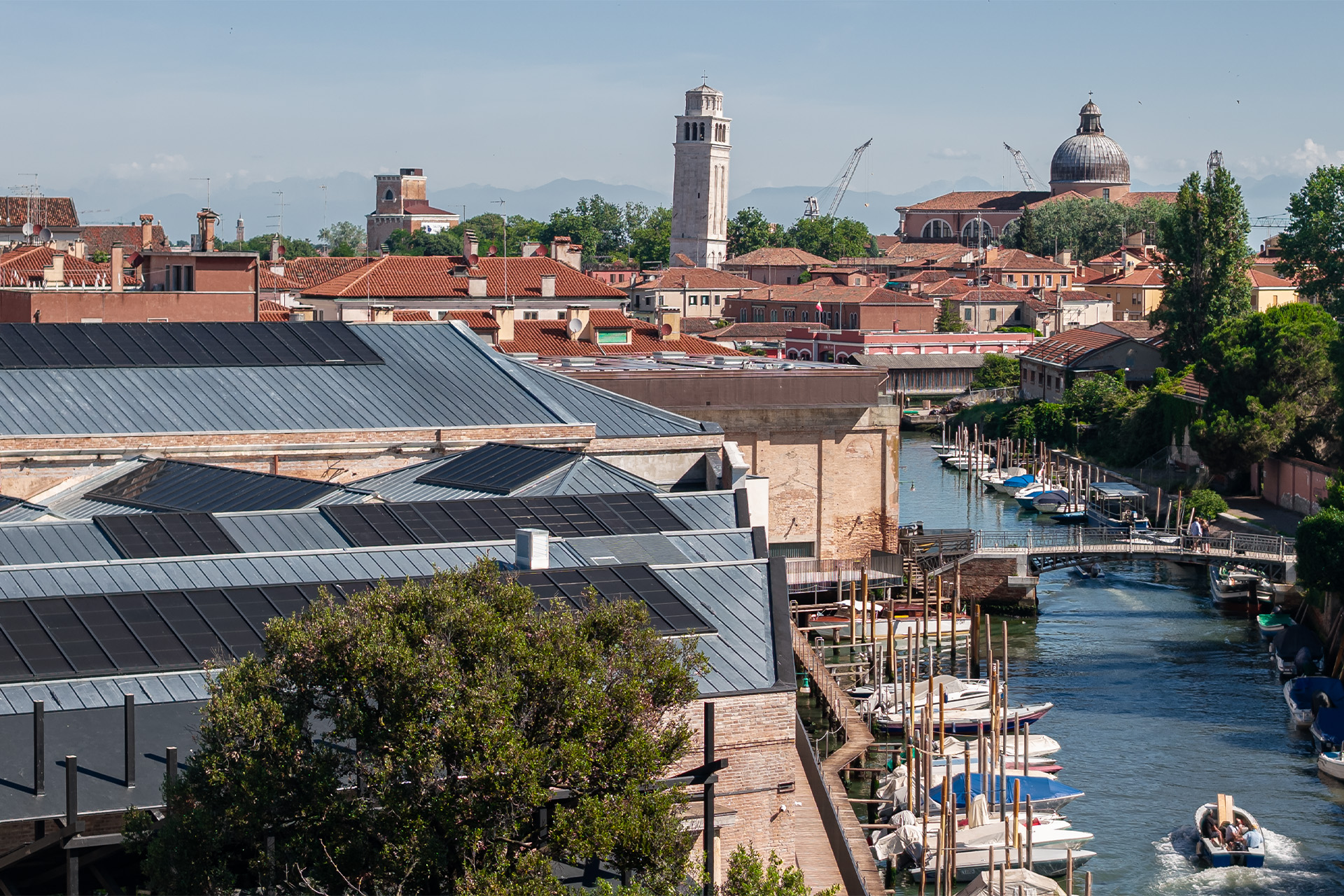
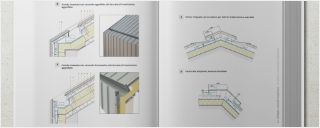
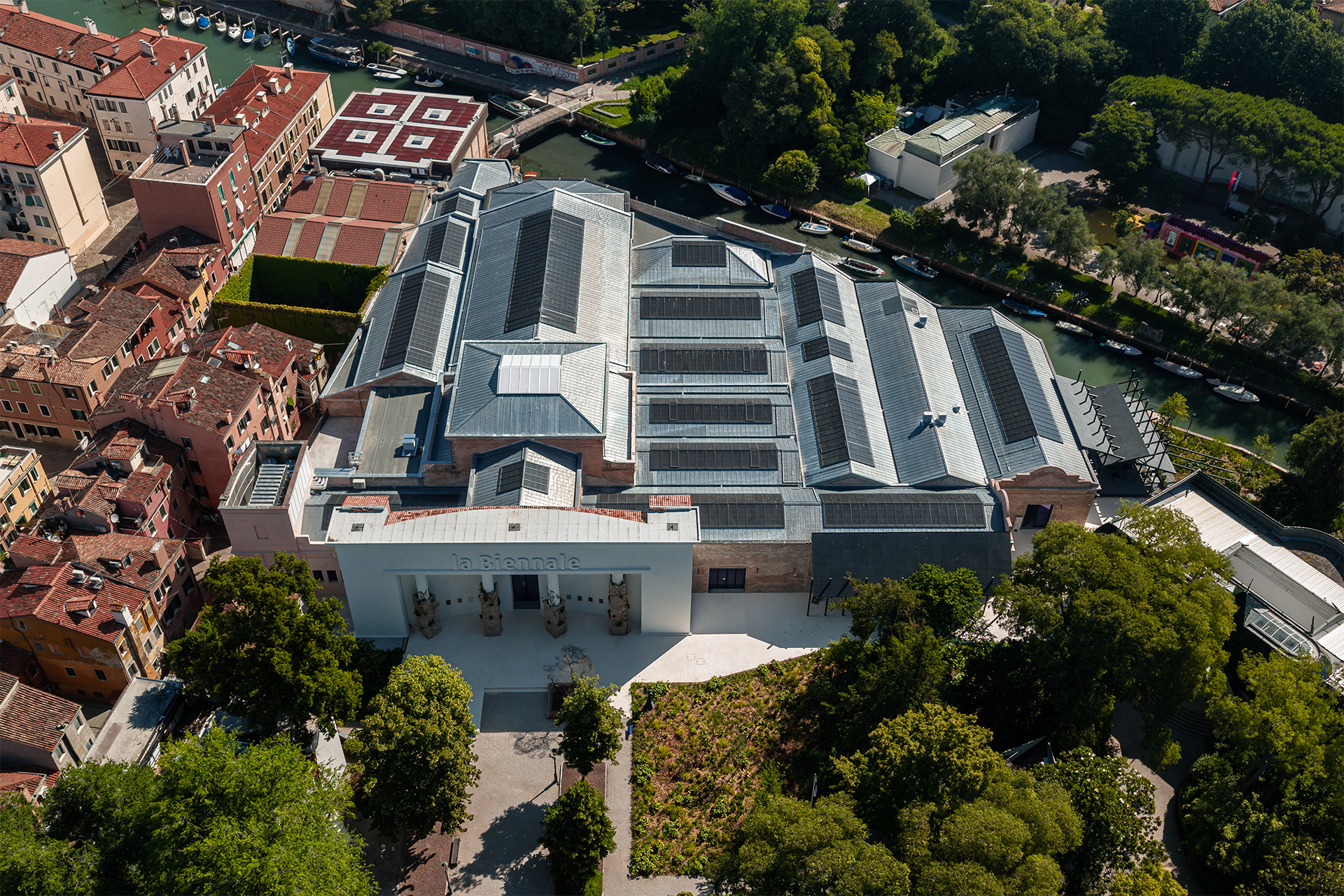
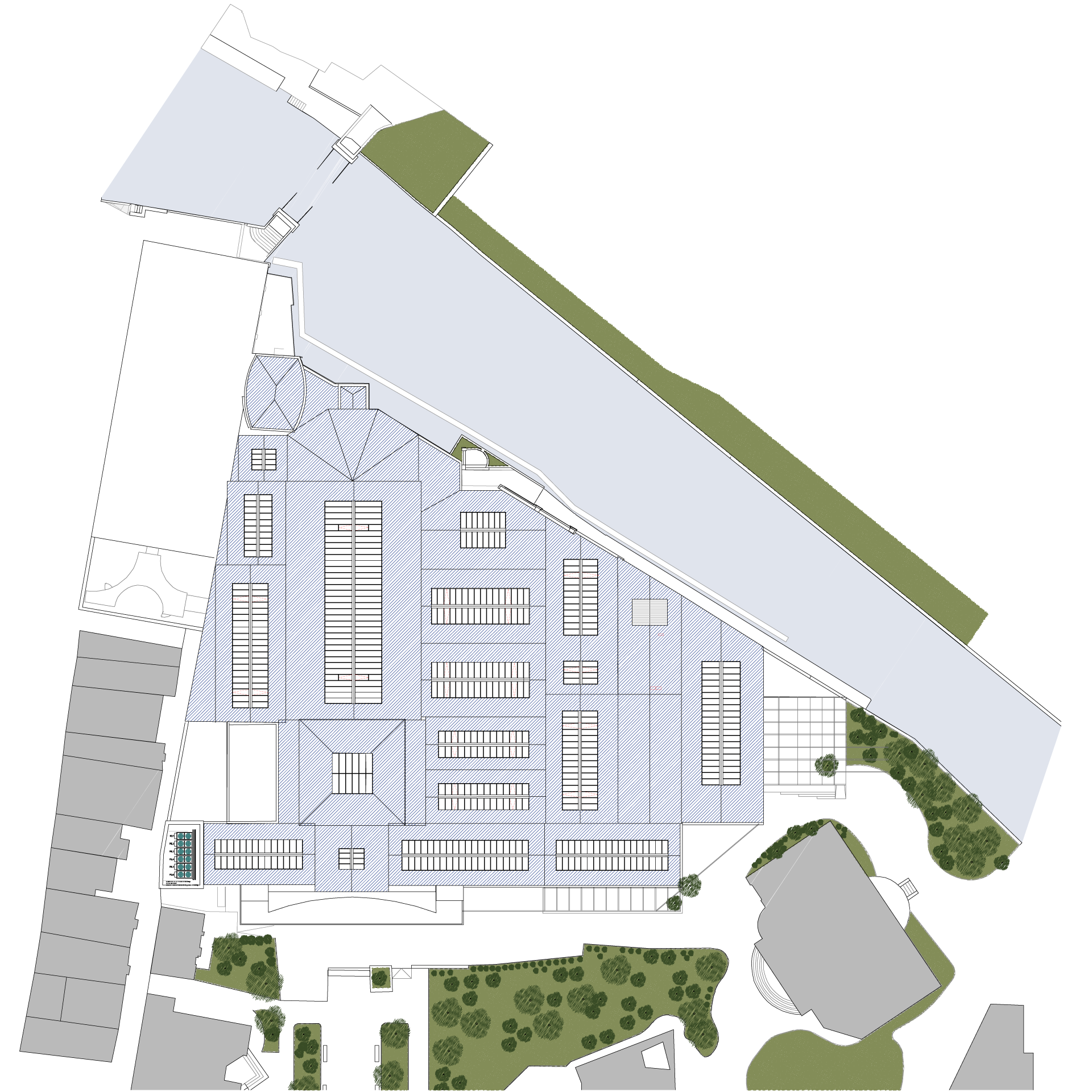
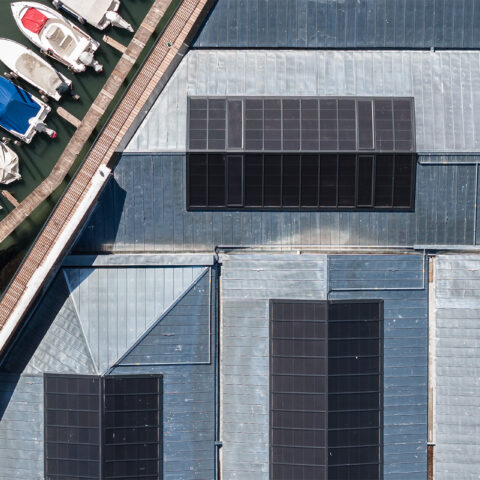
For the roof surfaces of the Central Pavilion, a cladding of natural titanium-zinc zintek® sheets, installed using a double standing-seam system, was adopted.
The choice of material does not respond solely to technical requirements: a delicate and prestigious setting such as the Biennale Gardens called for a solution capable of engaging with the building’s history without forgoing contemporary relevance. Titanium-zinc achieved this balance through its discreet elegance and its ability to blend naturally into the Venetian landscape, avoiding any invasive or dissonant elements in relation to the surrounding buildings.
Produced at the Zintek plant in Porto Marghera, just a few kilometres from the Biennale Gardens, the material also carries symbolic value: it is the metal of the city, returning to help build the city itself.
Durability, sustainability and performance
The technical characteristics of zintek® were a determining factor in the design choice. The natural formation of a zinc carbonate layer on the material’s surface protects it from corrosion and from the aggressive marine environment typical of the Venetian setting. Thanks to these properties, the system guarantees exceptional longevity, with minimal maintenance requirements.
On the sustainability front, since titanium-zinc can be fully remelted and recycled at the end of its service life, its use is consistent with CAM criteria and with the objectives of the LEED Gold certification the complex aims to achieve.
The double standing-seam technology ensures continuity and watertightness even with complex geometries, providing high resistance to wind, rain and thermal variation in both summer and winter. The lightness of the system and its compatibility with high energy-performance assemblies make it an ideal solution for complex buildings such as the Central Pavilion.
An ongoing collaboration
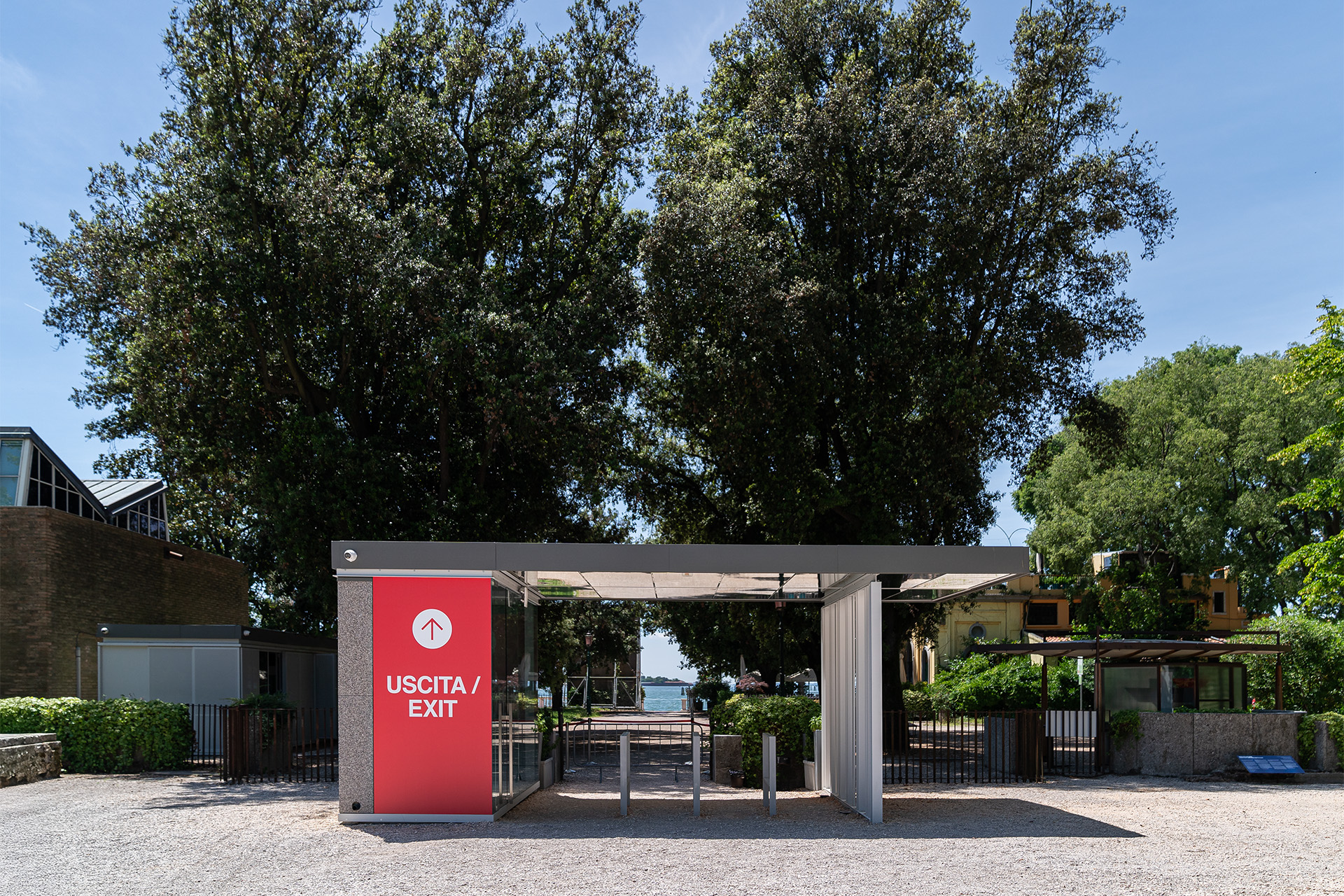
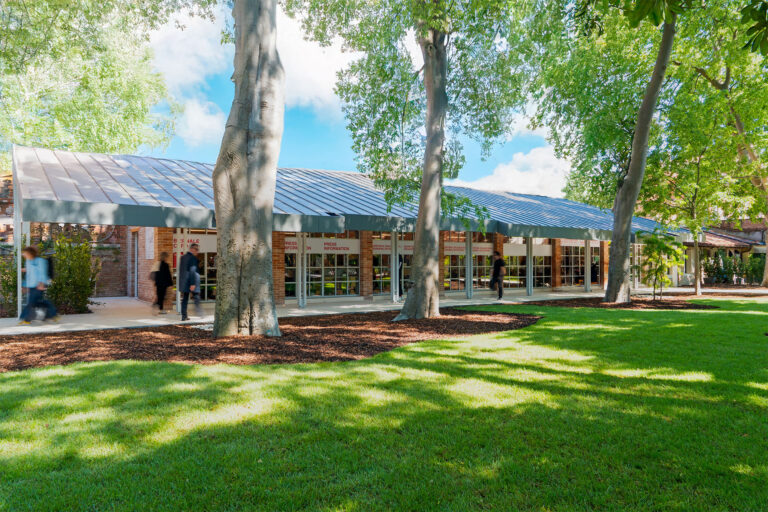
The work on the Central Pavilion is the latest in a series of interventions carried out by Zintek on buildings used by the Biennale. In 2025, the company took part in the construction of the new Gardens ticket offices, and in 2026 in that of the security booths and canopies, also at the entrance to the Gardens, as well as in the renovation of other national pavilions, contributing to the event’s infrastructure renewal programme.
A presence that confirms the ability of titanium-zinc zintek® to engage with contexts of exceptional cultural, historical and symbolic value.
In the Central Pavilion, design quality meets material quality: a contemporary envelope, built to last, that does not impose its presence but allows it to be felt over time — exactly like a successful piece of architecture.